
Top Commercial Property Management Best Practices for Salinas Investors
For high-end commercial property owners and serious investors across the Monterey Bay Area, maximizing returns is not just a goal; it is a fundamental requirement. The critical difference between a thriving, high-yield asset and a stressful liability often hinges directly on the quality of its day-to-day and strategic management. Generic, one-size-fits-all advice consistently falls short in our unique market, which spans from the agricultural core of Salinas and the communities of Soledad and Gonzales to the high-value coastal properties of Monterey and Carmel. This is where localized expertise becomes invaluable.
This definitive guide presents nine proven commercial property management best practices, specifically tailored for the discerning investor in Monterey County. We will move beyond basic oversight to provide actionable, concierge-level strategies designed to enhance asset value, ensure rigorous compliance, and secure your long-term profitability. These are not theoretical concepts; they are the practical methodologies that leading local firms like Coast & Valley Properties, guided by the deep regional experience of Amy Salmina, implement to preserve and grow premier commercial portfolios.
Throughout this article, you will discover how to implement sophisticated systems for:
- Proactive Maintenance: Shifting from reactive repairs to preventative care to protect your investment.
- Strategic Tenant Relations: Building partnerships that reduce turnover and improve stability.
- Rigorous Financial Oversight: Optimizing cash flow and ensuring transparent, accurate reporting.
- Smart Technology Integration: Using property technology (PropTech) to boost efficiency and owner convenience.
Prepare to transform your management approach from simple administration to strategic asset optimization. The following blueprint will provide the tools needed to unlock the full potential of your commercial property, ensuring it performs at its peak in the competitive Salinas and Monterey County landscape.
1. Institute Proactive Preventative Maintenance Programs
Shifting from a reactive "fix-it-when-it-breaks" model to a strategic, proactive approach is a foundational element of elite commercial property management best practices. A robust preventative maintenance program involves scheduled inspections, regular system servicing, and anticipating repairs before they become costly emergencies. This foresight is crucial for preserving the physical asset, enhancing tenant satisfaction, and protecting your investment's long-term value.
Why Proactive Maintenance is Non-Negotiable
For commercial properties in Monterey County, this means addressing region-specific challenges. This includes servicing HVAC systems to handle our coastal climate swings and maintaining the pristine building exteriors expected in communities from Monterey to Salinas. By catching small issues early, you prevent system failures, avoid business disruptions for your tenants, and control your budget with planned expenses rather than unexpected, expensive repairs.
Practical Implementation Examples:
- Retail Center: A retail property in Downtown Salinas can implement a quarterly maintenance sweep, checking everything from exterior lighting and signage to plumbing and roofing. This simple, scheduled action significantly reduces emergency call-outs and keeps the property safe and attractive for shoppers.
- Office Building: An office building in Monterey can schedule bi-annual HVAC tune-ups before the summer and winter seasons. This prevents system failures during peak usage, ensuring tenant comfort and productivity, which directly impacts lease renewals.
Actionable Tips for Implementation
- Adopt a CMMS: Implement a digital Computerized Maintenance Management System (CMMS), like the one used by Coast & Valley Properties. This provides transparent tracking, scheduling, and detailed reporting for owners.
- Create Seasonal Checklists: Develop checklists specific to the Salinas Valley climate, such as winter rain preparation (gutter cleaning, leak checks) and summer heat preparation (AC filter changes, exterior shade inspection).
- Vet Local Vendors: Build relationships with trusted, licensed local vendors in Salinas and surrounding areas before an emergency strikes. This ensures priority service and quality workmanship when you need it most.
- Document Everything: Meticulously document all maintenance activities with photos and detailed reports. This creates a clear history for compliance, warranty claims, and demonstrating property care during a future sale.
This bar chart illustrates the direct return on investment from a well-executed preventative maintenance strategy.
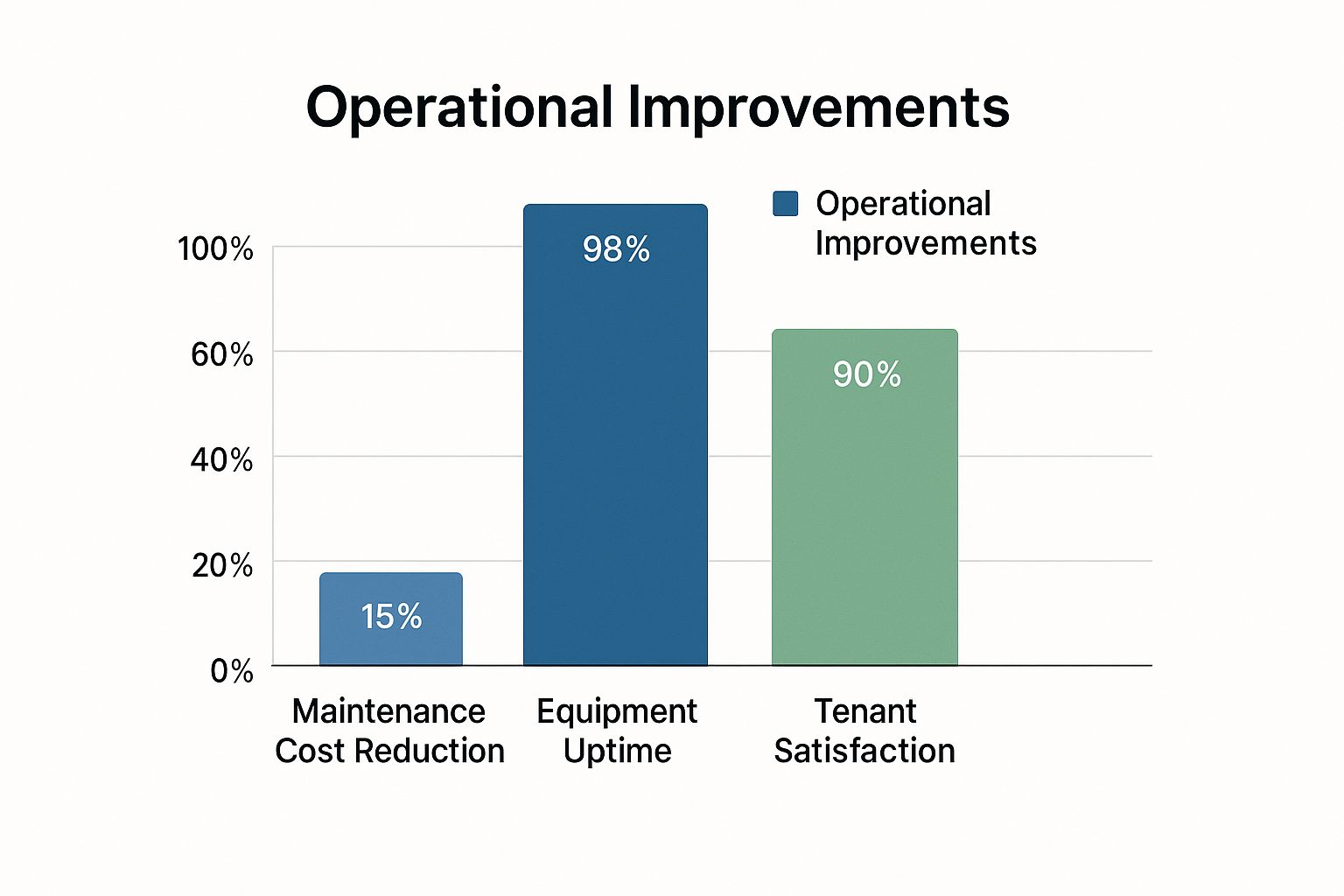
As the data shows, the benefits extend beyond simple cost savings, directly boosting critical operational metrics and tenant relations.
2. Tenant Relationship Management
Beyond collecting rent, sophisticated tenant relationship management is one of the most crucial commercial property management best practices for securing long-term profitability. This approach transforms the landlord-tenant dynamic from a transactional exchange into a strategic partnership. It involves proactive communication, responsive service, and a genuine commitment to helping your tenants' businesses succeed, which in turn fosters high retention rates and stabilizes your cash flow.

Why Tenant Partnerships are an Asset
For commercial properties across Monterey County, from Salinas's agricultural hubs to Monterey's tourism-focused storefronts, tenant success is owner success. A positive relationship means tenants are more likely to report maintenance issues early, take pride in their space, and renew their leases. This proactive partnership is the key to reducing costly vacancies and turnover expenses, creating a stable and thriving commercial environment that attracts other high-quality businesses. For an in-depth look, you can learn more about building a strong tenant-landlord relationship on coastandvalleypm.com.
Practical Implementation Examples:
- Industrial Park: For a light industrial park in Salinas, management can create a streamlined communication portal for logistics updates and maintenance requests, minimizing operational disruptions for tenants reliant on efficient daily operations.
- Mixed-Use Development: A property manager for a mixed-use building in Monterey can host quarterly networking events, connecting retail tenants with office workers upstairs to foster a synergistic community and drive internal business.
Actionable Tips for Implementation
- Establish a Communication Standard: Implement a strict 24-hour response policy for all tenant inquiries, even if it's just to acknowledge receipt and provide a timeline for a full answer. This demonstrates responsiveness and respect.
- Utilize a Tenant Portal: Provide tenants with a dedicated online portal, like the one offered by Coast & Valley Properties, for submitting maintenance requests, paying rent, and receiving building-wide announcements. This empowers them with 24/7 access and creates a transparent communication record.
- Conduct Regular Check-ins: Don't wait for a problem to arise. Schedule brief, quarterly check-in calls or visits to ask how things are going and if they need anything. This proactive approach uncovers minor issues before they escalate.
- Celebrate Their Success: Acknowledge tenant milestones, such as business anniversaries or positive press. A simple congratulatory email or social media shout-out shows you view them as partners, not just rent payers.
3. Financial Performance Optimization
Beyond day-to-day operations, superior commercial property management hinges on a data-driven approach to maximizing profitability. This means moving past simple bookkeeping into strategic financial performance optimization. This practice involves rigorous financial analysis, proactive budget forecasting, disciplined expense management, and constantly seeking opportunities to elevate property value and investor returns.
Why Financial Optimization is Non-Negotiable
In a competitive market like Monterey County, optimizing financial performance is a critical differentiator. It transforms a property from a passive asset into a high-performing investment. This involves not just collecting rent but strategically analyzing every line item, from vendor contracts in Salinas to utility costs in Monterey, to ensure maximum efficiency. For commercial property management, implementing rigorous financial performance optimization is paramount, and this extends to how you handle your payables and receivables. Learn more about strategies for effective invoice management in real estate. A proactive approach ensures your asset weathers market fluctuations and consistently outperforms expectations.
Practical Implementation Examples:
- Industrial Property: The owner of an industrial park in Soledad can benchmark utility costs against regional averages. This analysis might reveal an opportunity to install energy-efficient lighting, a capital improvement that lowers tenant operating costs and increases the property's marketability.
- Mixed-Use Building: A mixed-use property in Monterey can implement dynamic pricing for its short-term commercial spaces based on seasonal demand. This strategy, common among institutional investors, maximizes revenue during peak tourist seasons.
Actionable Tips for Implementation
- Benchmark Expenses: Regularly compare your operating expenses (e.g., landscaping, security, janitorial) against similar properties in the Salinas Valley. This identifies areas where you might be overspending and can negotiate better terms.
- Conduct Monthly Variance Analysis: Implement monthly financial reviews that compare budgeted figures to actual results. This allows for immediate course correction on budget overruns and highlights positive performance trends.
- Leverage Financial Reporting: Utilize property management software with robust financial reporting capabilities. At Coast & Valley, our detailed financial reports for Salinas investment properties give owners a clear, real-time view of their asset's performance.
- Track Key Performance Indicators (KPIs): Monitor essential metrics beyond just income and expenses. Track KPIs like Net Operating Income (NOI), Cost Per Square Foot, and Revenue Per Tenant to gain deeper insights into your property's financial health.
4. Technology Integration and PropTech Adoption
Embracing technology is no longer optional; it's a cornerstone of modern commercial property management best practices. Strategic PropTech adoption involves implementing software and smart systems to streamline operations, enrich the tenant experience, and provide owners with unparalleled transparency. This shift from manual processes to integrated digital solutions is critical for managing assets efficiently and staying competitive in a fast-evolving market.
Why Technology is a Competitive Differentiator
In a sophisticated market like Monterey County, leveraging technology sets a management company apart. It enables real-time communication, instant access to financial reports, and efficient handling of maintenance requests, all of which are expectations of today’s tenants and investors. For properties from Salinas to Monterey, this means using digital tools to deliver the high-touch, responsive service that the local market demands, ultimately improving operational efficiency and maximizing your return on investment.
Practical Implementation Examples:
- Office Complex: An office building in Monterey can implement a tenant portal app that allows tenants to book conference rooms, submit maintenance requests, and receive building announcements directly on their phones. This high-level convenience leads to higher engagement and satisfaction.
- Industrial Park: An industrial park in Salinas could use IoT sensors to monitor energy usage in common areas and for key systems. This data, analyzed by a smart building platform, can identify savings opportunities, potentially reducing utility costs significantly.
Actionable Tips for Implementation
- Build a Foundational Core: Start with a robust property management software like AppFolio or Buildium to centralize accounting, leasing, and operations before adding more specialized tools.
- Prioritize Cybersecurity: As you adopt digital platforms, implement stringent cybersecurity protocols to protect sensitive owner and tenant data. This is non-negotiable for maintaining trust and is a key focus for our team at Coast & Valley.
- Ensure Scalability: Select technology solutions that can grow with your portfolio. A system that works for one property should be scalable to manage ten or more without a complete overhaul.
- Invest in Training: Provide comprehensive training for your staff on all new systems to ensure they can leverage the technology to its full potential, improving internal efficiency and the quality of service delivered. You can discover more about how modern technology is managing Central Coast properties.
5. Compliance and Risk Management
Navigating the complex web of regulations, codes, and potential liabilities is a cornerstone of professional commercial property management best practices. A diligent compliance and risk management framework is not just about avoiding fines; it's about protecting your asset, ensuring tenant safety, and safeguarding your investment against unforeseen legal and financial threats. This involves staying current with ever-changing laws, implementing robust safety protocols, and proactively identifying risks before they escalate.
Why Compliance is Non-Negotiable
For commercial properties, from agricultural facilities in the Salinas Valley to historic buildings in Monterey, the legal landscape is intricate. Effective management requires a deep understanding of zoning laws, ADA (Americans with Disabilities Act) requirements, and California-specific regulations. A failure in compliance can lead to costly litigation, operational shutdowns, and significant damage to your property's reputation, making proactive oversight essential for long-term viability.
Practical Implementation Examples:
- Medical Office Building: A medical building in Salinas must adhere to strict HIPAA and ADA compliance, ensuring patient privacy and accessibility. This includes secure data handling, accessible ramps, and automated doors, where non-compliance poses both legal and reputational risks.
- Historic Retail Space: A historic retail property in Pacific Grove or Carmel requires careful management to balance preservation codes with modern safety standards. This includes specific guidelines for signage, facade maintenance, and fire suppression systems that protect both the building's character and its occupants.
Actionable Tips for Implementation
- Build a Legal Team: Establish relationships with experienced commercial real estate attorneys in Monterey County who specialize in landlord-tenant law and local building codes. This provides expert guidance and a crucial resource when complex issues arise.
- Conduct Regular Audits: Create detailed compliance checklists and schedule regular property audits. These should cover everything from fire safety systems and ADA accessibility to lease agreement adherence and insurance coverage adequacy.
- Invest in Security & Training: Beyond general security, consider implementing robust physical security measures such as advanced commercial access control systems to protect both the property and its occupants. Additionally, invest in regular staff training on safety protocols and emergency procedures.
- Meticulously Document Everything: Keep detailed, organized records of all compliance activities, inspections, incident reports, and communications. This documentation is invaluable for demonstrating due diligence, supporting insurance claims, and staying prepared for any potential legal challenges. To stay up-to-date, learn more about current California landlord-tenant laws.
6. Strategic Lease Management
Effective commercial property management best practices hinge on treating the lease not just as a document, but as a strategic asset. Strategic lease management is the systematic approach to overseeing lease agreements throughout their entire lifecycle, from negotiation and execution to renewal and termination. It is a dynamic process focused on optimizing terms, managing critical dates, and ensuring a favorable lease structure that aligns the landlord's financial goals with the tenant's operational needs, thereby maximizing portfolio performance.
Why Strategic Lease Management is Crucial
In a competitive market like Monterey County, a well-managed lease portfolio is your greatest defense against vacancy and your best tool for revenue growth. Proactive management allows you to anticipate lease expirations, stay ahead of market rent trends, and build strong tenant relationships that encourage renewals. For properties from the agricultural hubs of Salinas to the high-end retail spaces in Carmel-by-the-Sea, this means creating lease structures that are both attractive to quality tenants and protective of the owner's investment.
Practical Implementation Examples:
- Industrial Park: For an industrial park in Soledad, strategic management involves structuring leases with clear pass-through provisions for common area maintenance (CAM) costs and property taxes, ensuring operational expenses are covered without impacting net income.
- Mixed-Use Development: In a mixed-use property in Monterey, a manager might stagger lease expiration dates across retail and office tenants. This minimizes the risk of having multiple vacancies simultaneously and provides a steady, predictable cash flow.
Actionable Tips for Implementation
- Create a Lease Rollover Schedule: Maintain a detailed abstract and schedule for every lease, tracking key dates like expirations and renewal options 12-18 months in advance. This foresight is critical for starting renewal negotiations early.
- Conduct Regular Market Surveys: Stay informed on current rental rates, concessions, and terms for comparable properties in the Salinas Valley. This data empowers you to justify rent escalations and negotiate from a position of strength. To ensure you secure favorable terms and protect your investment in commercial properties, explore a comprehensive commercial lease negotiation checklist.
- Build Broker Relationships: Cultivate strong connections with local commercial real estate brokers. They are an invaluable source of market intelligence and a primary channel for sourcing high-quality, pre-vetted tenants for your vacancies.
- Standardize Lease Clauses: Work with legal counsel to develop standardized lease language for key provisions like escalation clauses, maintenance responsibilities, and default terms. This ensures consistency and protection across your entire portfolio.
7. Embrace Sustainability and Energy Efficiency
Integrating environmentally responsible practices is no longer a niche trend; it's a core component of modern commercial property management best practices. This approach involves implementing energy-efficient systems and sustainable operations to reduce operating costs, attract high-quality, eco-conscious tenants, and align with evolving green building standards. It's a strategic move that enhances asset value, marketability, and long-term financial performance.

Why Sustainability is a Smart Investment
For property owners in Monterey County, embracing sustainability offers a competitive edge. The region's environmentally aware demographic values green initiatives, making properties with these features more attractive for leasing. Beyond tenant appeal, energy efficiency directly lowers utility expenses, a significant portion of a commercial property's operating budget. This cost reduction boosts your Net Operating Income (NOI) and increases the property's overall valuation.
Practical Implementation Examples:
- Office Park in Monterey: A multi-tenant office park can achieve significant savings by retrofitting common areas and exterior lighting with energy-efficient LEDs and installing smart thermostats. These upgrades immediately lower electricity bills and signal a commitment to modern, responsible management.
- Winery in South County: A winery or agricultural facility in a town like Soledad or Gonzales can install solar panels to offset high energy usage. This not only reduces operational costs but also provides a powerful marketing story that resonates with the local community and visitors.
Actionable Tips for Implementation
- Start with Low-Cost Measures: Begin with high-impact, low-cost upgrades like LED lighting retrofits, smart irrigation controllers for landscaping, and regular HVAC filter changes before committing to major system overhauls.
- Leverage Rebates and Incentives: Research and take full advantage of local utility rebates from PG&E and federal tax incentives designed to offset the cost of energy-efficient improvements.
- Benchmark Performance: Use tools like the EPA's ENERGY STAR Portfolio Manager to track and benchmark your building's energy and water consumption. This data is crucial for identifying areas for improvement and measuring the ROI of your initiatives.
- Engage Your Tenants: Foster a culture of sustainability by educating tenants on energy-saving practices. Consider implementing green lease clauses that create shared goals for reducing waste and consumption, benefiting both landlord and tenant.
8. Market Intelligence and Competitive Analysis
Static management strategies fall short in a dynamic real estate market. One of the most critical commercial property management best practices is the continuous gathering and analysis of market intelligence. This involves a systematic approach to understanding competitor activities, local economic shifts, and industry trends to inform decisions on pricing, marketing, and capital improvements. This data-driven practice ensures your property remains competitive and profitable.
Why Market Intelligence is Non-Negotiable
For commercial assets in Monterey County, staying ahead of the curve is essential. From the agricultural demands influencing industrial space in the Salinas Valley to the tourism and hospitality trends shaping retail in Carmel-by-the-Sea, local nuances directly impact property value. By actively monitoring the market, you can justify rental rates, identify opportunities for property enhancements that attract high-value tenants, and forecast potential vacancies before they become a problem. This intelligence transforms property management from a guessing game into a calculated science.
Practical Implementation Examples:
- Industrial Property: The manager of an industrial park in Gonzales can analyze supply chain trends and local agricultural output to anticipate demand for warehouse space, adjusting lease terms and marketing efforts to attract logistics and food processing tenants.
- Mixed-Use Development: For a mixed-use property in Monterey, a manager can track local demographic shifts and consumer spending habits. This data helps curate a tenant mix that serves the community, such as adding a boutique fitness studio or a specialized cafe, increasing foot traffic and overall property appeal.
Actionable Tips for Implementation
- Leverage Professional Research: Subscribe to industry-standard data services like CoStar to get granular, real-time information on comps, vacancies, and absorption rates in the Salinas and Monterey markets.
- Build a Broker Network: Cultivate strong relationships with local commercial real estate brokers. Their on-the-ground insights are invaluable for understanding tenant movements and off-market trends that data platforms might miss. For a deeper dive into this process, explore our guide to conducting a thorough real estate market analysis in Salinas.
- Standardize Your Surveys: Create and consistently use a standardized market survey template. This ensures you collect uniform data on competitor properties, including rental rates, concessions, amenities, and occupancy, allowing for true apples-to-apples comparisons.
- Attend Local Industry Events: Participate in meetings held by local chambers of commerce and real estate associations. These events are goldmines for networking and gathering qualitative information about upcoming developments and business sentiment in the region.
9. Professional Development and Team Management
The excellence of your commercial property management is a direct reflection of the team executing the strategy. Investing in professional development and strategic team management is not an overhead cost; it's a core practice for building a resilient, knowledgeable, and high-performing operation. This approach involves continuous training, clear performance metrics, and creating a culture that retains top talent, ensuring your property is managed by professionals at the forefront of the industry.
Why Team Investment is Non-Negotiable
A well-trained team is the engine behind every other best practice, from financial reporting to tenant relations. For commercial property owners in Monterey County, this means having a team that understands not only national standards but also local regulations, market trends from Salinas to Monterey, and the specific needs of your tenants. At Coast & Valley, we know that investing in our people, guided by the leadership of Amy Salmina, leads to higher tenant satisfaction, lower operational risks, and superior asset performance for our clients.
Practical Implementation Examples:
- HOA Management: An HOA management team in Salinas can receive specialized training on new state laws governing community associations. This expertise prevents costly compliance errors and ensures fair, effective governance for the homeowners.
- Commercial Portfolio: A firm managing a diverse portfolio across Monterey County can implement cross-training, enabling a maintenance coordinator to understand leasing fundamentals. This creates a more versatile and resilient team capable of handling complex tenant and owner requests without delay.
Actionable Tips for Implementation
- Encourage Certifications: Support and incentivize team members to earn prestigious industry certifications like the CPM (Certified Property Manager) from IREM. This builds verifiable expertise and demonstrates a commitment to the highest professional standards.
- Implement Mentorship: Pair seasoned property managers with newer staff members. This practice, common in leading firms, accelerates learning, preserves institutional knowledge, and fosters a collaborative team culture.
- Provide Continuous Education: Offer tuition reimbursement or subsidies for courses on topics like sustainable building management or advanced financial analysis. This keeps your team's skills sharp and aligned with evolving market demands.
- Conduct Regular Performance Reviews: Establish clear, data-driven Key Performance Indicators (KPIs) for every role and review them regularly. This ensures accountability and provides a clear pathway for professional growth and compensation adjustments.
Best Practices Comparison Matrix for 9 Key Areas
| Item | Implementation Complexity 🔄 | Resource Requirements | Expected Outcomes 📊 | Ideal Use Cases | Key Advantages ⭐💡 |
|---|---|---|---|---|---|
| Preventative Maintenance Programs | Moderate to High 🔄 | Dedicated staff, planning, CMMS software | Reduced costs (12-18%), extended equipment life, fewer breakdowns 📊 | Properties needing proactive upkeep | Cost savings, longer asset lifespan, compliance ⭐ |
| Tenant Relationship Management | Moderate 🔄 | Staff for tenant services, communication tools | Higher retention (20-30%), reduced vacancies, premium rents 📊 | Tenant-focused portfolios | Increased tenant loyalty, positive referrals ⭐ |
| Financial Performance Optimization | High 🔄 | Skilled financial analysts, software tools | NOI improvement (5-15%), data-driven decisions 📊 | Portfolio profitability maximization | Better cash flow, informed investments ⭐ |
| Technology Integration & PropTech Adoption | High 🔄 | Upfront tech investment, training | Operational cost reduction (15-25%), real-time data 📊 | Modernization & efficiency focus | Automation, tenant satisfaction, security ⭐ |
| Compliance and Risk Management | Moderate to High 🔄 | Compliance teams, audits, legal advisors | Legal protection, reduced premiums, safety compliance 📊 | Properties in regulated environments | Risk reduction, operational stability ⭐ |
| Strategic Lease Management | Moderate 🔄 | Lease specialists, software systems | Maximized rental income, occupancy improvement 📊 | Lease-heavy portfolios | Rental optimization, vacancy reduction ⭐ |
| Sustainability and Energy Efficiency | High 🔄 | Capital for upgrades, sustainability experts | Utility savings (20-30%), higher property value 📊 | Green buildings, tenants seeking sustainability | Cost savings, marketability, tax incentives ⭐ |
| Market Intelligence & Competitive Analysis | Moderate 🔄 | Research tools, market analysts | Optimal pricing, strategic positioning 📊 | Investment and development decision-making | Market insights, competitive advantage ⭐ |
| Professional Development & Team Management | Moderate 🔄 | Training programs, HR resources | Improved service & retention, skilled staff 📊 | Growing teams, quality-driven management | Enhanced expertise, lower turnover ⭐ |
Your Partner in Commercial Property Excellence
Navigating the dynamic landscape of commercial real estate in Monterey County requires more than just a checklist of tasks; it demands a strategic, forward-thinking partnership. Throughout this guide, we've explored the nine pillars that form the foundation of elite commercial property management. From implementing rigorous Preventative Maintenance Programs that safeguard asset value to cultivating strong relationships through proactive Tenant Relationship Management, each practice is a critical component in a larger system designed for success.
The journey doesn't stop there. True excellence is achieved by mastering Financial Performance Optimization to ensure your property isn't just maintained, but is a thriving investment. It involves embracing Technology Integration for unmatched efficiency and transparency, and diligently practicing robust Compliance and Risk Management to protect you from the legal and financial pitfalls common in today’s market. These aren't just abstract concepts; they are the actionable strategies that distinguish a well-managed property from one that merely gets by.
From Good Practices to Great Performance
Adopting these commercial property management best practices is what separates passive ownership from active, strategic investment. The difference is profound, impacting everything from your bottom line to your peace of mind.
- Strategic Lease Management: This isn't just about filling vacancies. It’s about structuring agreements that align with long-term goals, whether your property is in the bustling agricultural hub of Salinas or the high-end retail corridors of Carmel-by-the-Sea.
- Market Intelligence: Staying ahead requires a deep, localized understanding of trends. Knowing the specific needs of businesses in Soledad versus those in Monterey allows for targeted leasing and competitive positioning.
- Sustainability and Team Excellence: Forward-thinking owners recognize that green initiatives and a well-trained management team are no longer optional. They are powerful differentiators that attract premium tenants and ensure operational continuity.
For busy professionals, absentee landlords, and serious investors with portfolios across Monterey County, the message is clear. You don't need to become an expert in all these fields yourself. The true best practice is to partner with a team that has already achieved mastery and possesses deep-rooted local knowledge.
Key Takeaway: Implementing these principles transforms your commercial property from a liability that demands your constant attention into a high-performing asset that fuels your financial goals. It's about shifting your focus from day-to-day problems to long-term strategy, confident that the details are being handled with professional precision.
Your Next Step Toward Maximizing Your Investment
Ultimately, the goal of superior property management is to unlock the full potential of your commercial asset. It’s about creating an environment where tenants prosper, the property’s physical and financial health is secured, and your return on investment is maximized. This level of service isn’t a commodity; it’s a commitment delivered by a dedicated local partner.
This is the standard we uphold at Coast & Valley Properties. Led by Salinas native Amy Salmina, our team lives and breathes these principles daily, applying them with a nuanced understanding of the unique Monterey Bay Area market. We provide the “boots-on-the-ground” expertise and 24/7 digital access that high-end property owners and discerning investors demand. Don’t let your valuable commercial property underperform. Take the definitive step toward securing its future and optimizing its returns today.
Ready to see how these commercial property management best practices can be implemented for your portfolio? Partner with Coast & Valley Properties, where our concierge-level service and local expertise turn best practices into tangible results for owners throughout Salinas and Monterey County. Contact Coast and Valley Properties today for a comprehensive evaluation of your commercial asset.