What a Property Manager Sees in a Monterey County Rental You’re About to Buy
Direct Answer: Before you close, look at drainage, roof, crawl space, seals, parking, and irrigation, then build a realistic rent and vacancy timeline. The walkthrough tells you more than the listing does.
One owner reached out to us before he had bought anything at all. He said he was planning to purchase an investment property in Monterey County and wanted a property manager lined up before he made the move.
That is rare. Most of the calls I take come the week after closing, when the carrying costs have already started and the place is still sitting empty.
This article is about the window between the accepted offer and the day the deed records. It applies whether the property is vacant or not, and it is the cheapest time you will ever have to ask hard questions.
Why the Pre-Purchase Window Matters More Than It Used To
County sales data from mid 2026 tells a useful story for anyone buying a rental property in Monterey County. For the three months ending in June, the median sale price sat somewhere around $897,000, down roughly 2.7% from a year earlier.
At the same time, homes were going under contract in about 22 days, compared to roughly 37 days the year before. So you have a little more room to negotiate and a lot less time to think it over.
That combination is exactly why the diligence questions belong before the offer, not after. The cost of simply holding a rental in California has climbed hard in recent years, with insurance leading the way, and that shrinks the margin for error on a purchase.
What I tell buyers:
- Get your walkthrough questions answered while you still have leverage with the seller
- Know your realistic rent range before you commit, not after
- Assume your first tenant is 60 to 90 days out from closing, then work backward
- Build a repair number, not a repair guess
A property that pencils on paper can still lose you a full quarter of income if nobody thought about the sequence.
What I Actually Look At on a Walkthrough
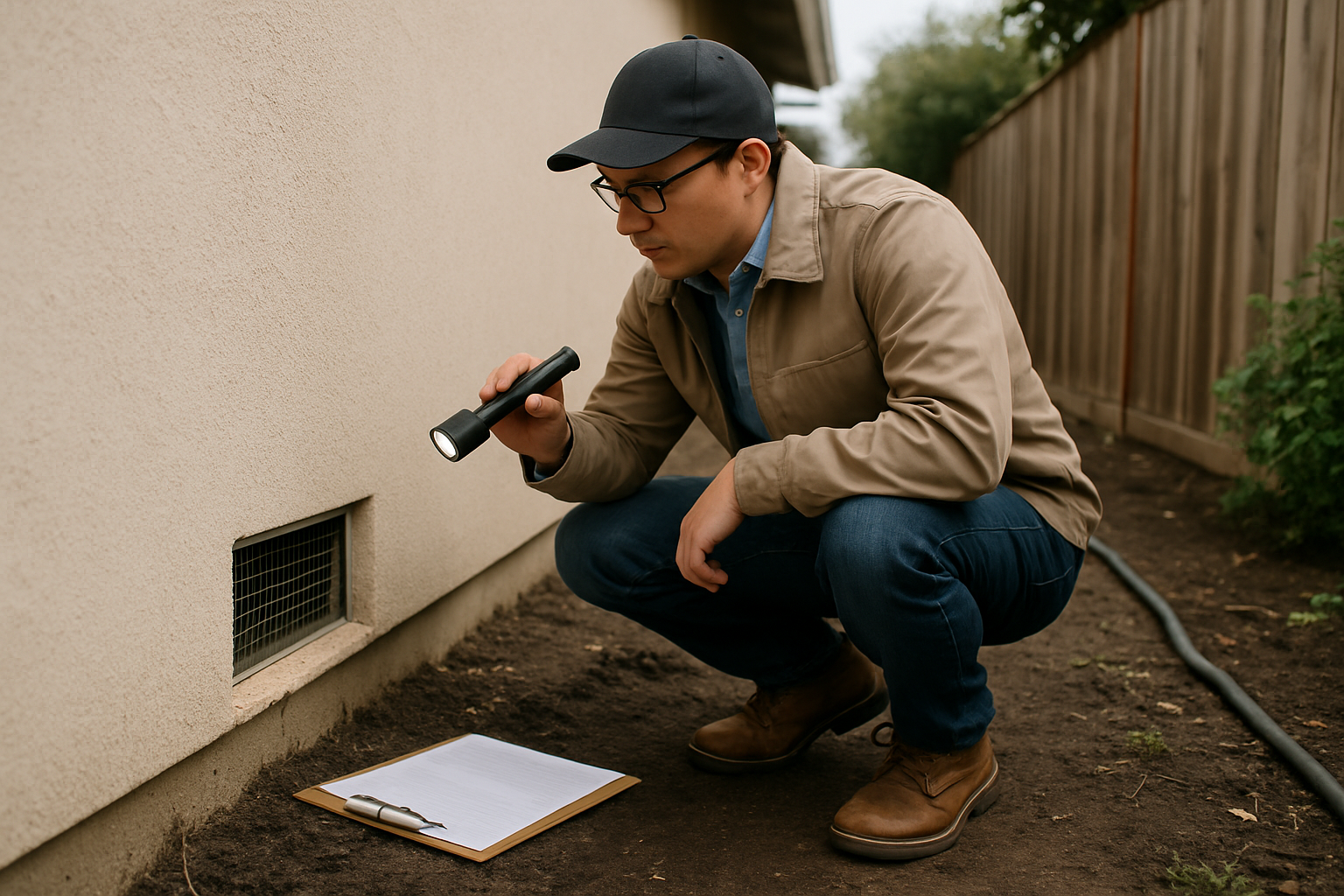
When I walk a Salinas fourplex or a Pacific Grove single family home with a buyer, I am not looking at finishes. I am looking for the things that turn into repeat maintenance calls in year two.
The short list:
- Drainage and grading. Where does water go when it comes off the roof and off the neighbor’s lot?
- Roof and gutters. Not just age. Debris, sagging runs, and downspouts that dump against the foundation.
- Crawl space and venting. Damp soil, standing moisture, dryer runs that vent into the crawl instead of outside.
- Window and door seals. Failed seals show up as condensation, soft sills, and complaints every winter.
- Irrigation. A system running unwatched on a timer is one of the most common hidden costs I see.
- Water heater, panel, and shutoffs. Where they are and whether a vendor can reach them at 9 p.m.
Then there is parking, which buyers almost never bring up and tenants almost always do. On a multi-unit property, I want to know how many real spaces exist, whether they are assigned, and whether a second car per unit is going to end up blocking the driveway.
We have actually had neighbors contact us about cars, trash placement, and driveway conflicts at properties we manage. Those are not small issues. They drive turnover.
Last, I read the unit the way an applicant in that specific pocket of the county would read it. A layout that rents fast in one neighborhood can sit for weeks six miles away.
Climate Is the Best Maintenance Predictor in This County
This is where local knowledge separates a real answer from a generic one. Monterey County is not one climate, and a buyer touring in dry August sees almost none of it.
A home in Pacific Grove or Carmel lives inside the marine layer. Damp air, salt, and surface mildew on a north-facing wall are often a normal effect of the coastal weather pattern the National Weather Service forecasts for the Monterey area, not a defect in the house. The question is whether the property is built and maintained to handle it.
Inland is a different set of problems. A Salinas Valley property deals with valley fog, agricultural dust in the filters and screens, wider temperature swings, and real storm and drainage exposure that changes block by block.
What that means for your inspection:
- Near the coast: exterior paint and caulking, metal fixtures and fasteners, bathroom and laundry venting, air movement in closets and closed rooms
- Inland: roof drainage paths, yard grading, gutters sized for a real storm, HVAC filters and duct sealing, irrigation that runs clean
If you see mildew on a Peninsula wall, it is worth knowing whether that is the marine layer or a maintenance problem before you price the repair. And if you are buying inland, the smartest thing you can do is walk the property the way we walk one before the first storm.
Coastal vs. Inland: Where to Point the Flashlight
Same checklist, different priorities depending on which side of the county the property sits on.
| What to Check | Pacific Grove, Monterey, Carmel, Pebble Beach | Salinas Valley and South County |
|---|---|---|
| Exterior surfaces | Salt and damp on paint, caulking, and metal hardware | Sun and heat cycling, cracked stucco, dried-out trim |
| Drainage and grading | Slow steady moisture, standing damp at foundation | Storm volume, water paths, low spots that pond |
| Crawl space and venting | Air movement and moisture control are the priority | Rodent entry, dust, and dryer venting done wrong |
| Windows and doors | Failed seals, condensation, soft sills | Gaps and weather stripping that let in dust and heat |
| Irrigation | Overwatering an already damp lot | Leaks that quietly run up a large water bill |
| Roof and gutters | Debris and moss on shaded slopes | Capacity and downspout direction during real rain |
Be Honest About the Pro Forma
Most buyers build their numbers on an online rent estimate or on what the seller says they were collecting. Neither one is a signed lease.
Rent bands across this county are unusually wide. An apartment in Salinas sits in one range and a three or four bedroom home on the Peninsula sits in a completely different one, so a countywide average is close to useless for a specific address. If you want the longer version, we wrote about how rent actually gets set and why online estimates miss.
The bigger issue is the line items buyers leave out:
- Vacancy weeks between close and first rent, and again at every turn
- Turn costs such as paint, cleaning, carpet, and small repairs
- Vendor pricing set by what local trades charge here, not by a spreadsheet percentage
- Holding costs during make-ready work, including insurance and utilities
I would rather a buyer walk in with a conservative rent number and be pleasantly surprised than build a model on a best case that never showed up.
From Closing Day to the First Rent Check
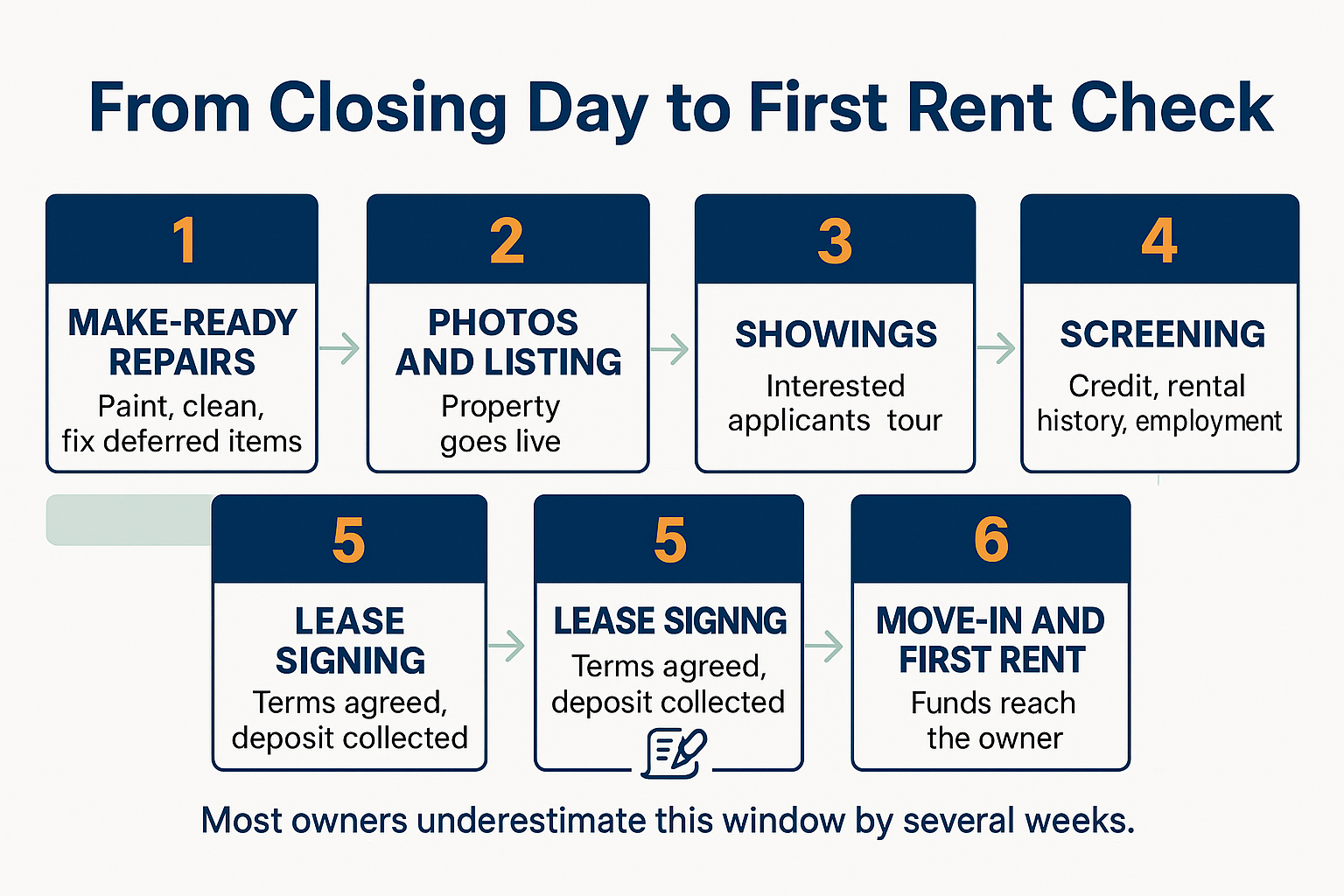
Here is the honest sequence most owners run through after a purchase closes, and where the weeks disappear.
The Timeline Is the Part Buyers Get Wrong
This is the most useful thing in this article, so I will be plain about it. The deed recording is not the starting line for income. It is the starting line for work.
After a close, the sequence usually runs like this:
1. Make-ready repairs and any deferred items from the walkthrough
2. Cleaning and photos
3. Listing goes live and showings begin
4. Applications come in and get screened for credit, rental history, and employment
5. Lease signing, deposit, and first month’s rent collected
6. Move-in evaluation with photos, then rent starts flowing
Owners who wait until closing day to start thinking about step one routinely lose several weeks of income they had already counted on. That is money, not inconvenience, and we broke down what vacancy actually costs a Monterey County owner separately.
Then add the seasonal layer. A December or January close on the Central Coast means marketing in the rain months, when fewer households are moving and showings slow down.
A close timed toward spring lands you in a faster leasing window with more applicants in motion. Fall has its own rhythm too, which we covered in what shifts when you lease after Labor Day.
If you can influence the closing date at all, that choice is worth real money.
Frequently Asked Questions About Buying a Rental in Monterey County
Should I talk to a property manager before I close, or after?
Before, if you can. Once the purchase closes, your options narrow and the carrying costs start. A walkthrough during escrow can change what you offer, what you ask the seller to fix, and what you budget for the first 90 days.
Can you tell me what a property will rent for before I own it?
We can give a specific range for that address based on condition, amenities, and what comparable units in that neighborhood are actually leasing for. What nobody should do is hand you a countywide average and call it a rent estimate.
The property is vacant. Does that make things easier or harder?
Easier to inspect, and easier to schedule repairs. Harder on your wallet, because there is no income covering the holding period. A vacant purchase makes the make-ready timeline the single most important number in your plan.
What if the property I am buying already has tenants in place?
That is a different set of questions entirely, and it deserves its own careful look at the existing lease, deposits, and payment history. It is worth reading about separately before you write the offer.
How much should I set aside for repairs on an older Monterey County property?
It depends far too much on the specific property for me to throw out a number honestly. Age, roof condition, plumbing, and how long the place sat without attention all move it. The walkthrough is what turns that from a guess into a real figure.
Thinking Through a Purchase on the Monterey Peninsula?
We run an in person consultation with a licensed agent that takes roughly 45 minutes to an hour, and it includes a walkthrough of the property, a look at current market trends, notes on upgrades or maintenance worth handling, and a specific rent range for that address. None of that costs a buyer anything at the evaluation stage, and pricing questions are answered directly in that conversation rather than published. Coast & Valley Properties has been doing this from our Main Street office in Salinas since 2009 under a broker owner, and we are reachable at (831) 757-1270 or through the contact form at coastandvalleypm.com whenever the timing suits you.