
7 Essential Questions to Ask Property Management Companies Before You Hire Them
Choosing a property management company in Salinas or Monterey County is a critical decision that directly impacts your ROI, tenant quality, and peace of mind. For high-end property owners and busy investors, this isn't just about finding someone to collect rent; it's about entrusting a valuable asset to a local expert who provides concierge-level service.
The right partner acts as a steward for your property, whether it's a luxury home in Pebble Beach, a multi-family unit in Salinas, or agricultural real estate in South County towns like King City or Soledad. Protecting your investment goes beyond physical maintenance. It's also crucial to consider the administrative details from the very beginning, such as ensuring document integrity in real estate transactions to secure your ownership foundation.
To ensure you find a firm that aligns with your goals of property preservation and financial growth, you need to ask insightful, targeted questions to ask property management companies. This guide provides the seven most crucial questions to help you identify a team that offers the professionalism, transparency, and local expertise that Coast & Valley Properties champions. Use this checklist to vet potential partners and secure the white-glove service your investment deserves.
1. How Do You Define Your Fee Structure and What Services Are Truly All-Inclusive?
Among the most critical questions to ask property management companies is a direct inquiry into their fee structure. A seemingly low percentage-based management fee can be misleading, concealing a web of à la carte charges that can quickly erode your return on investment. For high-value properties in Salinas and Monterey County, it’s imperative to understand precisely what your fee covers to ensure a transparent financial partnership and avoid unwelcome surprises on your owner statement.

Beyond the Base Percentage: Uncovering Hidden Costs
A premium, full-service firm should provide a clear, itemized breakdown distinguishing their base management services from any additional charges. The goal is to move beyond the percentage and evaluate the total cost of ownership under their management. Hidden fees often appear in areas you might assume are included.
For example, some national firms offer a lower base rate but then charge extra for managing HOA communications, a frequent necessity in planned communities like those in Pacific Grove or Carmel. Others may add an administrative surcharge to every maintenance invoice they process, a practice we believe should be an integral part of the core service, not a separate profit center.
What an All-Inclusive Fee Should Cover
At Coast & Valley, our white-glove approach means a more comprehensive fee structure. We consider professional photography and premium marketing listings on top platforms as standard, ensuring your property attracts the highest quality tenants from day one. In contrast, many competitors bill these essential marketing activities separately.
Key Insight: A transparent fee structure is the foundation of trust. If a company is not forthcoming with a detailed list of all potential charges, it can be a significant red flag. Your peace of mind depends on financial clarity and predictability.
To ensure you are comparing services accurately, ask for a written, itemized list of all included and à la carte services. Specifically inquire about costs associated with:
- Tenant Placement: Is there a separate leasing fee?
- Lease Renewals: Is there a charge to renew a lease with an existing, high-quality tenant?
- Eviction Proceedings: What are the administrative costs if an eviction becomes necessary?
- Detailed Inspections: Are move-in, move-out, and periodic inspections included?
Finally, ask a simple but powerful question: “Under what specific circumstances would I see a charge on my statement beyond the management fee and direct repair costs?” Their answer will reveal their commitment to true transparency.
2. What Are Your Tenant Screening Criteria and Process?
The quality of your tenant directly correlates to the performance of your investment property. A robust tenant screening process is a property management company’s first line of defense against potential issues like late payments, property damage, and costly evictions. When evaluating potential managers for your Salinas or Monterey County property, you must dissect their screening methodology to ensure it is thorough, compliant, and designed to attract a superior caliber of resident.

Beyond the Credit Score: A Holistic Applicant Review
A basic credit check is simply not enough, especially for the high-value rental markets in communities like Carmel and Pebble Beach. A premier property manager employs a multi-faceted approach, creating a comprehensive profile of each applicant. This process must be rigorous enough to protect your asset yet fully compliant with all fair housing laws.
For instance, while many national franchise firms might rely on a rigid benchmark like a 650 credit score and income 3x the rent, a more nuanced local expert understands the bigger picture. At Coast & Valley, we conduct in-depth verifications of employment and rental history, contact previous landlords directly, and perform comprehensive background checks that include criminal and eviction history. This detailed process allows us to assess an applicant’s reliability far more accurately than a simple algorithm.
What a Comprehensive Screening Process Includes
A white-glove management firm should be able to articulate its screening standards clearly and provide you with confidence in its process. While not directly applicable to California, understanding how a property management company handles complex tenant issues, such as the UK eviction process for landlords, can demonstrate their depth of knowledge in property law.
Key Insight: A disciplined and well-documented screening process is non-negotiable. It not only secures a reliable income stream but also minimizes liability by ensuring strict adherence to fair housing regulations, a critical consideration for every property owner.
To gauge a company’s diligence, ask these pointed questions:
- Approval Criteria: What are your specific, written criteria for income, credit, and rental history?
- Verification Methods: How do you verify employment and past rental performance? Do you speak directly with previous landlords?
- Marginal Applications: How do you handle an applicant who is strong in one area but weak in another? Is there a process for considering a co-signer?
- Compliance: Can you confirm your process is fully compliant with all federal, state, and local Fair Housing laws?
By digging into the specifics of their approach, you can better understand a company’s commitment to placing only the most qualified tenants in your property. You can learn more about our comprehensive tenant screening checklist to see how we prioritize protecting your investment.
3. How quickly do you respond to maintenance requests and emergencies?
A property management company's approach to maintenance is a direct reflection of its commitment to both tenant satisfaction and the preservation of your asset. Response times for maintenance issues can significantly impact tenant retention, prevent minor problems from escalating into costly repairs, and ultimately protect the value of your Salinas or Monterey County property. Asking about their maintenance protocols is a crucial part of vetting any potential partner.

Defining Urgency and Setting Expectations
A premier management firm will have clear, tiered protocols for handling maintenance. This isn't just about speed; it's about having a system. For instance, a burst pipe at a luxury property in Carmel requires a different level of immediate action than a running toilet in a Soledad rental. You need to understand their exact definitions and guaranteed response times for different categories of issues.
Many national chains or tech-focused platforms offer online portals, which provide real-time tracking of requests. While convenient, it’s vital to know the human-powered process behind the technology. A digital acknowledgment is meaningless without a qualified, local vendor being dispatched promptly.
What to Ask to Gauge True Responsiveness
Drilling down into the specifics of their maintenance process reveals their operational efficiency and the quality of their vendor network. When inquiring about their maintenance protocols, ask if they utilize a thorough, perhaps even a commercial-grade maintenance checklist, to ensure all aspects of your property are regularly inspected and cared for. This proactive approach is a hallmark of top-tier management.
Key Insight: A company's maintenance response system is the lifeline of your investment. It must be fast, reliable, and backed by a network of trusted, vetted vendors who can perform quality work at fair prices, protecting both your tenants and your bottom line.
To get a clear picture of their capabilities, ask these pointed questions:
- What are your specific, guaranteed response times for acknowledging a routine request and an emergency request?
- How do you define an emergency, and what is your after-hours and holiday procedure?
- Can you describe your vendor vetting and approval process? Are they licensed, insured, and familiar with the nuances of Monterey County properties?
- Do you have an in-house maintenance team, a preferred vendor list, or both?
Finally, ask for access to their rental property maintenance checklist to understand their proactive strategy for preserving your property's long-term health and value. A firm that can provide this documentation demonstrates a systematic and professional approach to property care.
4. What is Your Average Vacancy Rate and Time to Re-Lease?
A prolonged vacancy is the single greatest threat to your property's profitability. This is why one of the most revealing questions to ask property management companies is a direct inquiry into their vacancy and re-leasing metrics. These figures are not just numbers; they are a direct reflection of a company's marketing prowess, pricing strategy, and operational efficiency in the competitive Monterey County rental market.
Beyond the Market Average: Demonstrating Efficiency
Any management firm can quote generic market averages, but a premium provider will have specific data for their portfolio, broken down by property type and location. A low vacancy rate indicates they are proactive, beginning the marketing process for an upcoming vacancy long before the current tenant moves out. It shows they understand how to price a property in Salinas competitively versus one in Monterey to attract immediate interest without leaving money on the table.
For instance, many national firms might boast a low average re-lease time, but this can be misleading if their portfolio is concentrated in high-demand urban centers. An expert in the local market will know the seasonal nuances of renting in coastal communities versus agricultural hubs like Soledad or King City, adjusting their strategy accordingly to minimize downtime.
The Balance Between Speed and Quality
Quickly filling a vacancy is pointless if it leads to a costly eviction down the road. The true measure of a top-tier management company is their ability to place a high-quality tenant swiftly. Companies that leverage modern tools like virtual tours and seamless online applications often reduce physical vacancy periods significantly by allowing prospective tenants to view and apply from anywhere.
Key Insight: The time-to-re-lease metric is a powerful indicator of a management company’s proactive systems. A firm that consistently fills vacancies quickly and with qualified tenants demonstrates a mastery of local marketing, tenant screening, and operational readiness.
When you discuss this topic, get specific. Ask for data relevant to your type of property and drill down into their process:
- Property-Specific Data: What is your average vacancy period for single-family homes in my specific zip code?
- Proactive Marketing: When do you start marketing a property once a tenant gives notice?
- Listing Strategy: Which premium platforms do you use for listings, and is professional photography included?
- Speed vs. Screening: How do you ensure your tenant screening process remains thorough when trying to fill a unit quickly?
Your goal is to find a partner who understands that every day a high-value property sits empty, your return on investment diminishes. Their ability to minimize this gap is a crucial component of white-glove service.
5. What technology platforms do you use for property management?
In today's digital world, one of the most revealing questions to ask property management companies is about the technology they leverage. Sophisticated software is no longer a luxury; it's the engine of efficient operations, transparent communication, and enhanced tenant services. For owners of high-value properties in Salinas and Monterey County, the right tech stack ensures you have real-time, 24/7 access to your investment's performance, from financial reporting to maintenance updates.
The Power of a Modern, Integrated System
A premier property management firm invests in robust, integrated software to streamline every facet of their service. Antiquated methods involving spreadsheets and manual rent collection are inefficient and create a higher risk of errors, costing you time and money. Modern platforms like AppFolio or Buildium automate critical tasks, providing a seamless experience for both owners and tenants.
For instance, a unified system allows tenants to pay rent online, submit maintenance requests with photos directly from their phone, and access their lease documents at any time. For you, the owner, this same system provides a secure online portal where you can view detailed financial statements, track maintenance progress, and access important documents whenever you need them. This level of digital convenience is a hallmark of a white-glove service provider.
What to Look for in a Tech Platform
A manager's choice of software directly impacts your experience and ROI. A company committed to excellence will use a platform that offers more than just basic accounting. Their technology should serve as a central hub for communication, operations, and financial transparency, ensuring nothing falls through the cracks. Learn more about how different software impacts service delivery by exploring a property management software comparison.
Key Insight: A property manager’s investment in technology is a direct reflection of their commitment to efficiency, security, and owner transparency. A lack of modern tools can signal operational weaknesses and an outdated approach to service.
When evaluating a company's technology, be sure to ask for specifics:
- Owner & Tenant Portals: Request a live demo. Is the interface user-friendly and intuitive?
- Mobile Functionality: Do they offer a dedicated mobile app for owners and tenants? What are its user ratings?
- Maintenance & Inspections: How does the system track maintenance requests and log inspection reports with photos and notes?
- Data Security: What measures are in place to protect your financial data and your tenants’ personal information?
Finally, ask them to walk you through how their technology streamlines the tenant lifecycle, from online applications and digital lease signing to automated rent reminders and efficient move-out processing. Their answer will tell you everything you need to know about their operational sophistication.
6. Can You Provide References from Current Property Owners?
While marketing materials and initial presentations showcase a company’s ideal image, one of the most revealing questions to ask property management companies is for client references. Speaking directly with current property owners offers an unfiltered view of a firm's day-to-day performance, reliability, and service quality. For investors entrusting high-value assets in Monterey County, this step validates marketing claims and uncovers the true nature of the partnership you can expect.
Beyond Testimonials: The Power of a Live Conversation
Polished testimonials on a website are valuable, but a direct conversation allows you to probe deeper. A premier management firm should be proud of their client relationships and readily provide a list of references. Hesitation or an inability to produce more than one or two contacts is a significant red flag, suggesting a potential lack of satisfied long-term clients or a system that doesn't foster strong partnerships.
Successful companies are often prepared to connect you with current clients who own a variety of properties, from single-family homes in Salinas to luxury estates in Carmel. This demonstrates confidence and a proven track record across different asset types and owner needs. It shows they understand the unique demands of high-net-worth property management and have built the trust to back it up.
How to Get the Most from Your Reference Checks
When you connect with a reference, go beyond generic questions. Your goal is to understand their specific experience with communication, financial reporting, and problem resolution. A prepared list of questions will yield the most insightful answers.
Key Insight: A company’s willingness to provide multiple, relevant references is a direct reflection of their confidence in their service quality. The best firms have built a roster of advocate clients who are happy to share their positive experiences.
To conduct a thorough reference check, be sure to:
- Request Relevant Contacts: Ask for references with properties similar to yours and who share your investment goals.
- Seek Varied Tenures: Inquire if you can speak with both a new client (onboarded in the last year) and a long-term client (5+ years).
- Ask About Specifics: Prepare questions like, "Can you describe a time they handled a difficult maintenance issue?" or "How timely and clear is your monthly financial statement?"
- Inquire About Weaknesses: A powerful question is, “If there was one thing you could change or improve about their service, what would it be?” An honest answer can be incredibly telling.
7. What are your fees for leasing, maintenance markups, and other services?
While the monthly management percentage is a headline number, it's often the ancillary fees that reveal the true cost of a property management partnership. For savvy investors in Monterey County, understanding every potential charge is a non-negotiable part of the due diligence process. A company’s approach to these extra fees for leasing, maintenance, and administrative tasks is a direct reflection of its business model and commitment to transparency.
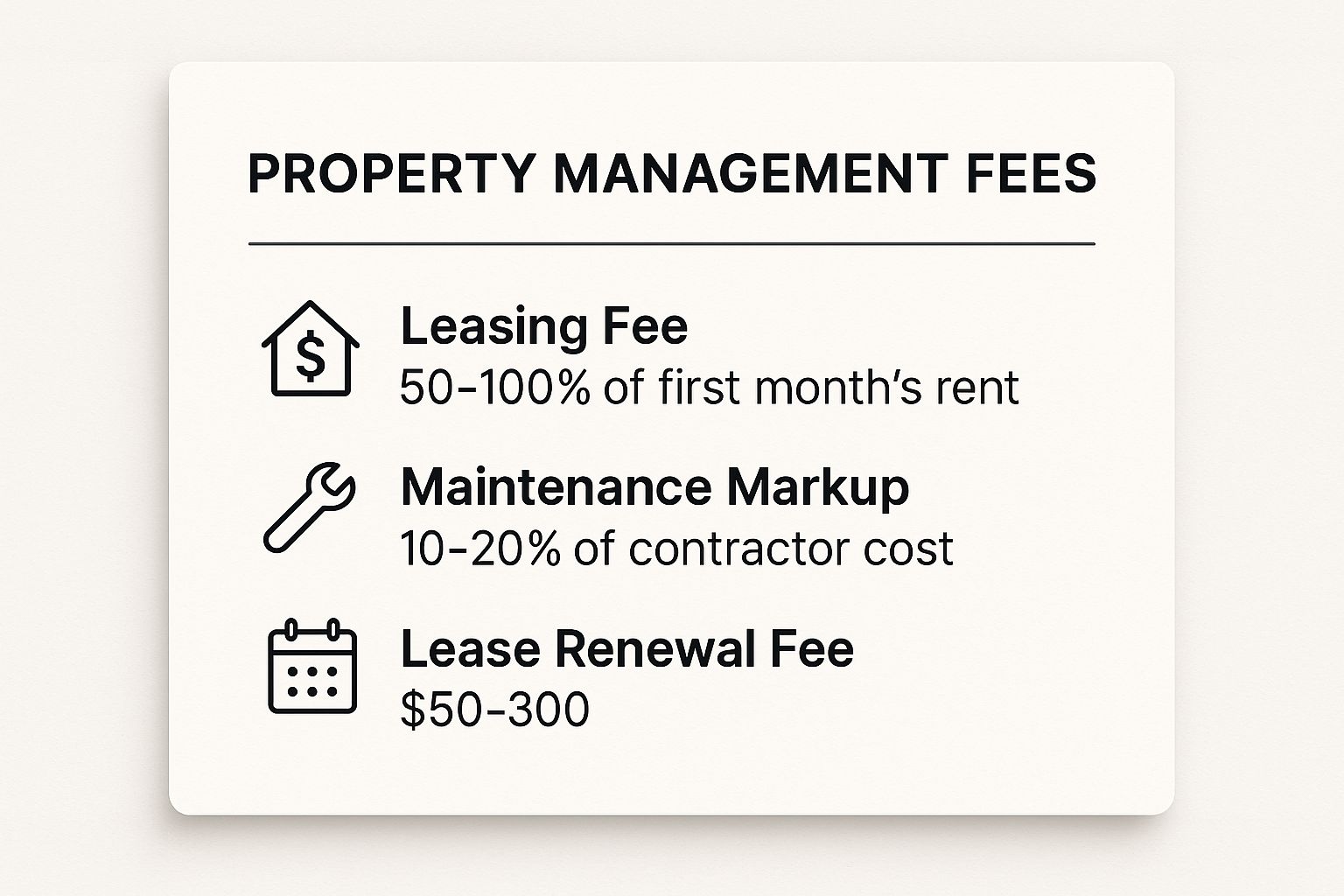
This quick reference visualizes common industry fee ranges that can significantly affect your net operating income if not clearly defined upfront.
Deconstructing the 'Extra' Charges
A premier management firm should never hide revenue streams in the fine print. You need to ask direct questions about costs beyond the base fee, as these can accumulate quickly and create friction. For example, a high leasing fee might incentivize tenant turnover rather than retention, which is counterproductive for long-term ROI.
Similarly, a significant maintenance markup can be a major point of contention. While coordinating repairs is a core management duty, some firms add a 10-20% surcharge on every contractor invoice. At Coast & Valley, we believe this practice creates a conflict of interest. Our philosophy is to pass through maintenance costs directly, ensuring our focus remains on finding the most cost-effective solution for you, not on profiting from repairs.
What a Comprehensive Fee Schedule Reveals
A clear, itemized fee schedule is essential for an accurate financial forecast. It’s a key component of any solid agreement and one of the most important things to review in your property management contract in California. If a company hesitates to provide one, consider it a serious warning sign.
Key Insight: A company's revenue model tells a story. If a firm relies heavily on transactional fees like leasing and maintenance markups, their interests may not be fully aligned with yours, which should be to secure and retain high-quality, long-term tenants.
When vetting a company, specifically ask them to outline their charges for:
- Tenant Placement Fee: Typically 50-100% of the first month's rent, this is a standard one-time cost for finding and screening a new tenant.
- Lease Renewal Fee: Does the company charge you when a great tenant decides to stay? Fees can range from $50 to over $300, penalizing you for successful retention.
- Maintenance Coordination/Markup: Ask if they add a percentage to vendor invoices. A transparent firm will pass these costs through without a surcharge.
- Routine Inspections: Are drive-by or annual interior inspections included, or do they come with an extra fee, often between $50 and $150?
By demanding a complete fee schedule, you can project your total annual management costs with greater accuracy and choose a partner whose financial model aligns with your goals for long-term profitability.
7 Key Questions Comparison for Property Management Firms
| Item | Implementation Complexity 🔄 | Resource Requirements ⚡ | Expected Outcomes 📊 | Ideal Use Cases 💡 | Key Advantages ⭐ |
|---|---|---|---|---|---|
| What services are included in your management fee? | Medium – varies by company and package | Moderate – requires ongoing coordination of multiple services | Clear cost structure and service expectations | Cost evaluation and comparing management firms | Prevents surprise charges; establishes transparency |
| What are your tenant screening criteria and process? | High – detailed checks and compliance needed | Significant – credit, background, income verification | Higher tenant quality; reduced turnover and risk | Tenant quality control and risk mitigation | Ensures legal compliance; reduces problem tenants |
| How quickly do you respond to maintenance requests and emergencies? | Medium – requires reliable vendor network and protocols | High – must maintain 24/7 readiness and communication | Improved tenant satisfaction and property upkeep | Enhancing tenant retention and property condition | Fast responses prevent costly damages; boosts tenant loyalty |
| What is your average vacancy rate and time to re-lease? | Medium – depends on marketing and operational strategy | Moderate – marketing resources and market knowledge needed | Lower vacancies; faster re-leasing | Maximizing rental income and minimizing downtime | Reflects effectiveness in occupancy management |
| What technology platforms do you use for property management? | Variable – depends on software integration and training | Moderate to High – investment in platforms & user onboarding | Increased transparency and operational efficiency | Streamlined management and real-time reporting | 24/7 access; improved communication and accuracy |
| Can you provide references from current property owners? | Low – mostly communication and verification effort | Low – coordination to gather and share references | Validated company performance and reliability | Due diligence before engagement | Honest insights; helps assess service quality |
| What are your fees for leasing, maintenance markups, and other services? | Medium – requires detailed fee structure management | Low to Moderate – accounting and communication | Transparent budgeting; avoids unexpected costs | Comprehensive cost analysis | Helps accurate cost comparison; prevents surprises |
Partner with a Local Leader Who Has the Right Answers
Selecting the right property management company is one of the most significant decisions you will make as a real estate investor. It's a partnership that directly impacts your property's profitability, its long-term value, and your personal peace of mind. The comprehensive list of questions to ask property management companies provided in this guide is your strategic roadmap to cutting through marketing claims and assessing the true capabilities of a potential partner. Your goal is not just to hire a manager but to align with a firm that shares your commitment to excellence and understands the unique dynamics of the Monterey County market.
By moving beyond surface-level inquiries, you empower yourself to identify a team that operates with transparency, leverages modern technology for your benefit, and possesses the local expertise necessary to navigate everything from Salinas's rental market trends to Pacific Grove's specific maintenance needs. The right answers to these questions will reveal a company's core operational philosophy.
Key Takeaways for Choosing Your Management Partner
Your vetting process should be built on three core pillars uncovered by these critical questions:
- Financial Transparency and ROI: A top-tier firm will provide a clear, itemized fee structure and demonstrate how their services, from tenant placement to proactive maintenance, directly contribute to maximizing your return on investment. Vague answers about costs or an inability to explain their value proposition are major red flags.
- Operational Excellence and Proactive Care: How a company handles tenant screening, maintenance response, and vacancy rates is a direct reflection of its efficiency. Look for firms with documented processes, established vendor relationships in areas like Soledad or King City, and a proven track record of minimizing downtime and preserving property condition.
- Communication and Technology: In today's market, 24/7 access to information is non-negotiable. A leading company will utilize a robust owner portal, provide regular, detailed reporting, and ensure you are always informed. Their investment in technology is an investment in your convenience and confidence.
Ultimately, choosing a property management partner is an investment in your asset's future. The time you spend now, diligently asking these questions and evaluating the responses, will pay dividends for years to come. For property owners in Salinas and across the Monterey Bay Area, the ideal partner is one who not only has the right answers but embodies them through their actions every single day. Seek a leader who offers a concierge-level experience, grounded in deep local roots and a proven commitment to protecting and growing your wealth.
Ready to partner with a firm that welcomes these tough questions and delivers transparent, high-performance results? Discover how Coast & Valley Properties provides the sophisticated, full-service management that high-end property owners in Monterey County trust. Contact us today for a comprehensive evaluation of your property and experience the peace of mind that comes from working with a true local expert.