
Top Rental Property Investment Strategies for Monterey County Investors
For discerning property owners in Salinas, Monterey, and across the Monterey Bay Area, real estate is more than just an asset; it's a foundation for long-term wealth. Navigating this unique market, from luxury homes in Pebble Beach to the agricultural heartland of South County towns like Soledad and Gonzales, requires a smart approach. Generic advice won't help you maximize returns on a high-end property portfolio.
This guide is for the busy professional and serious investor who wants strategic, time-saving solutions. We will explore nine proven rental property investment strategies, providing clear, actionable steps for our local area. We'll cover everything from the classic Buy and Hold method to short-term rentals in popular coastal spots like Pacific Grove. To get started, it's also important to understand your rental property financing options to maximize your portfolio's potential.
Our goal is to give you the knowledge to make smart decisions that match your financial goals. Whether you live out of town and need local expertise or you're a local investor wanting to simplify management, this article offers a clear roadmap. Learn how to increase your return on investment (ROI), protect your property's value, and use professional management to save your most valuable resource: your time. Let's look at the methods that build lasting wealth.
1. The Buy and Hold: Your Foundation for Generational Wealth
The Buy and Hold strategy is a classic for a reason. It is a long-term approach where you buy a property and hold it for years, or even decades. You build wealth in two ways: getting consistent monthly cash flow from rent and watching the property's value grow over time.

Unlike short-term "flipping," the goal here is to have your tenants’ rent payments cover your mortgage, property taxes, insurance, and maintenance. Any money left over is your passive cash flow, while the property itself becomes a major asset. For busy investors and out-of-town owners in Monterey County, this method offers a stable way to grow a portfolio, especially with a professional property manager handling the details.
How to Implement This Strategy
A successful Buy and Hold strategy starts with careful planning. The key is picking the right property in a strong market.
- Step 1: Choose the Right Location. Focus on desirable neighborhoods with low vacancy rates. In our region, this could be a luxury single-family home in Carmel, a multi-unit building near agricultural employers in Salinas, or a condo that appeals to military staff in Monterey.
- Step 2: Do the Math. Before you buy, run the numbers. A simple starting point is the 1% rule, which says the monthly rent should be at least 1% of the purchase price. But you must also include all local costs. See what your expenses might be by using our property management cost calculator.
- Step 3: Hire Professional Management. For a busy professional, managing a property yourself is like a second job. Partnering with a trusted firm like Coast & Valley ensures your asset is protected, rent is collected on time, and great tenants are found. This makes your investment truly passive and secure.
2. Fix and Flip Strategy
The Fix and Flip strategy is a short-term, active investment approach. It's the opposite of the long-term Buy and Hold model. With this method, you buy an undervalued property, renovate it to increase its market value, and then sell it quickly for a profit. The idea is to "force appreciation" through smart improvements instead of waiting for the market to go up.

For investors in Monterey County, this can be a great way to generate cash. The goal is to find a property where the purchase price plus renovation costs are much lower than its after-repair value (ARV). This hands-on strategy requires local market knowledge, project management skills, and an eye for what buyers in Salinas or Carmel want.
How to Implement This Strategy
A successful flip depends on precise math, speed, and quality work. If you miss any of these, your profit can disappear.
- Step 1: Know Your Market and Numbers. Before you make an offer, check recent sales of similar homes ("comps") in the area to find a realistic ARV. Your purchase price and renovation budget must leave a healthy profit after you pay for holding costs (like taxes and insurance), financing, and closing costs.
- Step 2: Build a Reliable Team. Your success depends on your contractors. Find licensed and insured professionals in the Salinas and Monterey area that you can trust. A good team makes sure work is done on time, on budget, and correctly, which helps the sale go smoothly.
- Step 3: Focus on High-ROI Renovations. Not all upgrades are worth the money. Focus your budget on what buyers value most: kitchens, bathrooms, and curb appeal. These updates make the biggest impact and give you the best return. It's also smart to know the tax rules; you can find helpful info on tax deductions for landlords.
3. BRRRR Strategy (Buy, Rehab, Rent, Refinance, Repeat)
The BRRRR method is one of the more advanced rental property investment strategies, ideal for investors who want to grow their portfolio quickly. It stands for Buy, Rehab, Rent, Refinance, Repeat. This powerful strategy lets you buy a property that needs work, increase its value through renovations, and then pull your initial investment back out to use on your next project.
The big difference here is that your down payment doesn't stay tied up in the property. BRRRR is designed to be a cycle of growth. For investors in Monterey County, this method can quickly build a portfolio of cash-flowing properties, turning a fixer-upper in Salinas or an outdated duplex in Seaside into a top-performing rental with very little of your own money left in the deal.
How to Implement This Strategy
The BRRRR strategy requires careful planning, a great team, and a solid understanding of local property values. A mistake at any step can break the cycle.
- Step 1: Buy Below Market Value. This first step is key. You must buy a property for less than it's worth. This creates "forced equity" right away and sets you up for a profit. Look for homes that need cosmetic updates, not major structural repairs.
- Step 2: Rehab for Maximum ROI. Your renovations need to add more value than they cost. Focus on high-impact upgrades like modern kitchens and bathrooms that will boost the property's After Repair Value (ARV). Keep detailed records of all your spending for the bank.
- Step 3: Secure a Tenant and Refinance. Once the work is done, find a great tenant to create a steady income. Then, you go to a lender for a cash-out refinance based on the property's new, higher value. The goal is to get back your original purchase and rehab money, leaving you with a cash-flowing property. Make sure it still generates positive income after the new mortgage payment; you can learn more about real estate cash flow to be sure.
The infographic below shows how the BRRRR strategy works as a cycle.
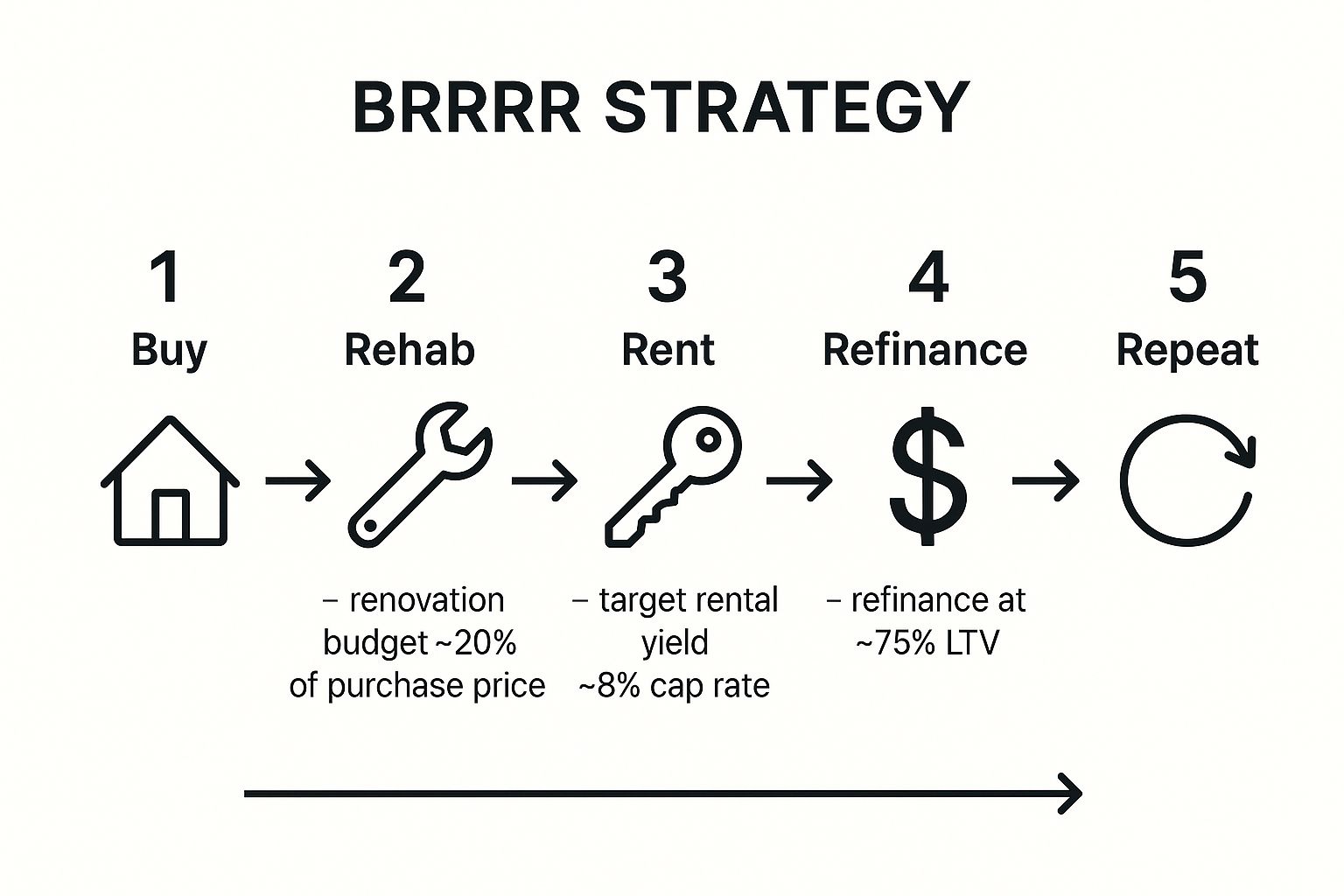
This visual shows how an investor can use a bank's money, based on the new property value, to buy more properties, making it a system for building wealth.
4. Short-Term Rental/Airbnb Strategy
The Short-Term Rental (STR) strategy means renting out a property for short stays, from a few nights to a few weeks. This is popular with tourists and business travelers and can bring in much higher nightly rates than a standard long-term lease. The goal is to earn more money by taking advantage of high-demand seasons, like summer in Monterey or car week in Pebble Beach.

Unlike a long-term lease, the STR model requires active management of bookings, guest questions, and frequent cleaning. For investors with properties in prime Monterey County locations like Carmel-by-the-Sea or Pacific Grove, this can be a very profitable rental property investment strategy. However, it is a lot of work, making professional management a smart choice for owners who don't live nearby.
How to Implement This Strategy
To succeed with short-term rentals, you need to provide great service, have a good location, and follow local laws.
- Step 1: Check Local Rules. This is the most important first step. Many cities in Monterey County, like Monterey and Carmel, have strict rules or even bans on STRs in some areas. You must research and follow all local laws, permit requirements, and taxes before you invest.
- Step 2: Create a Great Guest Experience. High ratings are everything. Invest in professional photos, stylish furniture, and nice amenities. A simple check-in process, a spotless home, and quick communication are key to getting five-star reviews.
- Step 3: Use Professional Management. The daily work of an STR can be a full-time job. A management company can handle guest screening, 24/7 communication, professional cleaning, and pricing to maximize your income. For a busy owner, this turns a high-effort business into a high-yield investment.
5. House Hacking Strategy
House Hacking is a smart and popular rental property investment strategy, especially for new investors. The idea is simple: you buy a multi-unit property, live in one unit, and rent out the others. Your tenants' rent can then cover most, or all, of your mortgage. This means you could live for free or for very cheap.
You can also house hack a single-family home in a place like Salinas or Monterey. For example, you could rent out spare bedrooms or build an Accessory Dwelling Unit (ADU) to create rental income. This strategy makes it easier to get started in real estate investing by turning your own home into an asset that makes you money.
How to Implement This Strategy
Successful house hacking means finding a balance between being a homeowner and a landlord, especially since you live next to your tenants.
- Step 1: Pick the Right Property. Look for a property that you would be happy to live in but that will also attract good renters. This could be a duplex in a quiet Monterey neighborhood or a larger home near a college where you can rent by the room.
- Step 2: Use Owner-Occupant Loans. A big benefit of house hacking is getting access to better loans, like FHA loans, which have low down payments. You just have to live in the property for at least one year.
- Step 3: Set Clear Boundaries and Screen Tenants. Since your tenants are also your neighbors, careful tenant screening is a must. It's important to have a professional relationship from the start. A clear lease agreement should outline rules for noise, guests, and shared spaces. Our professional tenant placement services can help you find reliable tenants, which is key for a peaceful living situation.
6. Wholesale Real Estate Strategy
The Wholesale Real Estate Strategy is a short-term approach where you find discounted properties, get them under contract, and then sell the purchase rights to another investor. A wholesaler never actually buys or renovates the property. Instead, they act as a middleman, earning a fee for connecting a motivated seller with a buyer.
This is a great option for investors who want to make money quickly without the risks of owning property. For example, a wholesaler in Monterey County might find a distressed home in Salinas, put it under contract for a price well below market value, and then assign that contract to a flipper who has the money to fix it up and sell it.
How to Implement This Strategy
Success in wholesaling depends on speed, marketing, and a strong network. It requires different skills than traditional investing, with a focus on finding deals and making connections.
- Step 1: Build Your Buyer's List First. Before you look for properties, you need a list of cash buyers. These are often fix-and-flip investors. Knowing what they're looking for helps you find deals you know you can sell fast.
- Step 2: Find Off-Market Deals. The best wholesale deals are usually not listed online. Wholesalers use direct mail, networking, and online ads to find motivated sellers, like people facing foreclosure or those who inherited a property they don't want.
- Step 3: Understand the Legal Side. Wholesaling involves assigning contracts, which is a legal process. It's smart to work with a real estate attorney to make sure your contracts are correct and you're following all the rules. This protects you and ensures the deal closes smoothly for everyone.
7. Real Estate Investment Trusts (REITs): The Ultimate Hands-Off Approach
For investors who want to be in the real estate market without owning physical property, Real Estate Investment Trusts (REITs) are a great option. A REIT is a company that owns or finances income-producing real estate. This strategy lets you invest in a portfolio of properties, like apartment buildings or shopping centers, just like you would buy stocks.
This is one of the most passive rental property investment strategies you can find. It's perfect for busy professionals who want real estate returns without the work of managing tenants or property. REITs must pay out at least 90% of their taxable income to shareholders as dividends. This provides a steady income, similar to cash flow from a rental, but with much less hassle.
How to Implement This Strategy
Investing in REITs is different from buying a duplex in Salinas, but you still need to do your research.
- Step 1: Pick Your Sector. REITs focus on different property types. You can invest in residential REITs, retail REITs, or even niche areas like cell towers and healthcare centers. Spreading your investment across different sectors can lower your risk.
- Step 2: Analyze Key Numbers. Instead of looking at typical earnings, look at a REIT's Funds From Operations (FFO). FFO gives a better picture of a REIT's cash flow and its ability to pay dividends.
- Step 3: Choose How to Invest. You can buy shares of individual REITs on the stock market or invest in REIT ETFs (Exchange-Traded Funds). ETFs like the Vanguard Real Estate ETF (VNQ) give you instant ownership in hundreds of properties, making them a popular choice.
- Step 4: Watch Economic Trends. REIT stock prices can be affected by interest rates. When rates go up, the dividends from REITs might seem less attractive compared to other investments, so it's good to keep an eye on the market.
8. Mobile Home Park Investment Strategy
The Mobile Home Park Investment Strategy is a unique niche in commercial real estate. In this approach, you buy the land and infrastructure of a mobile home park, but the residents own their own homes. This is powerful because tenants are less likely to move, which means lower turnover and more stable cash flow for you as the investor.
This model is different from other rental property investment strategies because you are renting out the land, not the home. For investors in areas like Monterey County, where land is valuable and housing is in high demand, this can be a very profitable strategy. It offers strong, steady returns and is managed differently than typical apartment buildings.
How to Implement This Strategy
Investing successfully in mobile home parks requires a good understanding of how they work, from operations to local rules.
- Step 1: Do Your Homework. Before you buy, carefully check the park's infrastructure, including water, sewer, and electrical systems. Understand the local zoning laws in places like Salinas or other parts of Monterey County, as these can affect how you operate the park.
- Step 2: Analyze the Finances. The business model is based on collecting lot rent from the homeowners. Look at the current rent payments, how many lots are filled, and if there's room for reasonable rent increases. Since tenants own their homes, they tend to stay longer, which makes occupancy stable.
- Step 3: Consider Professional Management. Managing a mobile home park has unique challenges, from handling utility bills to enforcing community rules. For an owner who is busy or lives far away, hiring a management company with experience in this area is key. They can ensure everything runs smoothly and protect the long-term value of your investment.
9. The Commercial Real Estate Strategy
Investing in commercial real estate is a big step for investors looking to grow beyond residential properties. This strategy involves buying income-producing assets like office buildings, retail centers, or warehouses. These investments usually have longer leases and require more money upfront, but they offer a different risk and reward profile that appeals to serious investors.
For high-net-worth investors in Monterey County, commercial properties can provide higher income streams. Tenants are often businesses that have a good reason to keep the property in great shape. From an office building in downtown Monterey to a retail strip in Salinas with a national brand as a tenant, this strategy can diversify your portfolio and provide stable income.
How to Implement This Strategy
A successful commercial real estate strategy requires different skills and research than residential investing. The focus is on business tenants and long-term leases.
- Step 1: Focus on Tenant Quality. The stability of your investment depends on your tenants. Look for properties with reliable, long-term tenants like national retail stores, established professional firms, or medical offices near hospitals. A strong list of tenants reduces the risk of vacancies.
- Step 2: Analyze the Market and Leases. Understand the local economy and how it affects your property type. A warehouse near the agricultural hubs in South County is different from a retail space in Carmel. You also need to understand commercial leases, like a triple net (NNN) lease, where the tenant pays for taxes, insurance, and maintenance.
- Step 3: Hire Specialized Management. Managing a commercial property is complex. It involves lease administration, strict rules, and special vendor relationships. Partnering with a management firm that knows this sector is essential. To learn more, check out this comprehensive commercial property management guide. This professional oversight will protect your large investment.
Rental Property Investment Strategies Comparison
| Strategy | Implementation Complexity 🔄 | Resource Requirements ⚡ | Expected Outcomes 📊 | Ideal Use Cases 💡 | Key Advantages ⭐ |
|---|---|---|---|---|---|
| Buy and Hold Strategy | Moderate 🔄 | High capital, mortgage financing ⚡ | Steady cash flow, long-term appreciation 📊 | Long-term wealth builders, passive income seekers | Predictable income, tax benefits, inflation hedge ⭐ |
| Fix and Flip Strategy | High 🔄 | Capital-intensive, renovation skills ⚡ | Quick profits from renovations 📊 | Hands-on investors, quick profit seekers | Fast returns, scalable, creative approach ⭐ |
| BRRRR Strategy | Very High 🔄 | Capital, renovation, refinancing ⚡ | Portfolio growth with cash flow & equity 📊 | Experienced investors, portfolio scalers | Maximizes ROI, combines flipping & rental benefits ⭐ |
| Short-Term Rental/Airbnb | High 🔄 | Active management, marketing ⚡ | Higher income with seasonal fluctuations 📊 | Tech-savvy, tourist market investors | Higher income potential, dynamic pricing ⭐ |
| House Hacking Strategy | Low to Moderate 🔄 | Low capital, living + rental management ⚡ | Reduced living expenses, equity building 📊 | Beginners, limited capital, first-time investors | Low upfront cost, beginner-friendly ⭐ |
| Wholesale Real Estate | Low to Moderate 🔄 | Minimal capital, strong network ⚡ | Quick fees from contract assignments 📊 | Entrepreneurs, marketers, low-capital investors | Very low capital needed, fast turnaround ⭐ |
| REITs Strategy | Low 🔄 | Small capital, stock purchase ⚡ | Dividend income, real estate exposure 📊 | Passive investors, small capital, dividend focus | High liquidity, professional management ⭐ |
| Mobile Home Park Investment | High 🔄 | Capital, specialized knowledge ⚡ | High cash flow, recession-resistant 📊 | Experienced investors, niche asset class | Strong cash flow, low turnover ⭐ |
| Commercial Real Estate | Very High 🔄 | Large capital, professional management ⚡ | High income, long-term stability 📊 | Experienced, high-capital investors | Higher returns, tenant-paid maintenance ⭐ |
Your Partner in Monterey County Real Estate Success
Navigating the world of real estate takes more than just money; it requires a clear vision and a solid plan. In this guide, we've covered a variety of rental property investment strategies, each offering a different way to build wealth. From the steady growth of the Buy and Hold method to the quick equity building of the BRRRR strategy, the best approach for you depends on your financial goals and how hands-on you want to be.
For investors in Monterey County—whether you're renovating a home in Salinas or managing a luxury short-term rental in Pacific Grove—the basics are the same. Success comes from paying attention to the details: careful property analysis, smart financing, and excellent management. A great strategy can fail if you don't have the right team on the ground to handle the daily work of owning property.
From Strategy to Sustainable Success
The true value of an investment is not just in buying it, but in how it performs over time. An effective strategy needs to be flexible. It must adapt to local market changes and the needs of high-value properties. This is where professional, local expertise is so important.
Key Takeaway: Choosing the right investment strategy is the first step. The second, and more important step, is putting it into action with a partner who understands the unique Monterey Bay Area market. Your success depends on proactive maintenance, quality tenant relationships, and smart financial oversight.
As an out-of-town owner or a busy professional, you can't let small problems eat away at your profits. Your focus should be on finding your next opportunity, not taking late-night maintenance calls. This is where a top-tier property management firm helps bring your chosen rental property investment strategies to life and ensures they deliver the returns you expect.
Your Actionable Next Steps
Turning this knowledge into action will make you a more strategic investor. Here are your next steps:
- Review Your Portfolio: Look at your current properties. Does your approach still fit your long-term goals? Could you refinance a property to fund a new BRRRR project?
- Analyze Your Local Market: Learn more about the different areas in Salinas and Monterey County. A short-term rental that works well in Carmel might not be the best choice for a family-focused neighborhood in Soledad.
- Consult with a Professional: The most successful investors build a team of experts. Talk to a property management partner who can not only handle day-to-day tasks but also provide advice to help you improve your portfolio's performance and protect your assets.
Building a successful real estate portfolio is a long-term journey. It requires patience, hard work, and knowing when to ask for help. By partnering with a team that offers top-notch service and deep local knowledge, you can help your investment reach its full potential, securing your financial future while freeing you to focus on what matters most.
Ready to elevate your investment strategy with expert management? Partner with Coast and Valley Properties to ensure your Monterey County assets are protected, profitable, and professionally managed. Visit us at Coast and Valley Properties to schedule a consultation and discover how our white-glove service can help you achieve your real estate goals.