
A Property Owner’s Guide to the Warranty of Habitability in California
In California, every residential lease includes an unspoken promise from the landlord to the tenant: the implied warranty of habitability. This is a built-in guarantee that the rental property will be safe, sanitary, and livable for the entire tenancy. It is a fundamental, non-negotiable right for every tenant, meaning it cannot be waived or signed away in a lease agreement.
Protecting Your Monterey County Investment

For investors and owners of high-end property in Monterey County, this warranty is more than a legal requirement—it’s the bedrock of a secure and profitable real estate investment. A firm grasp of this concept is essential for minimizing liability, attracting premium tenants, and preserving the long-term value of your properties in exclusive communities from Pebble Beach to Carmel.
This guide is designed to cut through dense legal language, offering a practical roadmap for property owners. We'll help you shift your perspective to see compliance not as a chore, but as a powerful strategic advantage that protects your ROI.
A Foundation Built on Tenant Rights
It might be surprising, but the legal requirement for a landlord to maintain a property in good condition is a relatively modern standard in California law. This principle was truly set in stone by the landmark 1972 court case, Hinson v. Delis. That ruling established that every residential lease contains an implied warranty of habitability.
The Hinson v. Delis decision was a major shift, making it clear that landlords are responsible for ensuring their properties meet basic health and safety codes from day one. You can read more about the landmark Hinson v. Delis case to understand its impact on modern landlord-tenant law.
This legal history highlights why a proactive approach is so vital for today’s property owners. For those with investments in Salinas, Soledad, Gonzales, or King City, staying ahead of maintenance issues means:
- Minimizing Risk: Proactively handling maintenance stops small problems from snowballing into expensive legal headaches and potential disputes.
- Maximizing ROI: A property that is clearly well-cared-for will always command higher rent, attract quality long-term tenants, and reduce vacancy periods.
- Preserving Your Asset: Consistent upkeep is the best way to protect the physical structure of your building and enhance its market value over time.
At Coast & Valley, our founder Amy Salmina's local expertise informs every aspect of our service. We specialize in helping owners turn this legal duty into an operational strength. By implementing rigorous property management best practices, we ensure your investment isn't just compliant—it's thriving. Our mission is to provide total peace of mind, knowing your asset is protected by local experts committed to excellence.
What Makes a Property Habitable in California?
In California, the “warranty of habitability” isn’t just a dry legal term—it’s the fundamental promise you make to every tenant. For savvy investors, this checklist is the key to protecting your asset, boosting your reputation, and staying on the right side of the law.
The specific standards are outlined in California Civil Code § 1941.1, defining what makes a rental property legally livable. For any serious property owner, meeting these requirements is just the starting point. Exceeding them is how you attract top-tier tenants and ensure your property’s value continues to grow.
This warranty is an implied part of every single residential lease in the state, meaning you are bound by it whether it’s written in your rental agreement or not. Falling short can lead to serious headaches and financial penalties.
The Core Pillars of Habitability
At its heart, the law is about ensuring a safe, secure, and healthy home. While the full list of requirements is long, a few key areas demand every landlord's constant attention.
- Effective Waterproofing and Weather Protection: This is non-negotiable, especially here in Monterey County. For high-end properties in coastal towns like Pacific Grove or Carmel, robust defenses against the relentless fog and damp air are critical to preventing mold and rot. This means a solid roof, properly sealed windows, and doors that close securely against the elements.
- Safe and Functioning Utilities: This covers the essentials every tenant expects and the law demands. Reliable heating is a must, particularly during the chillier winters we see in inland areas like Salinas and King City. Beyond that, your electrical and plumbing systems must not only work but also meet the codes that were in effect at the time they were installed.
- Clean and Sanitary Conditions: Your responsibility extends beyond the tenant's front door. All common areas—hallways, laundry facilities, courtyards, and grounds—must be kept clean and free of trash, debris, and pests. This also includes providing enough trash receptacles for all residents.
This infographic breaks down these foundational standards.
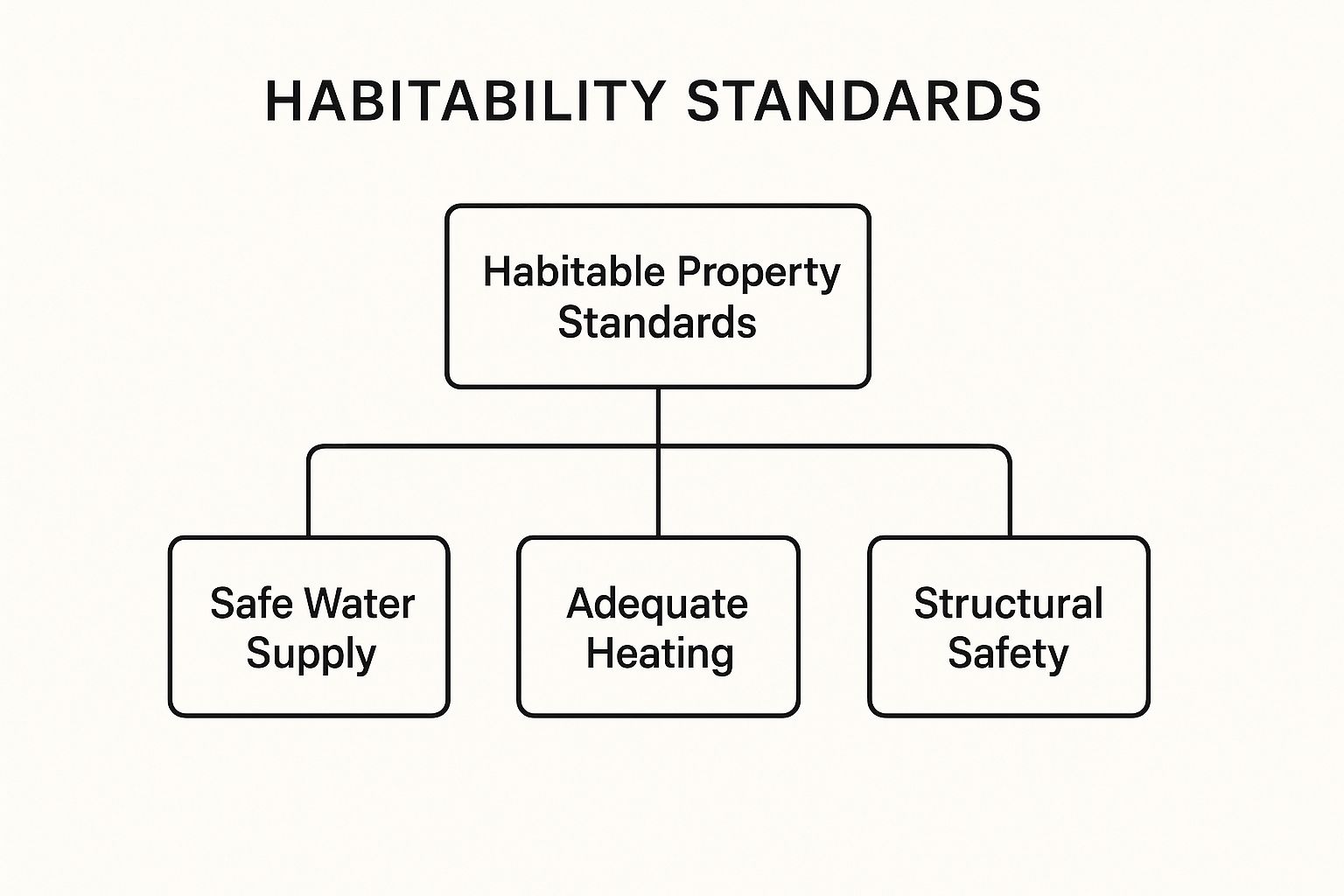
As you can see, maintaining a habitable property comes down to these three pillars: keeping it safe, providing essential services, and ensuring the structure itself is sound.
An Actionable Checklist for Monterey County Owners
The best way to ensure compliance and protect your investment is to be proactive. While a habitability issue generally must be "substantial" to trigger a legal breach, why risk getting close to that line? Conducting regular self-assessments isn't just good practice; it's smart asset management.
To put this into perspective, this table outlines the essential habitability requirements landlords must manage.
Essential Habitability Requirements for California Properties
| Category | Specific Requirement (Examples) | Relevance for Monterey County Owners |
|---|---|---|
| Utilities & Plumbing | Hot and cold running water, functional sewage disposal, working heating facilities, code-compliant electrical and gas systems. | Reliable heating is crucial for Salinas's colder winters. The coastal dampness in Monterey requires vigilant plumbing checks to prevent mold. |
| Structural Integrity | Effective weatherproofing (roof, windows, doors), floors, stairways, and railings in good repair, free from hazards. | Constant exposure to sea air and fog in Pacific Grove and Carmel demands proactive roof and window seal maintenance to protect your asset. |
| Safety & Sanitation | No lead paint hazards, functional smoke and carbon monoxide detectors, clean and sanitary building/grounds, pest-free. | In multi-unit properties in Salinas, keeping common areas immaculate is key. Regular pest control is a non-negotiable preventive measure. |
| Basic Amenities | Adequate number of trash receptacles, locking mail receptacles for each unit, secure doors and windows. | These details significantly impact a tenant's sense of security and well-being, reflecting on the quality of your management. |
This table provides a great starting point, but a hands-on approach is always best. A simple walkthrough can reveal issues before they become major problems for you and your tenants.
Here's a simple, actionable checklist for your next property visit:
- Test Water & Plumbing: Turn on all faucets. Do you have both hot and cold water? Is the pressure adequate? Check under sinks and around toilets for any signs of leaks or water damage.
- Inspect Structural Integrity: Walk the property. Are the floors, stairs, and railings sturdy and free from tripping hazards? Check for cracks in walls or ceilings.
- Verify Safety Measures: Press the test buttons on all smoke and carbon monoxide detectors. Are they installed where required by law, and are they functioning correctly?
Grasping these requirements is a fundamental part of successfully managing a rental property in this state. For a more comprehensive look at the legal landscape, our guide to California landlord-tenant laws offers crucial information for every property owner.
Your Duty to Repair and Maintain the Property

Knowing the definition of a habitable property is step one, but keeping it that way is the ongoing commitment that protects your investment. The warranty of habitability in California requires you to handle repair requests promptly and professionally. This duty is what preserves the value of your asset and the safety of your tenants.
This obligation isn't just about fixing what's broken—it’s about responding within a legally "reasonable" timeframe. What’s “reasonable” depends entirely on the urgency of the problem.
A broken heater during a cold snap in King City or Soledad is a high-priority emergency requiring attention within 24-48 hours. In contrast, a cosmetic issue like a cracked tile in a laundry room can be scheduled for a later date without violating your duty. The key is to communicate clearly with your tenant and act swiftly when it matters most.
Creating a Professional and Compliant Repair Process
For busy investors, especially those with multiple properties, juggling maintenance requests can quickly become overwhelming. This is where a systematic, professional approach is an essential safeguard that ensures every action is documented and every repair meets professional standards.
A first-class repair process includes these actionable steps:
- Acknowledge and Document Every Request: Immediately confirm receipt of the request and keep a clear, time-stamped log of every maintenance call, email, or portal submission from your tenant.
- Dispatch Vetted, Local Vendors: Utilize a trusted network of licensed and insured professionals who know the Monterey County area, from Salinas to the Peninsula.
- Ensure Code Compliance and Quality: After the work is done, verify that it meets all current building and safety codes and your own standards of quality.
- Communicate Clearly and Proactively: Keep your tenant informed about the repair schedule, who will be entering their home, and what to expect from start to finish.
Following a system like this doesn't just fulfill your legal obligations. It builds a powerful, documented history of your compliance, which is your best defense should a dispute arise.
"A landlord’s breach of the implied warranty of habitability exists whether or not he has had a ‘reasonable’ time to repair. The mutual dependence of a landlord’s obligation to maintain habitable premises, and of a tenant’s duty to pay rent, would make no sense otherwise." – Knight v. Hallsthammar, a key California legal decision.
Leveraging Systems for Efficiency and Peace of Mind
For property owners aiming to master the repair and maintenance cycle, implementing efficient systems is non-negotiable. Modern field service automation solutions can help manage work orders, dispatch professionals, and track progress, turning a potentially chaotic task into a smooth, manageable workflow.
At Coast & Valley, we take this entire process off your plate. Our team fields every tenant request, coordinates with our established network of Salinas and Monterey Bay Area professionals, and personally oversees every repair. We document each step in our secure online owner portal, giving you a transparent, 24/7 window into your property's maintenance history. This meticulous management style ensures your property remains a high-value asset, your tenants feel respected, and your legal obligations are always met. Understanding the balance of duties is crucial, as we detail in our guide to landlord responsibilities vs tenant duties.
How to Avoid Costly Tenant Disputes
Understanding a tenant's legal options is your most powerful tool for managing risk. When a landlord fails to keep a property in livable condition, California law gives tenants several powerful remedies.
Knowing these remedies helps you see why taking swift action on maintenance isn't just about good service—it's a critical business practice to protect your investment. This isn't meant to cause alarm; it's about empowering you with the knowledge to prevent a small problem from spiraling into a significant financial and legal issue.
Consider this real-world scenario: a minor leak under a kitchen sink in a Monterey condo. If ignored, it can lead to water damage and mold growth—a major habitability defect that can trigger serious consequences.
Tenant Remedies You Must Understand
When a habitability issue arises and isn't addressed in a reasonable time, tenants have potent options. As an investor, knowing them is key to protecting your asset.
- The "Repair and Deduct" Remedy: This allows a tenant to hire their own professional for necessary repairs and subtract the cost from their next rent payment. This remedy is capped at one month's rent and can only be used twice in any 12-month period.
- Rent Withholding: For more serious violations, a tenant may choose to stop paying rent entirely until the problem is fixed. This can severely disrupt your cash flow and almost always results in a complex legal battle.
- Legal Action: A tenant also has the right to sue their landlord for damages suffered due to the uninhabitable conditions, which could include rent reimbursement and other costs.
Imagine a tenant in your Salinas property calls about a leaking pipe. If you delay, they could use the "repair and deduct" rule, call a plumber, and take that cost right out of their rent payment. Worse, if that leak causes mold, they could withhold all rent, forcing you into a messy and expensive dispute.
For discerning property owners, the goal is to never let it reach that point. Proactive maintenance and crystal-clear communication are the best insurance policies against these escalations.
From Minor Leak to Major Liability
The path from a simple maintenance request to a costly legal dispute is usually paved with poor communication and delayed responses. Your best defense is a transparent, professional process for handling every single request.
Using a well-structured lease contract is an excellent first step, as it establishes clear responsibilities from day one. It sets the right expectations before an issue ever arises.
Beyond that, a rock-solid, documented system for managing repairs is priceless. It creates a clear paper trail demonstrating your commitment to upholding the warranty of habitability in California. How you handle these conversations is crucial, especially when you need to deal with tricky tenants.
At Coast & Valley, we are built to intercept these problems before they begin. Our system logs every communication, dispatches trusted local vendors, and follows up to ensure every repair is completed to the highest standard—protecting your Monterey County investment from preventable disputes.
Go Beyond Compliance to Protect Your ROI

For savvy property owners in premium communities like Pebble Beach or Carmel, merely checking legal boxes is not enough. That's the baseline. The real path to maximizing your returns is to transform legal duties into a powerful competitive advantage.
This means shifting your mindset from reactive repairs to a philosophy of proactive, preventive care. It’s the difference between simply owning a property and strategically managing a high-performing investment—one that attracts and retains premium tenants while ensuring a stable, predictable income stream.
Implement a Proactive Maintenance Schedule
A generic checklist won't suffice for a property in Monterey County. The unique local climate—from the salty coastal fog in Monterey to the warmer, drier summers in South County towns like King City—demands a tailored maintenance plan.
A smart, proactive plan for a high-end property should include:
- Seasonal Inspections: Schedule HVAC system checks before the Salinas winter chill sets in. Inspect roofs and window seals before the rainy season to prevent leaks and water intrusion.
- Appliance Longevity Checks: High-end appliances are a major draw for quality tenants. Servicing them regularly extends their lifespan and helps you avoid costly emergency replacement calls.
- Exterior Preservation: For coastal properties, the salty sea air is relentless. Consistently addressing exterior wear and tear preserves not only curb appeal but also the building's structural integrity, protecting your investment’s value.
This forward-thinking approach doesn't just reduce the odds of expensive emergency repairs. It sends a clear message about your commitment to quality—something high-caliber tenants notice and value.
A well-maintained property is a brand statement. It tells prospective tenants that you are a professional, conscientious owner who values quality, which in turn attracts tenants who will treat your property with respect.
The Power of Meticulous Record-Keeping
Here’s a piece of advice that can save you countless headaches: document everything. Thorough records are your best defense and a powerful management tool. Every inspection, repair, and piece of tenant communication should be carefully logged.
This diligence creates an indisputable history of your responsiveness, which is invaluable if a dispute ever arises. While the warranty of habitability in California gives tenants strong legal footing, procedural details and documentation often influence outcomes. For landlords, this highlights how critical it is to have a clean, documented history of compliance. You can learn more about the practical impacts of habitability laws to understand why organized management is so crucial.
At Coast & Valley, our secure online owner portal provides a complete, transparent maintenance history for your property. This isn't just for your peace of mind; it provides a clear, data-driven overview of your investment's health, turning compliance from a chore into a cornerstone of long-term profitability.
Partner with Experts for Total Peace of Mind
Let's be direct. Juggling the complexities of California's warranty of habitability is a full-time job. It demands constant attention, a deep understanding of evolving laws, and a significant time commitment—three things most busy property owners and investors in Monterey County lack.
For those with high-end properties in Salinas, Carmel, or Gonzales, leaving compliance to chance is not a viable strategy. Entrusting these responsibilities to a dedicated professional isn't a luxury; it's a core component of intelligent asset management. A partnership with local experts transforms this demanding legal duty from a potential liability into a smooth, seamless operation.
This is where a full-service property management team becomes an invaluable asset. Think of it as a protective shield around your investment, where every detail is handled with precision and professional care.
Your Hands-Off Compliance Solution
At Coast & Valley, we are structured to deliver one thing: complete peace of mind for our clients. We assume the daily operational burdens of compliance so you can focus on the rewards of ownership.
Our all-inclusive approach covers every base:
- Proactive Maintenance: We don't wait for things to break. We create and execute preventative maintenance schedules tailored to the Monterey Bay climate, catching small issues long before they can become tenant complaints.
- A-List Vendor Network: We have cultivated a trusted network of vetted, local professionals who get the job done right, ensuring all repairs meet the highest standards of quality and craftsmanship.
- Concierge-Level Communication: We act as the single point of contact for all tenant maintenance requests, carefully documenting every conversation and action in our secure portal for your review.
By systemizing compliance, we not only protect your return on investment but also insulate you from the day-to-day stress of property ownership. To explore the benefits of working with a full-service property management company, we invite you to connect with our team.
Contact Coast & Valley for a comprehensive evaluation of your property. Let our local expertise and commitment to excellence work for you.
Frequently Asked Questions
When managing high-end properties in Monterey County, absolute clarity on your responsibilities is paramount. Navigating California's warranty of habitability can bring up specific, and often tricky, questions. We hear them frequently from our clients in Salinas, Carmel, and throughout the region.
Here are direct, practical answers to the most common questions we encounter.
Can a Tenant Waive Their Right to a Habitable Property?
No. In California, the warranty of habitability is a non-negotiable right automatically implied in every residential lease. Regardless of what a rental agreement says, a tenant cannot legally sign away this fundamental protection.
Any lease clause attempting to waive this right is void and unenforceable in court. For owners of luxury homes from Pebble Beach to the Salinas Valley, this is a critical point: you are always responsible for meeting the state's habitability standards. This duty cannot be sidestepped, reinforcing the need for professional, proactive property care.
What Is a 'Reasonable' Time for Making Repairs?
"Reasonable" is a flexible legal term that depends entirely on the severity of the problem. Issues threatening a tenant's health and safety demand the most urgent response.
- Emergency Repairs (24-48 Hours): These are issues that make a home unsafe or unlivable. A failed furnace in winter, a major gas leak, no hot water, or a serious roof leak fall into this category. You are expected to act immediately, and a response within 24-48 hours is the standard.
- Non-Urgent Repairs (Up to 30 Days): For less critical problems like a dripping faucet, a cracked floor tile, or a sticky door, the law is more lenient. California generally allows landlords up to 30 days to address these non-threatening issues.
The key to navigating this is proactive communication. As soon as a tenant reports a problem, acknowledge it and provide a clear timeline for the repair. This demonstrates professionalism and maintains a positive landlord-tenant relationship.
At Coast & Valley, our client portal documents every maintenance request and our response, creating a transparent and unimpeachable record of our timely actions. This system protects our owners by demonstrating consistent, professional compliance with these timelines.
Am I Responsible for Damage Caused by a Tenant?
No, the landlord is not obligated to repair damage caused by a tenant, their guests, or their pets. Your responsibility under the warranty of habitability covers the property's condition and normal wear and tear—not damage resulting from negligence or abuse, such as holes in walls or pet-related destruction.
However, the burden of proof is on you. You must be able to demonstrate that the damage was the tenant's fault and not due to a pre-existing issue or the natural aging of the property.
This is precisely why thorough move-in and move-out inspections, complete with detailed photos and videos, are non-negotiable. This documentation is your single most effective tool for drawing a clear line between tenant-caused damage and your own maintenance obligations.
Managing these complex duties requires local expertise and constant vigilance. Coast & Valley Properties provides the professional oversight needed to protect your investment and give you total peace of mind. Contact us today for a comprehensive property evaluation.