
Why Salinas Rentals Sit Longer in the Winter Months
If you own a rental property in Salinas, you’ve probably felt the winter chill extend beyond just the weather. It’s a simple truth most seasoned investors know: Salinas rentals sit longer in the winter months. This isn't a fluke; it's a predictable seasonal slowdown driven by fewer tenants moving, the distraction of the holidays, and a surprisingly crowded market. This rhythm can seriously impact your return on investment (ROI) if you're not prepared.
Understanding the Winter Slowdown in Salinas
For property owners and investors across the Monterey Bay Area—from the agricultural heart of Salinas to coastal towns like Pacific Grove—winter brings a noticeable shift in the rental market. It’s not a sign your property is underperforming; it's the reality of the season. Far fewer tenants are looking to move between November and February. This dip in demand means even well-maintained properties, especially high-end homes, tend to have longer vacancy periods.
This slowdown creates a perfect storm for lost rental income, especially if a lease happens to expire during the holidays. The risk is even higher for luxury rentals that require the “right fit” tenant and aren't priced for high turnover speed. For any serious investor, learning how to do market analysis effectively is the first step to truly understanding this trend.
This seasonal pattern is made worse by current market dynamics. A recent trend shows more homeowners converting unsold properties into rentals, which increases the local supply of higher-end homes. Combined with a 14% year-over-year drop in average rent, this puts added pressure on owners to secure a quality tenant before the winter slowdown deepens.
The challenge isn’t just finding any tenant; it’s about attracting a qualified, long-term resident during the most competitive time of year. Proactive planning is the key to protecting your investment.
Understanding this dynamic is half the battle. This guide will walk you through actionable strategies to turn this seasonal challenge into a manageable part of your annual investment plan. A crucial first step is getting your property physically ready for the season, and our guide on what Monterey County property owners need to know now offers critical, time-saving tips.
Why Fewer Tenants Move During Winter Months
The main reason Salinas rentals sit longer in the winter comes down to simple human behavior. Between November and February, the practicalities of life make moving a hassle. This shrinks the available tenant pool for even the most desirable properties in Monterey County, from Salinas to South County towns like King City and Gonzales.
Holiday commitments, school schedules, and unpredictable weather create powerful roadblocks to moving. For a premium property owner, this means you are no longer casting a wide net in a bustling market; you are fishing in a much smaller, quieter pond.
The Impact of School and Holiday Schedules
For families, the school calendar is a major factor in planning a move. Uprooting kids mid-year can disrupt their education and social lives, making summer the ideal moving season. This trend holds true across the Salinas Valley, from Soledad to Gonzales, significantly reducing the number of family applicants during the winter.
Holiday obligations also play a huge role. The period from Thanksgiving through New Year's is packed with family gatherings and travel. The logistics of packing, hiring movers, and settling into a new home are simply too much for most people to handle during this busy season.
This seasonal slowdown creates a unique dynamic. While demand dips, the average rent in Salinas remains relatively high—around $2,375 to $2,450—which is approximately 25-26% higher than the national average. This cycle of high rents and low seasonal demand means fewer inquiries from November through February, which naturally leads to longer vacancies. You can explore more insights and comparisons in our breakdown of Salinas rent trends.
Weather and Logistical Hurdles
Even in the relatively mild climate of the Monterey Bay Area, winter weather can complicate a move. Shorter daylight hours leave less time for packing and unpacking, while a sudden rainstorm can turn the process into a stressful ordeal. These logistical hurdles are often enough to make potential tenants push their search until spring.
For a high-end property owner, this seasonal dip means your strategy must shift from speed to precision. It’s about patiently targeting the right applicant from a smaller group rather than quickly sifting through a large one.
This smaller tenant pool requires a more thoughtful approach. Your property must be perfectly presented, and your marketing must be highly targeted to attract qualified professionals relocating for work—a less common but still important driver of winter moves. Succeeding in this market requires patience and a strategy tailored to the unique rhythm of the season.
How Economic Pressures Impact Winter Renters
Beyond the holiday rush and gloomy weather, the biggest force shaping the winter rental market in Salinas is economics. For many potential tenants, this time of year brings financial caution, which directly translates into longer vacancies for rental properties—especially at the higher end of the market in areas like Pebble Beach or Carmel.
It’s no secret that affordability is a major concern across Monterey County. For many local families on a tight budget, the winter months add pressure. Higher utility bills for heating, combined with holiday spending, leave little cash for the significant costs of moving, such as security deposits and hiring movers.
This financial strain affects a wide range of renters. Even well-qualified applicants become more selective. They are less likely to make a quick decision and are hunting for exceptional value to justify the expense of a winter move.
The Squeeze on Renter Budgets
This financial pressure isn't just a feeling; the numbers back it up. A large portion of the Salinas population faces affordability challenges that get tougher in the winter.
Here's the reality: statistical housing data shows that 53% of households in Salinas are renters. Of those, a staggering 52% are 'rent-burdened,' meaning they spend over 30% of their income just on housing. You can dig into the full Salinas housing data here.
When you factor in rising average rents and the seasonal dip in some local job sectors, a renter's ability to commit to a new lease shrinks even further.
This means the pool of financially confident, move-ready tenants gets considerably smaller in the winter. For owners of premium properties, this highlights the need for a competitive strategy that acknowledges these pressures. To get a better handle on this dynamic, you can read our guide on how premium rentals can stay competitive in our local market.
An Increasingly Crowded Market
Making matters worse, just as tenant demand is dropping, the supply of available rentals often goes up.
It’s a classic scenario: homes that don't sell during the fall real estate season often get converted into rentals. This sudden wave of properties from "accidental landlords" floods the market right when the fewest people are looking to move.
This creates a hyper-competitive environment where your property must stand out not just on quality, but on value. As an investor, you need a sharp strategy to attract the best applicants from a smaller, more budget-conscious group. At Coast & Valley, our deep local roots—backed by Amy Salmina's fourth-generation Salinas expertise—give us the insight to position your property to catch the eye of qualified tenants and keep those costly vacancy days to a minimum.
Navigating Your Winter Pricing Strategy
Pricing a premium rental in the Salinas Valley during the winter is a delicate balancing act. Set the price too high, and you risk extended vacancy as the smaller pool of tenants overlooks your property. Set it too low, and you devalue your asset and leave annual income on the table.
A strategic approach to winter pricing is essential for protecting your ROI. It starts by accepting a fundamental market reality: the peak rent you can command in July is almost never achievable in January. Holding out for a summer price during the off-season can easily cost you thousands in lost rent—far more than a temporary, strategic adjustment.
Aligning Price with Seasonal Demand
The key is to view seasonal pricing as a powerful business tool, not a loss. Local market data consistently shows that rents across the Monterey Bay Area tend to flatten or dip after peaking in the summer. This creates a standoff where owners hold out for their peak-season rate, while the few tenants looking are hunting for an off-season deal.
You can see this pattern clearly in historical rent price trends for Salinas. For example, average rents might hit a peak near $2,600 in the spring and then level off through the fall and winter, mirroring a broader trend where rental demand is highest from April through August. You can explore more about these local rent market trends on Zillow.
A vacant property in winter costs you 100% of your potential income each month it sits empty. A strategic price reduction of 5-7% can secure a qualified tenant quickly, protecting your cash flow and boosting your overall annual return.
Viewing Pricing as an Investment Tool
Instead of focusing on a slightly lower monthly rent, look at the bigger financial picture. Securing a high-quality tenant in December—even at a modest discount—means your property is generating income through the slowest months of the year. This approach is far more profitable than standing firm on a summer price and facing a vacancy that stretches into February or March.
Understanding these seasonal nuances is a core part of valuing a rental property correctly. To see how these factors fit into the larger equation, you can read our guide on what is Fair Market Rent. At Coast & Valley, we use real-time data to help our clients implement dynamic pricing strategies that minimize vacancy days and maximize your annual revenue.
Actionable Strategies to Avoid Winter Vacancy
Knowing why Salinas rentals sit empty longer in the winter is the first step. Now, let's focus on the solution. This section is your playbook for turning a seasonal challenge into a strategic advantage, protecting your income and preserving your property's value with proactive management.
These are the same practical strategies we use for our clients across Monterey County, broken down into clear, actionable steps.
1. Strategically Time Your Leases for Peak Season
The single most effective way to avoid a winter vacancy is to ensure your leases don’t expire then. This requires planning a full year in advance. Your goal is to have lease expirations line up with the peak rental season in the Salinas Valley, which is typically April through August. A lease ending in June will almost always get filled faster, and for a better rate, than one ending in December.
Here’s a step-by-step approach:
- Review Your Lease Portfolio: Identify any leases set to expire between November and February.
- Offer Strategic Renewals: Approach those tenants in the fall. Offer an attractive renewal, perhaps with a 15-month lease that pushes their next expiration date into the spring peak season.
- Structure New Leases Intelligently: For any new tenants, don't just default to a 12-month lease. Consider an 11-month or 13-month term to ensure the end date lands in a more favorable season.
2. Enhance Your Winter Marketing and Showings
If you must market a property in the winter, your approach needs to be sharper to grab the attention of a smaller tenant pool. A standard Zillow post won't be enough. The property has to feel warm, inviting, and safe to counteract the dreary weather.
- Professional Photography is Non-Negotiable: Winter light is often flat and gray. Professional photos, edited to look warm and bright, are essential to make your online listing stand out.
- Create Immersive Virtual Tours: High-quality video or 3D walkthroughs are critical for attracting out-of-area applicants and busy professionals who don't have time for multiple in-person visits.
- Perfect the Showing Experience: When a potential tenant walks through the door, make sure the heat is on, the lights are bright, and the home feels welcoming. Simple touches create a powerful emotional connection.
This decision tree breaks down the clear choice owners face when pricing a rental during the off-season.
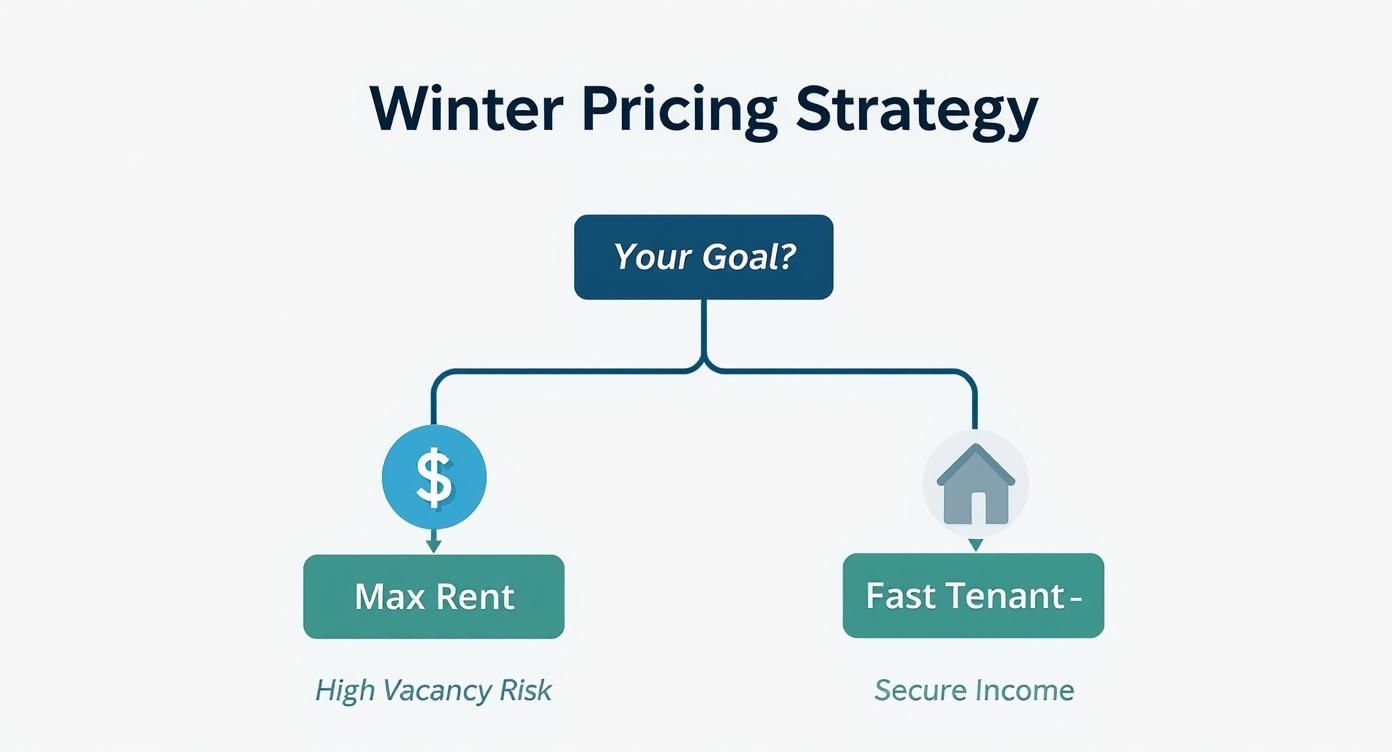
Ultimately, making a modest, strategic price adjustment to secure a great tenant quickly is almost always more profitable than stubbornly holding out for a peak-season rate and risking months of lost income.
3. Focus on High-Touch Tenant Retention
The absolute best way to avoid a vacancy is to keep the fantastic tenant you already have. Tenant retention is an active strategy built on exceptional service and communication—a cornerstone of our philosophy at Coast & Valley.
A happy tenant is far less likely to move. Proactive communication and prompt maintenance are your most powerful retention tools. To combat extended vacancies, it's also smart to consider technology. An effective tool like an AI receptionist for property management companies can ensure all inquiries are handled instantly, which helps maximize lead conversion and minimize costly downtime.
"A proactive lease renewal program is the number one defense against off-cycle turnover. We begin conversations 90 days out, creating a predictable and stress-free process for both the owner and the tenant." – Amy Salmina, Coast & Valley Properties
By mastering these three areas—lease timing, marketing, and retention—you can dramatically reduce the risk of a costly winter vacancy. For a deeper dive, check out our guide on how to fill your Salinas rental property quickly, packed with more proven tactics.
Partner with a Local Expert for Year-Round Success
Navigating the seasonal rhythms of the Salinas and Monterey Bay rental market doesn’t have to be a source of stress for property owners. The winter slowdown is a predictable cycle, and it's entirely manageable with the right local expertise on your side.
Instead of reacting to vacancies, you can partner with a team that has mastered these unique market dynamics. At Coast & Valley, we provide investors with proactive strategies to ensure consistent returns. Our deep knowledge of Salinas, Monterey, and the surrounding South County communities means we are always prepared for seasonal shifts before they happen, saving you time and protecting your ROI.
Your Path to Peace of Mind
Let us handle the market complexities so you can focus on what matters most. We use advanced marketing, strategic lease timing, and high-touch tenant retention to keep your investment secure and profitable through every season. Protecting your asset and maximizing its performance is our core commitment.
Partnering with a dedicated local expert transforms seasonal challenges into strategic opportunities. It's about shifting from a reactive mindset to a proactive plan that guarantees your peace of mind and protects your annual ROI.
Choosing the right partner is a critical step. Our team, led by fourth-generation Salinas native Amy Salmina, offers a concierge-level service built on trust, transparency, and unparalleled local insight. To understand what sets a premier firm apart, we recommend reading our guide on how to choose a property management company.
Don't let the winter chill put a freeze on your cash flow. Let our team build a strategy to keep your rental income flowing and your property thriving all year long.
Your Questions, Answered
When navigating the seasonal shifts in the Salinas rental market, many property owners have the same valid concerns. Here are clear, straightforward answers to the most common questions we hear from investors about winter vacancies.
Frequently Asked Questions About Winter Rentals
We've compiled the top questions owners ask when facing a potential winter vacancy in the Salinas area. The answers provide a strategic framework for making smart, profitable decisions during the slower months.
| Question | Answer |
|---|---|
| Why do rents seem to drop every winter? | It’s a classic case of supply and demand. Fewer people move during the holidays and school year, so tenant demand dips. At the same time, homes that didn't sell in the fall often get listed as rentals, increasing supply. This forces owners to compete for a smaller group of renters, pushing market rates down temporarily. |
| How long should I realistically expect my property to sit vacant? | While every property is different, plan for a longer leasing period from November to February. A well-priced and marketed home might rent in 30-45 days, but a premium-priced rental could easily sit for 60 days or more. Proactive moves, like strategic pricing and lease timing, can significantly shorten this timeline. |
| Is it better to let my property sit empty than lower the rent? | Almost never. A vacant property is a guaranteed 100% loss of income each month, plus your fixed costs for utilities and upkeep. A strategic, temporary rent adjustment is a business tool to protect your annual ROI, secure cash flow, and prevent a minor vacancy from becoming a major financial loss. |
A proactive strategy is always more profitable than a passive "wait and see" approach, especially when market conditions are working against you.
The goal is to minimize vacancy, not just maximize rent. Securing a great tenant quickly at a slightly adjusted winter rate is almost always more profitable than holding out for a summer price and losing months of income.
Don't let seasonal slowdowns dictate your investment returns. Salinas and Monterey Bay owners can contact Coast & Valley for a seasonal vacancy risk assessment and a tailored strategy to keep rental income flowing through the slower winter months. Contact us for a seasonal vacancy risk assessment today.