Remote building inspections are now law in California after AB 1738
Direct Answer: AB 1738 was signed September 18, 2026. It requires covered cities and counties to offer homeowners a remote inspection option for certain permitted work, with compliance starting January 1, 2028.
A water heater quits on a Tuesday in Pacific Grove. My plumber can be out Wednesday, the swap is done Thursday, and then everything stops while we wait on a permit inspection slot. That wait is the part owners never budget for, and it is often the part that keeps a unit off market or keeps a tenant without hot water.
California just changed that waiting game. AB 1738 was signed into law on September 18, 2026, and it opens the door to remote building inspections for specific residential work.
I want to walk through what the law actually says, when it takes effect, and what it means for a one or two family rental here on the Monterey Peninsula. I also want to be clear about what it does not change, because I have already heard a few owners assume more than the law delivers.
What the California AB 1738 remote inspection law actually says
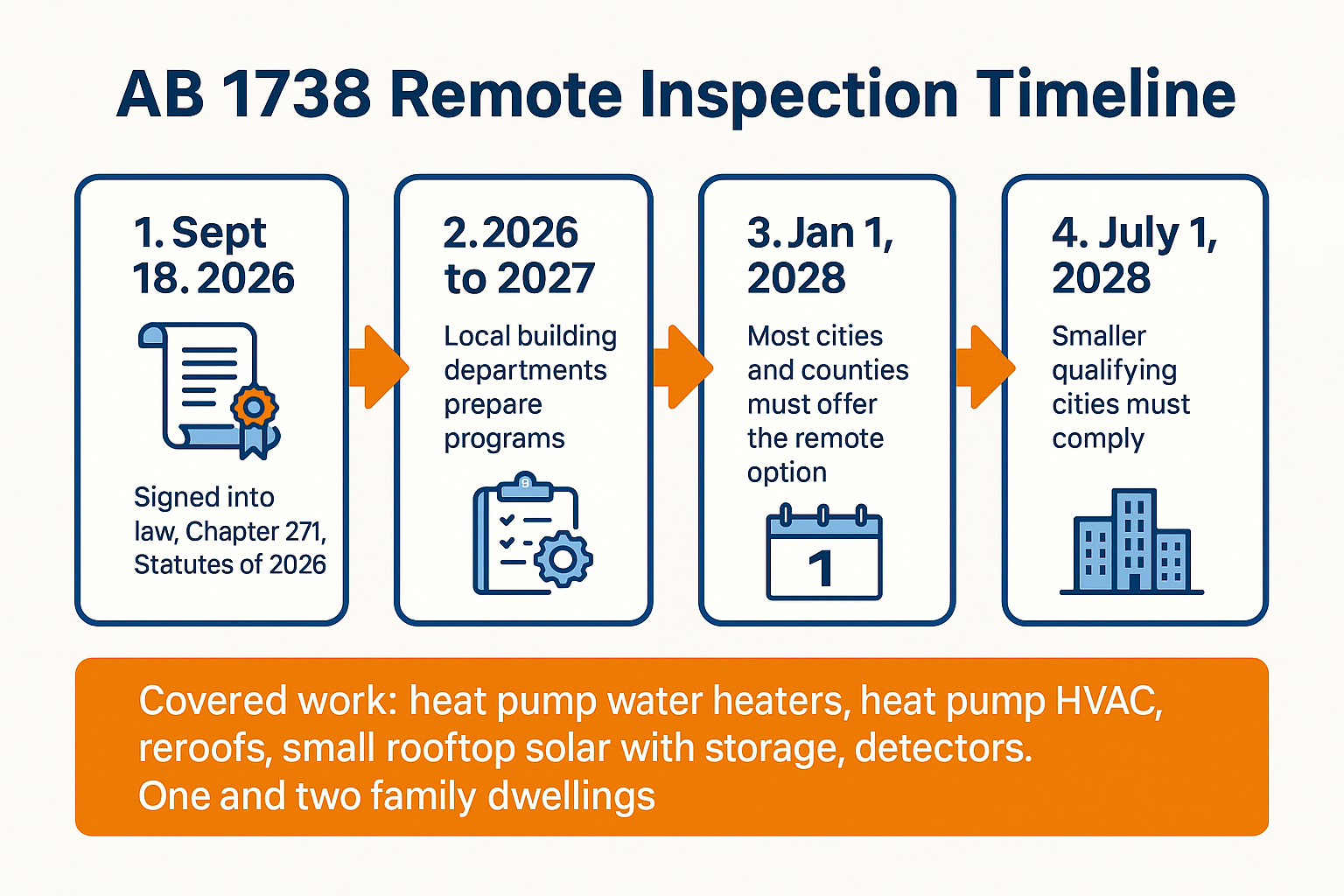
AB 1738 was chaptered by the Secretary of State on September 18, 2026 as Chapter 271, Statutes of 2026, and it adds Section 17970.9 to the Health and Safety Code. It was authored by Assemblymember Juan Carrillo and passed the Senate 29 to 6, with final Assembly concurrence 68 to 0.
The core of it is straightforward. The new law requires covered cities and counties to offer a homeowner, or a contractor with the homeowner’s written consent, the option to request a remote inspection for all or part of an inspection required by a building permit.
The work it covers is specified and narrow. It applies to certain permitted projects on one and two family dwellings, including:
- Heat pump water heaters
- Heat pump HVAC systems
- Reroofs
- Small rooftop solar with storage
- Detectors
The dates matter more than anything else right now. Compliance begins January 1, 2028 for most agencies, and July 1, 2028 for smaller qualifying cities. You can read the bill’s status and history through CalMatters Digital Democracy.
So nothing changes at your local counter this month. What changes is how you should plan capital work over the next couple of years.
Why this matters for a Monterey Peninsula rental
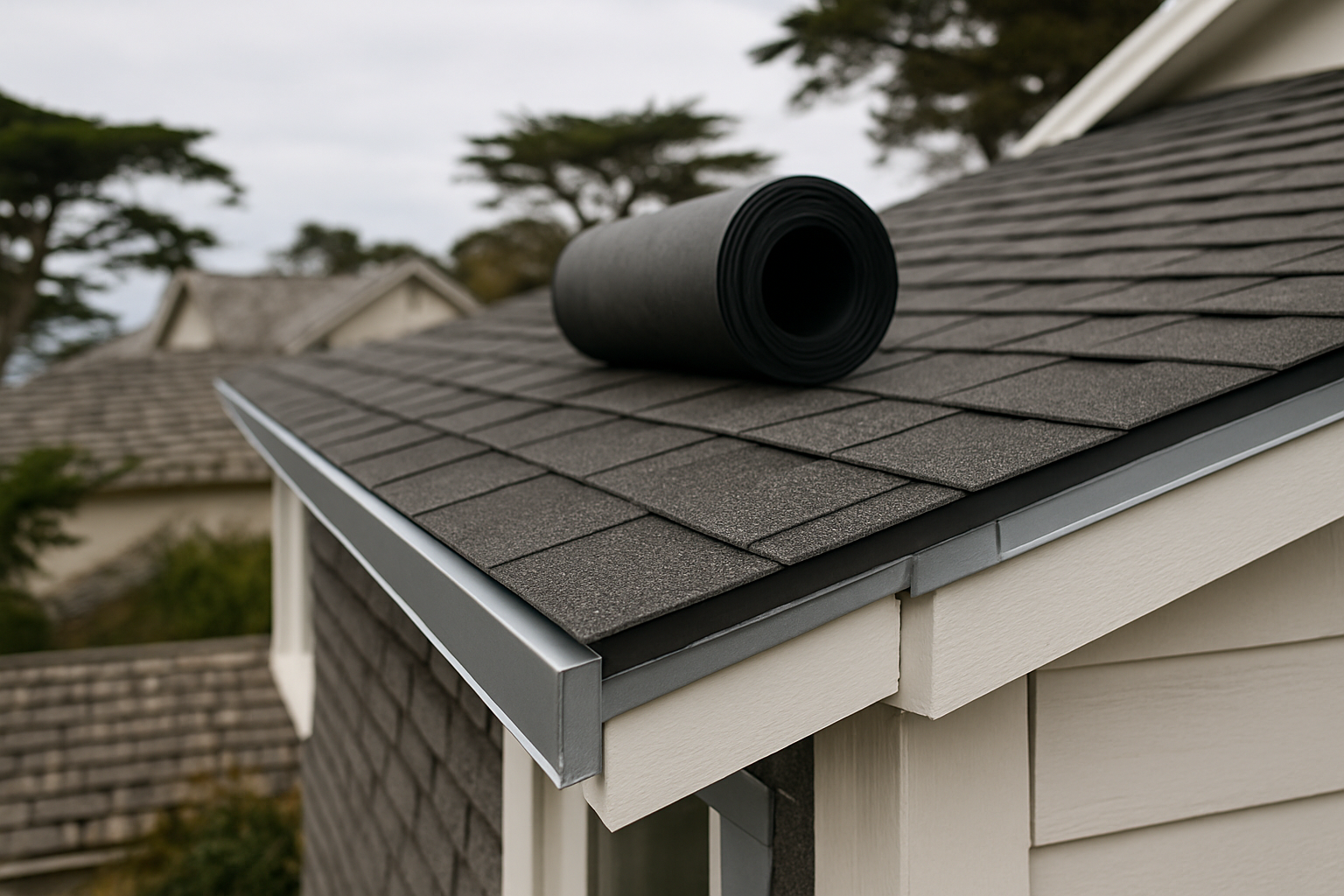
The repairs on that list are the exact repairs that come up most on Peninsula homes. Salt air off the bay chews through roof flashing and outdoor HVAC components faster than it does inland, and I see reroofs and system replacements on Pacific Grove and Carmel homes on a shorter cycle than owners expect.
Here is the practical piece. On an occupied rental, a slow inspection sign off means a tenant living with a partially finished job. On a vacant one, it means days added to turnover while you carry the mortgage, utilities, and insurance on an empty house.
Peninsula rents sit at the high end of Monterey County, so the cost of a vacant week is real money. I am not going to put a number on your specific property, but the math is simple: divide your monthly rent by 30 and multiply by the days you sit waiting. Two or three saved days on a water heater permit is not nothing.
Once local building departments implement remote inspections, the upside for owners looks like this:
- Shorter gaps between job completion and final sign off
- Fewer trip charges from vendors waiting on site for an inspection window
- Less tenant disruption on jobs that touch hot water, heat, or roofing
- Faster re-rent timing when the work lands in the middle of a turnover
If you want the seasonal side of turnover timing, I wrote about how leasing shifts after Labor Day in Monterey County.
Covered work and why it lands on the list
Here is how the specified work maps to what I actually see on Peninsula rentals.
| Covered work | Why it comes up locally | Owner impact of a faster sign off |
|---|---|---|
| Heat pump water heaters | Aging tank units failing in older Pacific Grove and Monterey homes | Tenant gets reliable hot water sooner |
| Heat pump HVAC | Coastal moisture and salt air shorten equipment life | Less downtime on heat during winter months |
| Reroofs | Fog, wind, and salt exposure on Peninsula rooflines | Shorter window with scaffolding and crews on site |
| Small rooftop solar with storage | Owner upgrades on single family rentals | Less delay between install and operation |
| Detectors | Routine replacement and turnover-related work | Cleaner documentation at unit handoff |
The AB 1738 timeline at a glance
This is the sequence I keep in mind when planning work on one and two family rentals over the next two years.
What I would do between now and 2028
The law does not require anything of you as an owner. It requires something of local agencies. Your job is to be positioned to use it when it arrives.
A few habits I would build now:
- Pull permits on covered work. Owners who skip permits on water heaters and reroofs cannot use an option that exists inside the permit process, and unpermitted work creates its own headaches at sale or refinance.
- Get written consent language into your vendor paperwork. The law allows a contractor to request the remote inspection with the homeowner’s written consent, so that authorization needs to exist on paper.
- Document the install as it happens. Good photos of connections, strapping, flashing, and labels, taken before anything gets closed up, make a remote review far less painful.
- Ask your building department. When you next apply for a permit in 2027, ask where their remote inspection program stands. Departments plan on their own timelines.
One more caution worth naming. If you own a small apartment building rather than a single family home or duplex, this specified work does not reach you. I covered that property class separately in where compliance gets complicated on a small Salinas apartment building.
What remote inspection does not change
This is the part I want owners to hear clearly. AB 1738 expands access to remote inspections while preserving the authority and professional judgment of local inspectors.
An inspector can still decide a job needs eyes on site. A remote review of a reroof does not mean nobody looks closely at the flashing. It means the looking may happen through a camera instead of a truck visit, when the inspector agrees that works.
It also does not touch the rest of an owner’s obligations. California’s rental rules keep shifting, and a faster permit sign off does nothing for habitability standards, disclosure practices, or the quality of the vendor doing the work. If you want a recent example of how fast the standards move, look at California’s new appliance requirement for rentals.
And it will not fix a slow response on the front end. The clock on a failed water heater starts when the tenant reports it, not when the permit gets issued. That is a coordination problem, and I wrote about how we sort it in what counts as an emergency at 2 a.m..
Frequently Asked Questions About the AB 1738 Remote Inspection Law
Can I request a remote inspection in Monterey County right now?
Not as a right under this law yet. Compliance begins January 1, 2028 for most agencies and July 1, 2028 for smaller qualifying cities. Some departments may offer something sooner on their own, so it is always worth asking when you apply.
Does this apply to my fourplex?
No. The specified work covered by AB 1738 applies to one and two family dwellings. A single family rental or a duplex fits. A fourplex or larger apartment building does not fall under this particular provision.
Can my contractor handle the request for me?
Yes, with paperwork. The law lets a contractor request the remote inspection with the homeowner’s written consent. I would get that consent language built into your service agreements ahead of time rather than scrambling for it on the day of an install.
Will this make my repairs cheaper?
It may reduce some soft costs, like a vendor waiting on site through an inspection window or making a second trip. Actual savings depend on your project, your vendor’s billing practices, and how your local department runs its program, so I would not plan a budget around it.
Does a remote inspection mean less scrutiny of the work?
No, and owners should not want it to. The law preserves the authority and professional judgment of local inspectors. If an inspector wants to be there in person, that call still belongs to them.
Planning capital work on a Peninsula rental before 2028?
If you own a home in Pacific Grove, Monterey, Pebble Beach, or Carmel and you are mapping out a roof, water heater, or HVAC replacement in the next couple of years, the permit path is worth thinking through now. Our team at Coast & Valley Properties keeps track of how Monterey County building departments handle this kind of work, and we are always glad to talk it through with an owner who is weighing their options. You can reach us at (831) 757-1270 or through the contact form at coastandvalleypm.com.