
New Safety Rules are Raising the Stakes for High-Value Properties
For owners of high-value properties in Salinas and across Monterey County, the rules have changed. A wave of new California safety mandates has arrived, and they aren't just suggestions—they are strict requirements with serious financial and legal consequences. For anyone with a luxury home, estate, or multi-unit complex in places like Carmel or Pebble Beach, this means being proactive about compliance is no longer a choice. It's an absolute necessity to protect your investment.
A New Era Of Property Safety In Monterey County

Whether you own an estate in Carmel, a multi-unit building in Salinas, or a coastal home in Pacific Grove, the game has changed. California’s new safety and inspection laws are adding more responsibilities for property owners. What used to be simple maintenance is now a complex legal duty, especially for high-value properties with features like balconies or terraces.
The Impact on Monterey County Properties
So, what does this mean for your property here in Monterey County? It means new, mandatory rules. If your home or multi-unit building has balconies, decks, elevated walkways, or similar structures, you are now required to schedule regular professional inspections and keep detailed records.
The big risk for busy owners who manage their own properties is what we call the "compliance gap." It’s easy to miss a deadline, hire someone who isn't certified, or fail to file the correct paperwork. The results can be costly:
- Hefty Fines: Cities like Salinas and Monterey are enforcing these rules with large financial penalties.
- Increased Liability: If an accident happens, not having proof of compliance can lead to serious legal and financial trouble.
- Insurance Problems: Insurance companies are now checking for compliance. They might deny a claim or refuse to renew your policy if your property isn't up to code.
For estate owners across Monterey County, from Soledad to Pebble Beach, proactive management is no longer optional—it is essential for protecting your asset.
To help you understand, here’s a quick look at how these changes affect high-value properties in our area.
Key Safety Rule Changes Impacting Monterey County Properties
This table shows the difference between the old way of doing things and the new, mandatory standards.
| Area of Regulation | Previous Standard (General Practice) | New Requirement (Mandatory Compliance) |
|---|---|---|
| Elevated Structures (Balconies/Decks) | Visual checks by general contractors during routine maintenance. | Mandatory inspections every 9 years by a licensed architect or structural engineer. |
| Fire Safety Systems | Basic annual smoke detector checks and occasional system tests. | Annual professional certification for fire doors, sprinkler systems, and alarm panels. |
| Seismic Gas Shutoff Valves | Recommended but often overlooked. | Required installation on all new builds and major renovations in seismic zones like ours. |
| Documentation & Record-Keeping | Informal records, receipts kept in a folder. | Formal, detailed inspection reports must be kept and ready for officials to review. |
As you can see, the standards are much higher now. Simply "keeping an eye on things" is no longer enough to protect your investment and your peace of mind.
Avoiding Last-Minute Emergencies
These new rules require a planned, calendar-driven approach. Think about the critical importance of annual fire door drop testing in condominium buildings—it’s just one example of how new rules demand constant attention. The goal is to move from reacting to problems to managing compliance in a predictable, stress-free way.
For estate and multi-unit owners, this shift means that professional oversight from a firm like Coast & Valley is the solution. We track inspections, coordinate with certified vendors, and maintain your compliance calendar, so you don't have to. This saves you time and protects you from legal risks and emergency costs.
Understanding the Critical Mandates
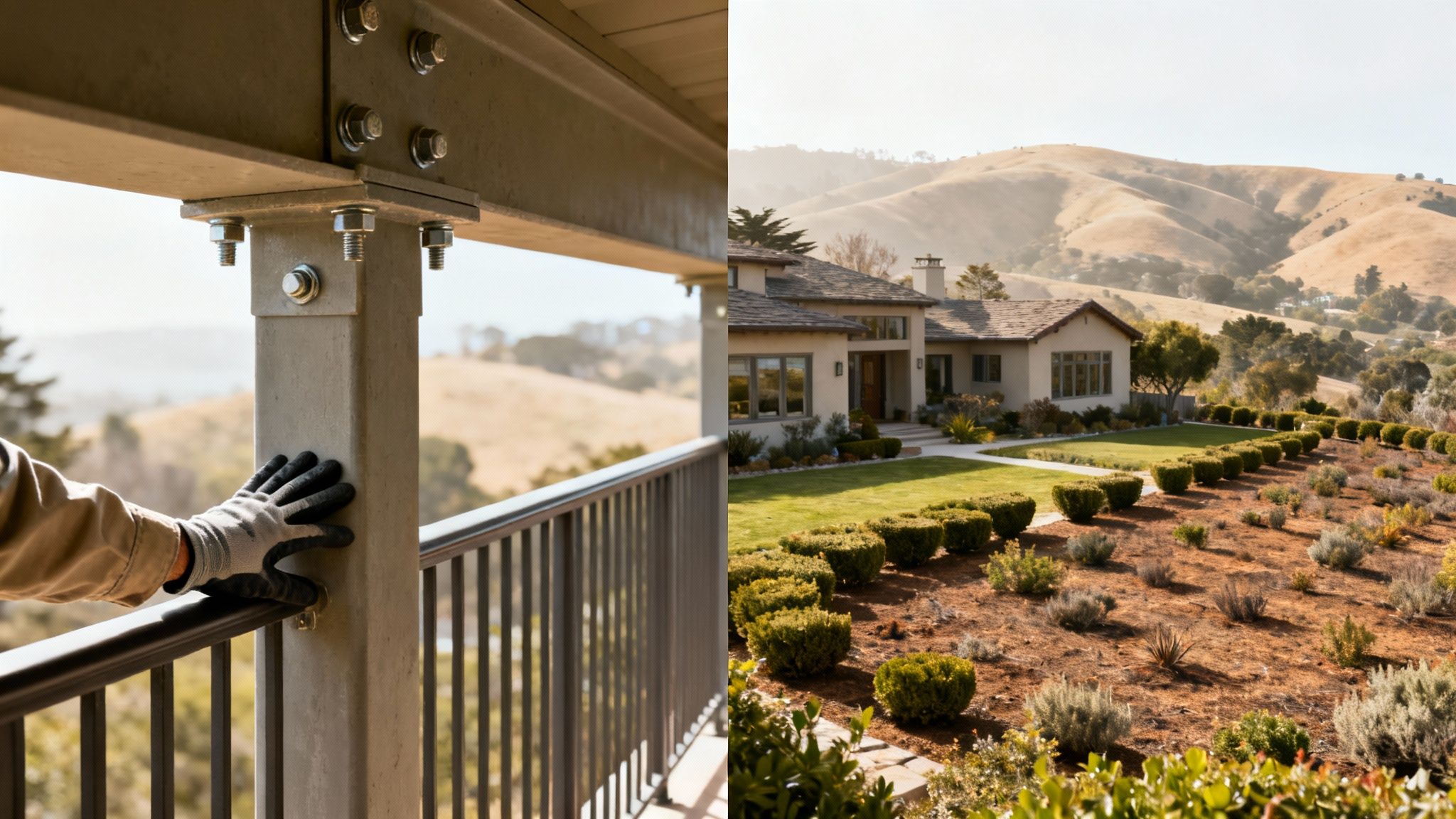
For owners of fine properties from Pebble Beach to King City, new safety rules are raising the stakes. The regulations can seem complex, but they focus on two main areas: structural integrity and fire safety. Let's break down what you need to know in simple terms.
Structural Integrity Inspections: SB 721 and SB 326
Think of California's balcony inspection laws—Senate Bill 721 (SB 721) and Senate Bill 326 (SB 326)—as a required health check for your property’s balconies, decks, and walkways. These laws are designed to find structural problems before they become dangerous.
The goal is to make sure these areas are safe for residents and guests. The responsibility is now on the owner to schedule and document these inspections, adding a new layer of pressure for those with high-value properties.
So, who does this apply to?
- SB 721 covers buildings with three or more multifamily dwelling units that have outdoor structures more than six feet above the ground.
- SB 326 specifically targets condominium complexes with similar structures.
For properties in Salinas, Monterey, and nearby towns, the first inspection of these structures had to be completed by January 1, 2025. After that, inspections are required at least once every nine years.
A key detail many owners miss is that these inspections cannot be done by a general handyman. The law requires a licensed architect, structural engineer, or a certified building inspector to do the evaluation and write a formal report.
Failing to comply doesn't just risk fines. It creates major legal and insurance risks, especially if an accident occurs. This is why professional oversight—having an expert track deadlines and hire certified local vendors—has become essential for protecting your asset.
Enhanced Fire Safety and Defensible Space
Living in the beautiful landscapes of Monterey County, from the coast of Carmel to the hills near Gonzales, comes with a real fire risk. Because of this, fire safety rules have become much stricter, focusing on prevention for high-value estates.
One of the most important ideas for any property owner here is defensible space. This is the buffer zone you create between your home and the surrounding grass, trees, and wildland to help slow or stop a wildfire.
California law requires property owners in high-risk fire zones to maintain this defensible space, which is divided into two zones:
- Zone 1 (0-30 feet from the home): This area needs the most work. You must remove all dead plants and weeds, trim trees, and clear flammable materials from under your decks.
- Zone 2 (30-100 feet from the home): Here, the goal is to reduce fuel. Grass should be cut to four inches or less, and you need to create space between trees and shrubs to stop a fire from spreading.
These steps work. Homes with just a few fire-resistant features—like a good roof, fire-resistant siding, and double-pane windows—have a much higher chance of surviving a wildfire.
For owners of larger estates, especially in the rural parts of Monterey County like South County towns, these rules require regular, year-round work. Local fire departments inspect properties and will issue fines for not complying. You can learn more about commercial property fire safety regulations.
Meeting these standards isn't just about avoiding a fine; it’s about protecting your property and making sure you can keep it insured. These safety rules are also tied to the basic duties every owner has under the Warranty of Habitability in California.
The Real Costs of Non-Compliance
It's one thing to read about new safety rules, but it's another to understand what ignoring them could actually cost you. For owners of high-value properties in Monterey County, these rules have raised the stakes far beyond a simple fine. Ignoring compliance can create a chain reaction that harms your property's value and your financial stability.
The consequences are real and expensive. Not complying can lead to large fines from local authorities in Salinas and Monterey County, a huge increase in your legal liability if an accident happens, and the real chance of your insurance company denying coverage or raising your rates.
Fines, Liability, and Insurance Risks
Missing a required inspection deadline is no longer a small error. Local code enforcement can issue serious penalties that add up quickly. Even worse, if a balcony fails or a fire happens on a property that isn't compliant, the owner's legal risk is huge. Proof that you failed to follow state safety rules can be the centerpiece of a costly lawsuit.
The insurance industry is also paying close attention. Insurance carriers are looking more carefully at property compliance records before renewing a policy. A single mistake in safety inspections could lead to:
- Policy Non-Renewal: Your insurer might simply refuse to cover your high-value property anymore.
- Skyrocketing Premiums: If they do offer to renew, it could be at a much higher, unaffordable rate.
- Claim Denial: If an accident occurs, your insurance company could deny your claim completely, pointing to your failure to comply with safety rules.
This isn't about creating fear. It's about seeing proactive compliance for what it is: a smart investment that protects your property's value and your own peace of mind. The cost of prevention is a tiny fraction of the cost of a single accident.
The Bigger Picture on Regulatory Costs
This isn't just happening in California. Across the country, new safety and environmental rules are increasing the cost of owning high-value properties. Look at New York City's Local Law 97, which sets strict carbon limits for large buildings.
Owners who don't comply face huge penalties—up to $268 per ton of CO2 over their limit. For a large luxury apartment building, that can mean fines of over $1 million a year. You can get a sense of how global standards are changing from this in-depth 2024 report.
To bring this closer to home, here’s a real-world example we've seen.
Anonymized Scenario: A Carmel Condo Complex
Imagine a multi-unit condo building in Carmel with beautiful ocean-view balconies. The owner, busy with other businesses, missed the first SB 326 inspection deadline. When a potential buyer's inspection discovered this, the sale immediately fell through.
The owner then had to rush to get an emergency inspection, paying extra fees, all while facing possible fines and worrying the tenants. This one mistake cost them a sale and thousands in extra costs—a perfect example of how proactive management pays for itself by preventing these problems.
Managing these growing requirements is key to protecting your investment. You can find more information about budgeting for these costs in our guide to understanding rental property maintenance costs.
The numbers below show clearly how the small, upfront cost of compliance is much less than the potential costs of doing nothing.
Cost Analysis of Compliance vs. Non-Compliance
| Expense Category | Cost of Proactive Compliance (Estimate) | Potential Cost of Non-Compliance (Estimate) |
|---|---|---|
| Mandatory Inspections | $3,000 – $10,000 (Structural/Balcony) | $5,000 – $15,000+ (Expedited/Emergency Rates) |
| Minor Repairs | $1,000 – $20,000 (Scheduled, competitive rates) | $50,000 – $500,000+ (Post-incident structural failure) |
| Fines & Penalties | $0 | $10,000 – $100,000+ (Accumulating daily/weekly) |
| Insurance Premiums | Stable/Standard Rates | 2x – 5x Increase or Policy Non-Renewal |
| Legal Liability | Minimal (Covered by insurance) | $1,000,000+ (Lawsuits, settlements, legal fees) |
| Property Value Impact | Value Protected | 10% – 30% Devaluation (Lost sales, damaged reputation) |
| Total Estimated Cost | ~$4,000 – $30,000 | ~$1,065,000 – $1,615,000+ |
As the table shows, the financial case for proactive compliance is clear. Investing a few thousand dollars today can prevent catastrophic losses that could easily run into the millions. It’s a simple business decision to protect your asset.
Why Self-Managing Is Riskier Than Ever
For busy professionals and investors across Monterey County, managing a high-value property has always been a lot of work. But with California's tough new safety rules, the do-it-yourself approach has gone from challenging to risky. This creates a serious "compliance gap" for even the most careful owners.
The simple truth is that self-managing owners are now taking on a level of financial and legal risk that professional management is designed to handle. You are an expert in your own field, not in the fine print of Salinas or Gonzales city codes.
The Widening Compliance Gap
The "compliance gap" is the dangerous space between what new rules require and what a self-managing owner can realistically do. It's easy to see how these gaps happen when you're juggling a career, family, and other investments.
Here are some of the most common traps for high-end property owners:
- Missing Critical Deadlines: Key inspection dates can be easy to forget. A single missed deadline can lead to big fines and put your insurance at risk.
- Hiring Uncertified Inspectors: The law is very specific. You need licensed architects or structural engineers for certain inspections—not just a handyman. Using the wrong person makes the inspection invalid.
- Keeping Improper Records: If an accident happens, having incomplete records is a huge problem. It weakens your case in any insurance claim or legal fight.
- Not Tracking Local Rules: Rules in places like King City or Soledad are always changing. What was okay last year might not be this year, and not knowing is not an excuse.
For owners of premier properties in areas like Pacific Grove or Pebble Beach, the question is no longer "Can I manage this myself?" but "Is it worth the risk not to have an expert managing it for me?"
When Good Intentions Are Not Enough
Many smart investors think their business skills are enough to handle these new rules. But these regulations require a special, organized approach that goes beyond general management.
Think of it this way: you could do your own taxes, but a professional accountant knows all the details that save you money and keep you out of trouble.
A professional property manager is your compliance expert in the same way. At Coast & Valley, we do more than collect rent. We keep a detailed compliance calendar, use a network of trusted, certified vendors, and build a digital record to protect your asset. This proactive oversight is how you close the compliance gap and reduce your risk. Our article on why you should reconsider managing your own investment properties offers more to think about.
This shift means self-managing is no longer just about giving up your weekends; it’s about taking on legal and financial risks that can threaten the value of your investment.
Your Proactive Property Safety Action Plan
Trying to handle all these new regulations can feel overwhelming. But breaking it down into a clear, step-by-step plan makes it manageable. For owners of high-value properties in the Monterey Bay area, this isn't just about following rules; it's a smart move to protect your investment for the long term. Here is your guide to getting ahead of the curve.
If you’re managing this yourself, it’s easy to make mistakes. The process has many potential problems, from missing a deadline to hiring the wrong inspector or not keeping the right records.
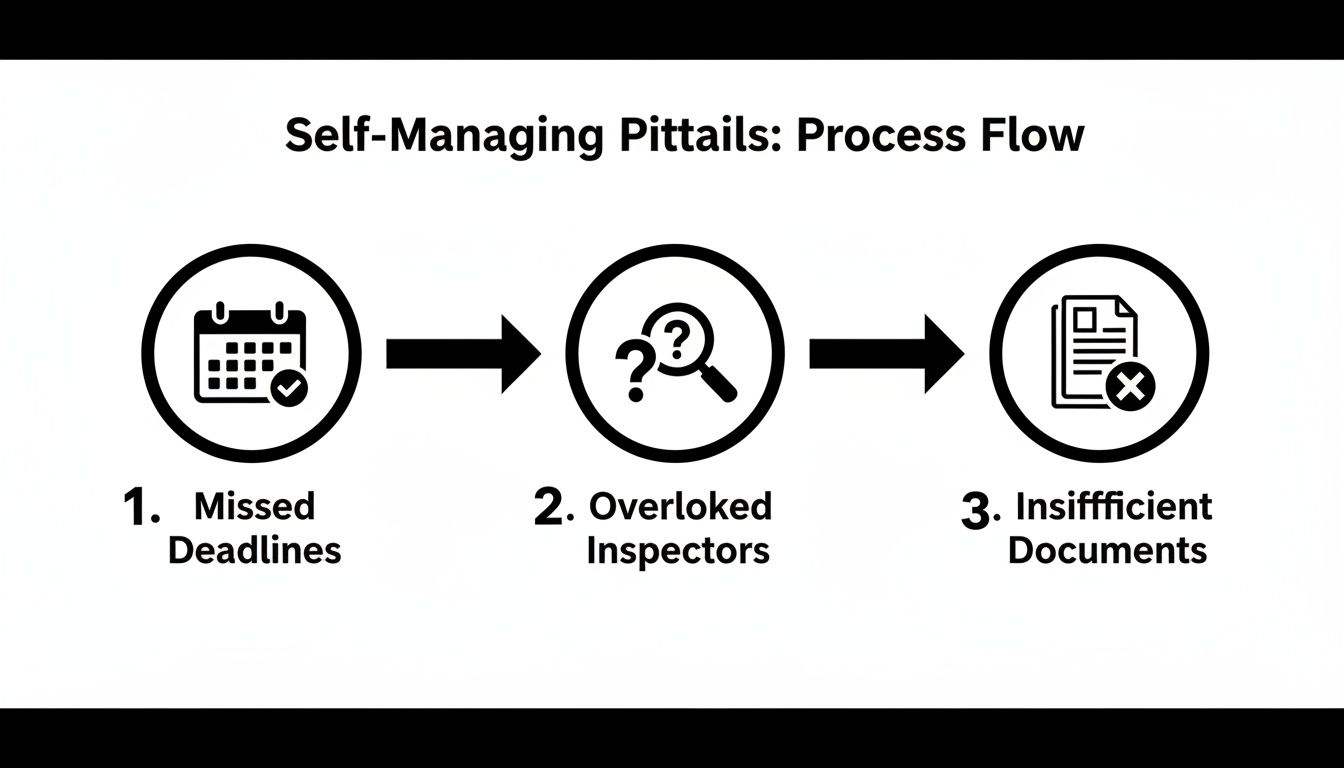
Each of these steps—tracking deadlines, vetting professionals, and organizing documents—is where professional oversight can save you from a very expensive problem.
Step 1: Conduct a Property Compliance Audit
First, you need to find out exactly which new safety rules apply to your property. Not every rule affects every building, so a focused audit is the only way to know for sure.
- Identify Property Features: Walk your property and list all "exterior elevated elements." This includes balconies, decks, porches, raised walkways, and outdoor stairs.
- Review Building Classification: What kind of property is it? Is it a single-family home, a duplex, or a multi-unit building with three or more units? This is very important for laws like SB 721 and SB 326.
- Check Fire Hazard Zone: Use the official Monterey County maps to see if your property is in a High or Very High Fire Hazard Severity Zone. This will tell you your defensible space duties.
This first audit gives you a clear picture of your property's specific compliance needs. It lets you focus your energy where it matters most.
Step 2: Create a Compliance Calendar
With your audit done, it's time to get organized. A simple compliance calendar is a powerful tool that helps you track important dates and avoid last-minute stress.
- Log Inspection Deadlines: For any property that needs SB 721 or SB 326 inspections, the first one was due by January 1, 2025. Go ahead and mark your calendar for the next one—inspections are required at least once every nine years.
- Schedule Annual Fire Safety Tasks: Set aside time every spring for your defensible space work. You want this done before fire season starts here in Monterey County. Also, add reminders to test smoke detectors and check your fire extinguishers.
- Set Vendor Vetting Reminders: Add a task 60-90 days before any big deadline to start finding and scheduling your certified professionals. The best inspectors are always busy, so booking in advance is a must.
Step 3: Vet and Engage Certified Local Professionals
This is one area where you cannot cut corners. The law is very clear about who is qualified to do these inspections. Hiring the wrong person will waste your money and make the inspection invalid.
When you hire for a structural inspection, make sure the professional is one of the following:
- A licensed architect
- A licensed civil or structural engineer
- A certified building inspector with the right credentials
For owners in Salinas and the surrounding communities, working with a professional who knows the local area is a huge plus. They understand local building codes and have relationships with other trusted vendors.
Always ask for proof of their license and insurance before you sign any contract. A professional property manager like Coast & Valley, founded by local expert Amy Salmina, already has a network of these experts, fully vetted and ready to go. This takes all the guesswork out of it for you.
Step 4: Establish a Robust Documentation System
When it comes to liability and insurance, your records are your best defense. Your documents need to be organized, complete, and easy to find.
- Create a Digital Compliance Folder: Use a secure cloud service like Dropbox or Google Drive to store all your documents. Create folders like "Structural Inspections," "Fire Safety," and "Vendor Contracts."
- Scan and Save Everything: Make it a habit to digitize every inspection report, repair invoice, email, and certificate. Name your files clearly (e.g., "Balcony_Inspection_Report_May_2025.pdf").
- Maintain a Communications Log: Keep a simple log of important talks with inspectors, city officials, and vendors. Note the date, name, and key points discussed.
This digital file becomes a permanent record of your responsible ownership. It’s one of the smartest things you can do to protect your asset's value.
How Professional Management Shields Your Investment

These new safety rules are raising the stakes for high-value properties, and navigating them alone is a heavy lift. This is exactly where professional management acts as your shield, closing the gap between complex rules and your peace of mind.
A dedicated property manager is your compliance partner. They turn a stressful, time-consuming task into a smooth, professionally handled process. This is the perfect solution for busy professionals and serious investors who need to know their asset is protected without getting lost in the details.
The Coast & Valley Compliance System
At Coast & Valley, we don’t just react to new rules; we build a proactive system to defend your investment. Think of this system as our promise to protect your asset's value and reduce your legal risk.
Our approach is built on a few key actions:
- A Master Compliance Calendar: We track every inspection deadline for your property, from structural checks in Salinas to fire safety in Carmel. Nothing is missed.
- Vetted Vendor Coordination: We send licensed and insured experts from our trusted network of Monterey County professionals. This guarantees all work is done correctly and meets legal standards.
- Digital Record-Keeping: Every inspection report, repair invoice, and compliance certificate is digitized and stored in your secure online owner portal, giving you easy access and a clear record.
This organized oversight ensures your property doesn’t just follow the law—it stays a top-tier, well-maintained asset, protecting your ROI.
For owners of high-value estates across Monterey County, professional management is the best way to reduce legal risk, protect asset value, and avoid the stress of last-minute compliance emergencies.
Turning Compliance into an Advantage
Beyond just avoiding fines, our proactive management turns compliance into a real benefit for your investment. A property with a perfect, documented history of safety is more attractive to high-quality tenants. It also gets its full value when it's time to sell.
We make sure your property remains a premium asset in a competitive market. This concierge-level oversight is how you protect your investment and save valuable time. You can get a better sense of our approach to asset protection and see how a premier property management company in Monterey protects your investment.
By trusting your property to Coast & Valley, you gain the freedom that comes from knowing every detail is being managed with precision, professionalism, and your best interests first.
Your Questions, Answered
When new rules like these come out, a lot of questions come up. Understanding the details can feel overwhelming, but getting clear answers is the first step to protecting your investment. Here are simple answers to the most common questions we're hearing from high-value property owners across Monterey County.
Which Properties Are Most Affected by These Structural Inspection Laws?
The laws, specifically Senate Bills 721 and 326, focus on multi-unit residential buildings. In general, if you own a building with three or more units that has outdoor elevated areas—like balconies, decks, or exterior stairs—these rules apply to you.
The details can vary based on your building's construction. For owners with multi-family properties in Salinas or luxury condos in Monterey, the only way to be sure is with a professional compliance audit.
How Often Are These Safety Inspections Required?
The timelines are no longer suggestions; they are strict legal deadlines.
- Structural Inspections: For balconies and other elevated structures, a full inspection by a licensed professional is required at least once every nine years. The deadline for the first inspection has already passed, making compliance an immediate priority for many owners.
- Wildfire Defensible Space: For properties in high-risk fire zones, which include large parts of Monterey County, inspections by local fire departments are usually an annual event. However, you as the owner are responsible for maintaining that defensible space all year.
What Happens if I Miss an Inspection Deadline?
Missing a deadline is a serious issue. You can expect to get violation notices from local code enforcement, which come with large fines that increase over time.
More importantly, you create a huge liability. If an accident happens and you are not in compliance, the legal and financial results could be devastating. It can also give your insurance company a reason to not renew your policy or even deny a claim related to the incident.
Can My Regular Handyman Perform These Inspections?
No, and this is a point you cannot get wrong. The law is very clear: these structural inspections require a qualified, licensed professional.
You must hire one of the following:
- A licensed architect
- A licensed civil or structural engineer
- A certified building inspector with the proper credentials
Using an unqualified person doesn't meet the legal standard and leaves you completely exposed to all the risks. A professional property manager's job is to ensure only vetted, certified experts handle these critical tasks, which is vital as new safety rules are raising the stakes for high-value properties.
Protecting your high-value property from these growing risks demands proactive, expert oversight. Coast and Valley Properties provides the comprehensive compliance management needed to shield your investment, preserve its value, and give you complete peace of mind.
Contact us today to schedule a professional compliance evaluation for your Monterey County property.