
Your Guide to a Real Estate Management Contract
A real estate management contract is the legal agreement that starts the professional partnership between you, the property owner, and a management company. Think of it as the official playbook for how your investment property will be taken care of. It clearly defines every responsibility, from collecting rent in Salinas to handling late-night maintenance calls.
This document is essential for creating a relationship that’s transparent, effective, and protective for everyone involved. For busy owners of high-end properties in Monterey County, it’s your guarantee of peace of mind.
Your Blueprint for a Successful Partnership
It's easy to see a contract as just another legal document, but it’s better to view your real estate management contract as the master plan for protecting and growing your investment. This agreement ensures you’re getting the concierge-level service you expect.
A well-crafted contract turns verbal promises into legally enforceable duties, making sure your asset is managed to your exact standards. It provides a clear roadmap for success from day one.
Defining Roles and Responsibilities
The contract acts as a shield, ensuring everything is done in compliance with local and state laws while spelling out who is responsible for what.
Here’s an actionable checklist of what it should cover:
- Financial Duties: Outlines exact procedures for rent collection, how security deposits are handled in line with California law, and the process for paying property-related bills.
- Maintenance Protocols: Specifies how routine upkeep and emergency repairs will be managed, whether it’s seasonal gutter cleaning in Carmel or a plumbing issue in a South County town like Soledad.
- Leasing and Tenant Relations: Details the manager's authority to market your property, screen potential tenants, and enforce the lease terms.
This infographic breaks down the foundational elements you'll typically find in a management agreement.
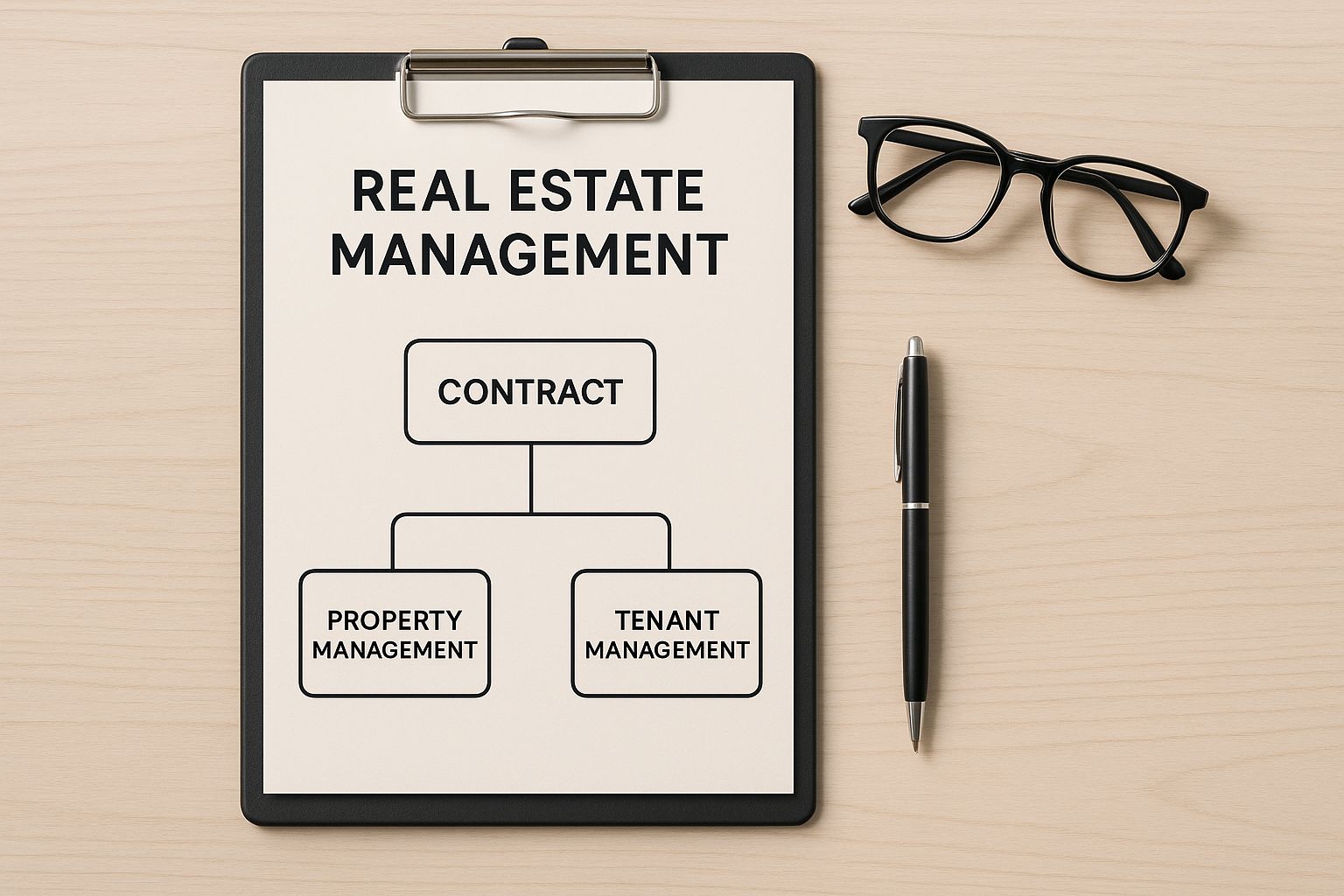
As you can see, each part of the contract builds upon the others to create a complete framework designed to protect your property and maximize its ROI.
Anatomy of a Real Estate Management Contract
Here's a quick look at the essential elements every Monterey County property owner should find in their management agreement.
| Key Section | What It Defines | Why It Protects Your Investment |
|---|---|---|
| Services & Fees | The specific duties of the manager and the matching fee structure. | Creates financial transparency and prevents surprise costs. |
| Term & Termination | The length of the agreement and the rules for ending the partnership. | Provides a clear exit strategy if the relationship isn't a good fit. |
| Owner's Responsibilities | Your obligations, such as funding a reserve account and keeping insurance. | Clarifies your role and ensures the manager has what they need to do their job. |
| Liability & Indemnification | Who is legally and financially responsible for issues or damages. | Limits your personal liability and defines the manager's accountability. |
| Financial Reporting | The schedule and format for financial statements and reports. | Guarantees you have a clear view of your property’s financial performance. |
Having these sections clearly defined in writing is a non-negotiable step toward a healthy, professional relationship.
Building Trust Through Clarity
Ultimately, the contract is a tool for building a transparent and profitable partnership. It sets clear expectations for communication, financial reporting, and performance metrics right from the start.
When every detail is in writing, it creates a relationship built on trust and mutual understanding. This legal framework isn't just a formality—it's your first and most important step toward maximizing your property’s ROI while minimizing your personal stress.
Actionable Tip: For a deeper look into the specifics required in our state, explore our guide to the property management contract in California. This resource covers state-specific clauses that every Monterey County investor should know.
The Non-Negotiable Clauses for High-Value Properties

When you own a luxury home in a place like Pebble Beach or Pacific Grove, using a generic, one-size-fits-all contract is a risk you can’t afford. Your investment is unique, and your real estate management contract should be too. The real power is in tailoring specific clauses to handle the demands of a high-value asset.
This isn't about making things more complicated; it's about creating absolute clarity to prevent expensive misunderstandings. Let's walk through the three most critical clauses every high-end property owner in Monterey County must get right.
Defining the Scope of Services
At the heart of the agreement is the "Scope of Services" clause. This is where you move past vague promises and spell out exactly what your property manager will do. For a high-end property in Carmel or anywhere along the coast, this section needs to be incredibly detailed.
Actionable Checklist for Your Services Clause:
- Elite Vendor Coordination: Specify the process for hiring vetted, insured contractors for everything from landscape architects to technicians servicing high-end appliances.
- Concierge-Level Tenant Relations: Detail how the manager will communicate with high-caliber tenants, ensuring their needs are handled professionally and quickly.
- Proactive Maintenance Schedules: Outline a preventive care plan, including seasonal tasks crucial for coastal properties, like checking for salt air corrosion or prepping for winter rains.
- Comprehensive Marketing Strategy: Describe how the property will be marketed to attract the right tenants, including professional photography and listings on premium platforms.
A weak services clause leaves too much gray area. A strong one acts as a clear checklist for every action your manager is expected to perform, protecting your investment.
Demystifying the Fee Structure
Financial transparency is non-negotiable. The "Fee Structure" clause needs to be crystal clear, leaving no room for misinterpretation. This section details how your manager gets paid and which services are included in their main fee.
Here's what to look for:
- The Management Fee: Usually a percentage of the monthly rent collected, covering day-to-day oversight.
- The Leasing Fee: A one-time fee for finding and placing a new tenant, covering marketing, showings, and screening.
- Project Management Fees: An extra fee for overseeing major renovations that fall outside of normal maintenance, often a percentage of the project cost.
- Miscellaneous Costs: The clause should clarify who pays for things like eviction proceedings or specific marketing expenses.
Actionable Tip: By clearly itemizing every potential cost, this clause prevents the "nickel-and-diming" that can sour a good relationship. For a more detailed breakdown, explore the typical property management fees in California to see how these structures work in our local market.
Clarifying the Term and Termination Clause
Even the best partnerships need an exit strategy. The "Term and Termination" clause defines how long the contract lasts and the exact steps for ending it.
This section must clearly state:
- Initial Term Length: Most contracts start with a one-year term.
- Renewal Process: How the contract renews, often automatically on a month-to-month basis unless one party gives notice.
- Termination Without Cause: The amount of written notice required to end the agreement for any reason, typically 30 to 60 days.
- Termination For Cause: The specific conditions that allow you to end the contract immediately if the manager fails to perform their duties.
This clause is your safety net. It protects you from being locked into an underperforming partnership and ensures you always have control over who manages your valuable Monterey County asset.
How Your Contract Ensures Financial Transparency

For any serious investor, trust is built on absolute financial transparency. Your real estate management contract is the foundation of that trust. It’s a legally binding promise, detailing exactly how every dollar related to your property is handled, reported, and protected.
This part of the contract must spell out every financial responsibility, making sure you always have a precise picture of your investment's performance, whether it's a luxury home in Monterey or a multi-unit complex in Soledad.
Handling of Funds and Trust Accounts
A critical job of the management agreement is to define how all money flows. Vague language here is a massive red flag.
California law is very clear: client funds, like rent and security deposits, must be held in a trust account. This is a separate bank account that keeps your money completely separate from the property management company's own operating funds.
Your contract must state:
- Use of a Trust Account: It needs to confirm a dedicated, federally insured trust account will be used for all your property-related funds.
- Deposit Timelines: The agreement should detail how quickly rent payments and other funds are deposited.
- Security Deposit Management: It must outline the process for holding and returning tenant security deposits in strict compliance with California law.
This legal separation of funds isn't optional; it's a fundamental safeguard that protects your money.
Detailed and Accessible Financial Reporting
How and when you get financial information is just as important as how the money is handled. A professional contract will set a clear schedule and format for financial reporting, guaranteeing you receive consistent, easy-to-understand updates.
Your monthly owner statement should be a comprehensive report. Here’s a checklist of what the contract should promise:
- Itemized Income Statements: Showing all rent collected.
- Detailed Expense Reports: Listing every expense, from routine landscaping in Pacific Grove to an emergency repair in King City, backed up with copies of invoices.
- Rent Roll: A current list showing the payment status of every tenant.
- Owner Disbursement Details: Clearly showing the net income transferred to you each month.
At Coast & Valley, our secure online owner portal provides 24/7 access to all this information. This technology puts you in control, allowing you to view real-time financials and download statements whenever it suits you. This focus on efficiency and owner convenience is a core part of our service.
Protecting Your Investment in Monterey County
Owning a high-value property in Monterey County involves navigating a complex web of state and local laws. From Salinas to the coast in Pacific Grove, your real estate management contract is the single most important document protecting you from legal trouble and unexpected costs.
Think of this agreement as your strategic legal shield. A professionally drafted contract ensures your property manager is legally bound to follow every regulation. This is where a manager with deep local roots, like Coast & Valley’s founder Amy Salmina, provides immense value—they know the specific ordinances in towns like Soledad or Gonzales and how they fit with broader state laws.
Compliance and Fair Housing Protections
One of the biggest financial risks for a landlord is a Fair Housing violation. Federal and California laws are incredibly strict, and one mistake in advertising or screening can lead to a costly lawsuit.
Your management contract must make it clear that your property manager is responsible for all legal compliance. The agreement should spell out their duties to:
- Follow all guidelines from the Federal Fair Housing Act and California's Fair Employment and Housing Act (FEHA).
- Use inclusive, non-discriminatory language in all marketing.
- Apply the same screening criteria to every single applicant.
- Correctly handle requests for reasonable accommodations from tenants with disabilities.
By contractually giving these duties to your manager, you shift a huge amount of legal burden off your shoulders. It’s the best way to ensure your property is run professionally and legally.
Getting Insurance and Indemnification Right
When something goes wrong, who pays? This is a critical question your management agreement must answer through insurance requirements and an indemnification clause.
What Is an Indemnification Clause? In simple terms, it's a promise where one party (your property manager) agrees to cover your losses if their mistake causes a problem. It’s designed to protect you from being financially responsible for something your manager did.
The contract must clearly state the insurance coverage both you and your manager need to carry.
Checklist for Insurance Requirements:
- For You (Property Owner):
- Liability Insurance: A solid landlord policy to cover things like a slip-and-fall accident.
- Property Insurance: Covers the physical building from damage like fire or storms.
- For Your Property Manager:
- Errors and Omissions (E&O) Insurance: Protects you if the manager makes a professional mistake, like a wrongful eviction.
- General Liability Insurance: Covers claims for injury or property damage from the manager's business operations.
By defining these duties and including a strong indemnification clause, your contract builds a financial firewall. It makes sure that if a legal issue arises from your manager’s actions, their insurance policy—not your personal bank account—is the first line of defense.
Actionable Tip: For more information, you can learn more about California's landlord-tenant laws in our detailed guide.
Defining Authority and Owner Responsibilities
A great partnership runs on clear boundaries. Your real estate management contract draws a distinct line between the authority you give your property manager and the core obligations that remain yours. Getting this balance right is crucial for a smooth relationship that protects your high-value asset in Monterey County.
This part of the contract is the rulebook for daily operations. It gives your manager the power to handle issues efficiently without calling you for every little thing. For a busy owner, this means fewer interruptions and more peace of mind.
Delegating Authority to Your Manager
For your property manager to be effective, they need the authority to act on your behalf in specific, pre-approved situations. This isn't about giving up control; it’s about delegating tasks to a trusted expert.
The contract should clearly give them the power to:
- Approve Qualified Tenants: Screen applicants based on agreed-upon criteria and sign lease agreements, getting great tenants into your property faster.
- Authorize Necessary Repairs: Set a spending limit (e.g., $500) for maintenance. This lets them fix a leaking pipe in a Carmel home or a broken appliance in a Salinas rental immediately, stopping small issues from becoming expensive disasters.
- Enforce Lease Terms: Issue notices for late rent or other lease violations, making sure the rules are consistently upheld.
This delegation is how you unlock the time-saving benefits of professional management. By defining these powers in writing, you create a system where your investment is managed efficiently, preserving its value and keeping tenants happy.
Clarifying Owner Responsibilities
While your manager handles the daily tasks, certain responsibilities always stay with you. Spelling these out in the contract prevents misunderstandings and ensures your manager has what they need to succeed.
Your main obligations typically include:
- Maintaining Adequate Insurance: You are responsible for carrying the proper landlord and liability insurance for the property.
- Funding the Reserve Account: You must provide and keep a minimum balance in a reserve fund for approved repairs and expenses.
- Making Major Decisions: Any decision that costs more than the pre-set spending limit, like a roof replacement or major renovation, will always require your direct approval.
This clear division of labor builds trust and makes everything run more smoothly, protecting your time and your investment.
Partnering with a Local Monterey County Expert
The property manager you choose is the single most important decision for your investment's success. This isn't just another vendor; this firm becomes the on-the-ground steward of your valuable asset. At Coast & Valley, we understand that. It’s why our approach to the real estate management contract is built on local expertise, transparency, and trust—all designed to protect your interests.
This is about forging a partnership to preserve your asset's value and maximize its return. We make sure our agreements are clear, fair, and customized to the unique needs of high-end properties right here in the Monterey Bay Area.
Local Insight Written into Every Clause
Drawing on founder Amy Salmina’s deep family roots in the Salinas Valley, our contracts are shaped by decades of local, hands-on experience. A generic agreement can’t account for the specifics of our market—from seasonal rental trends in Carmel to the unique maintenance needs of homes in South County towns like Soledad and King City.
We believe the best contract reflects a strong partnership—one where every term is understood, every fee is transparent, and every action is aligned with your goals. It’s the difference between simple management and true asset stewardship.
This commitment to local knowledge makes your contract a practical tool, not just a legal formality. It ensures your property is managed with an understanding of the community, from local vendor relationships to seasonal maintenance needs.
A Partnership Focused on Your ROI
Ultimately, your choice of a property manager comes down to trust and results. Our contracts are structured to give you both. We invite serious investors and high-end property owners to see the difference a dedicated local expert can make.
By aligning our services with your financial goals, we provide a level of service that goes beyond simple maintenance and rent collection. It's a comprehensive approach to asset protection and growth.
Actionable Next Step: To understand what makes a manager the right fit for you, check out our guide on how to choose a property management company.
Common Questions About Management Contracts
If you're a high-end property owner in Monterey County, you want absolute clarity before you sign. A real estate management contract is the foundation of our partnership, and it's essential to have all your questions answered. Here are straightforward answers to the most common questions we hear from busy investors and homeowners in our community.
What Is the Typical Length of a Management Contract?
Most professional management agreements start with a one-year term. This gives both of us time to establish a productive relationship and for you to see tangible results.
After that initial year, the contract often rolls over into a more flexible month-to-month arrangement. A crucial detail is the "Termination" clause; it should clearly state the required notice period to end the partnership, typically 30 to 90 days. For owners with properties in seasonal markets like Carmel, it’s smart to make sure this term aligns with your rental goals.
Are the Terms of a Management Contract Negotiable?
Yes, absolutely. A good management agreement should be the start of a conversation, not a rigid document. A reputable firm like Coast & Valley will be happy to walk you through the contract and discuss terms to ensure it serves your best interests.
Common areas for discussion include:
- Management Fee Percentage: This can sometimes be adjusted based on your property type or the size of your portfolio.
- Ancillary Service Costs: We can clarify fees for extra services, like overseeing a major renovation.
- Repair Authorization Limits: The spending limit a manager has for repairs without your direct approval is often negotiable.
Think of the contract as a collaborative roadmap. The goal is to build an agreement that feels fair and transparent, setting the stage for a long and successful partnership.
What Happens If I Am Unhappy with My Property Manager?
This is where a "Termination for Cause" clause comes in. This is your primary protection, giving you the right to end the agreement if the manager fails to uphold their duties—like neglecting critical maintenance or not collecting rent.
This clause will spell out the required steps, which usually involve giving written notice and allowing the manager a period to fix the problem. This is a non-negotiable safeguard that ensures accountability and protects your investment.
Who Handles Finding and Screening New Tenants?
That's one of our primary jobs, and it will be clearly defined in the "Scope of Services" section. The agreement should detail our entire process for marketing your home, running comprehensive background and credit checks, verifying employment, and signing the lease.
For luxury homes in the Monterey Bay Area, from Salinas to Pebble Beach, a rigorous screening process is essential. It’s how we place qualified tenants who will treat your property with the respect it deserves, protecting your asset for the long term.
Your property deserves more than just management; it deserves expert stewardship. Coast and Valley Properties provides the concierge-level service and local expertise necessary to protect and grow your investment.
Contact us today for a personalized consultation of your property management needs.