
When a Single Missed Inspection Becomes a Six-Figure Problem
Direct Answer: A missed rental inspection can expose Monterey County landlords to habitability lawsuits, code violation fines, and undetected damage that compounds into six-figure losses.
Most Monterey County landlords don’t lose money all at once. They lose it slowly — one skipped walkthrough, one unnoticed leak, one tenant who said everything was fine when it wasn’t. By the time the damage is visible, the bill is already deep into five or six figures.
California law doesn’t give landlords much grace here. Under the warranty of habitability, you’re legally responsible for conditions at your property whether you knew about them or not. That distinction matters enormously in a dispute — and in a courtroom.
This article covers how missed inspections turn into real financial exposure, what the law actually requires of Monterey County owners, and what a professional inspection process looks like compared to the informal check-ins most self-managing landlords rely on.
How Undetected Damage Compounds Over Time
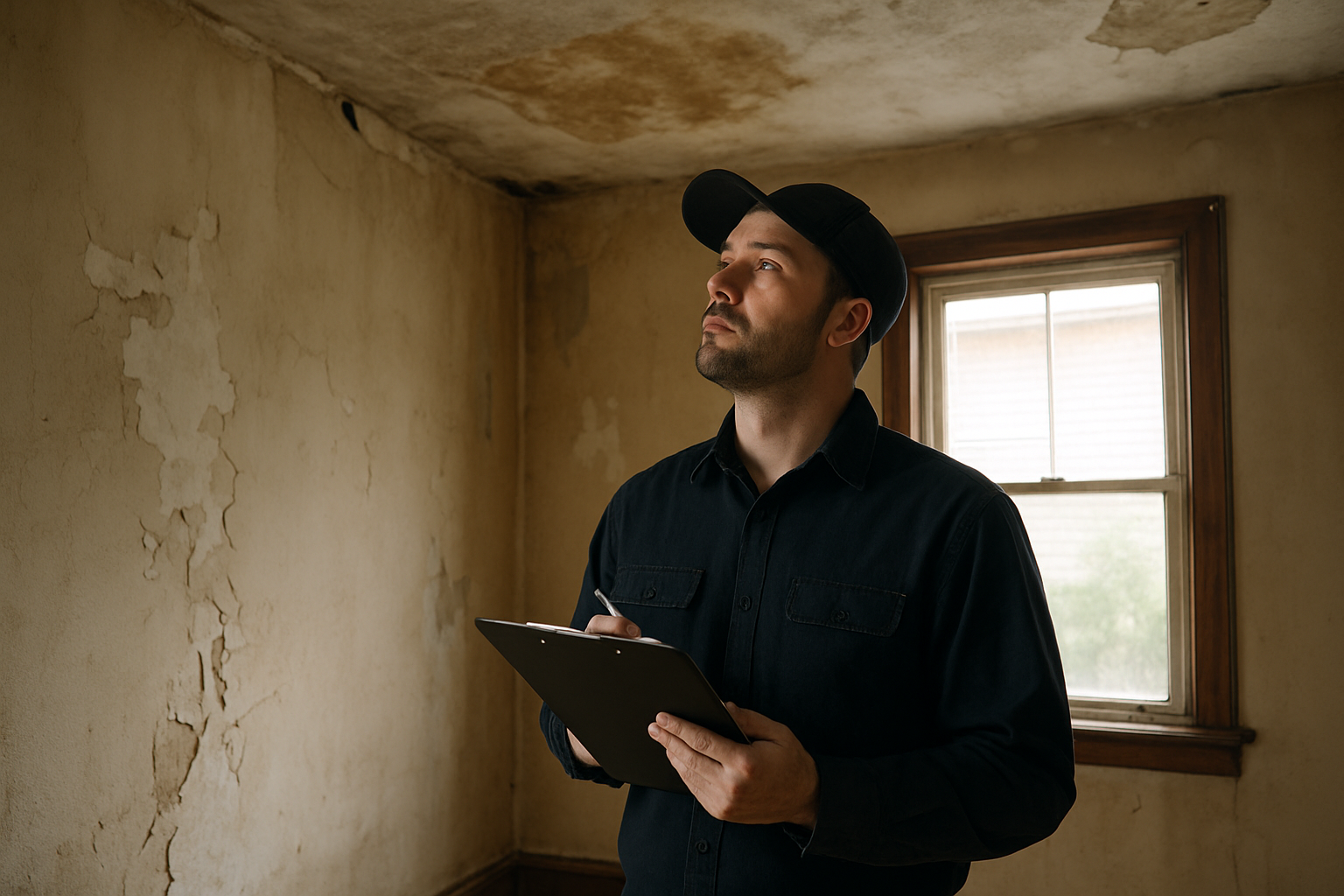
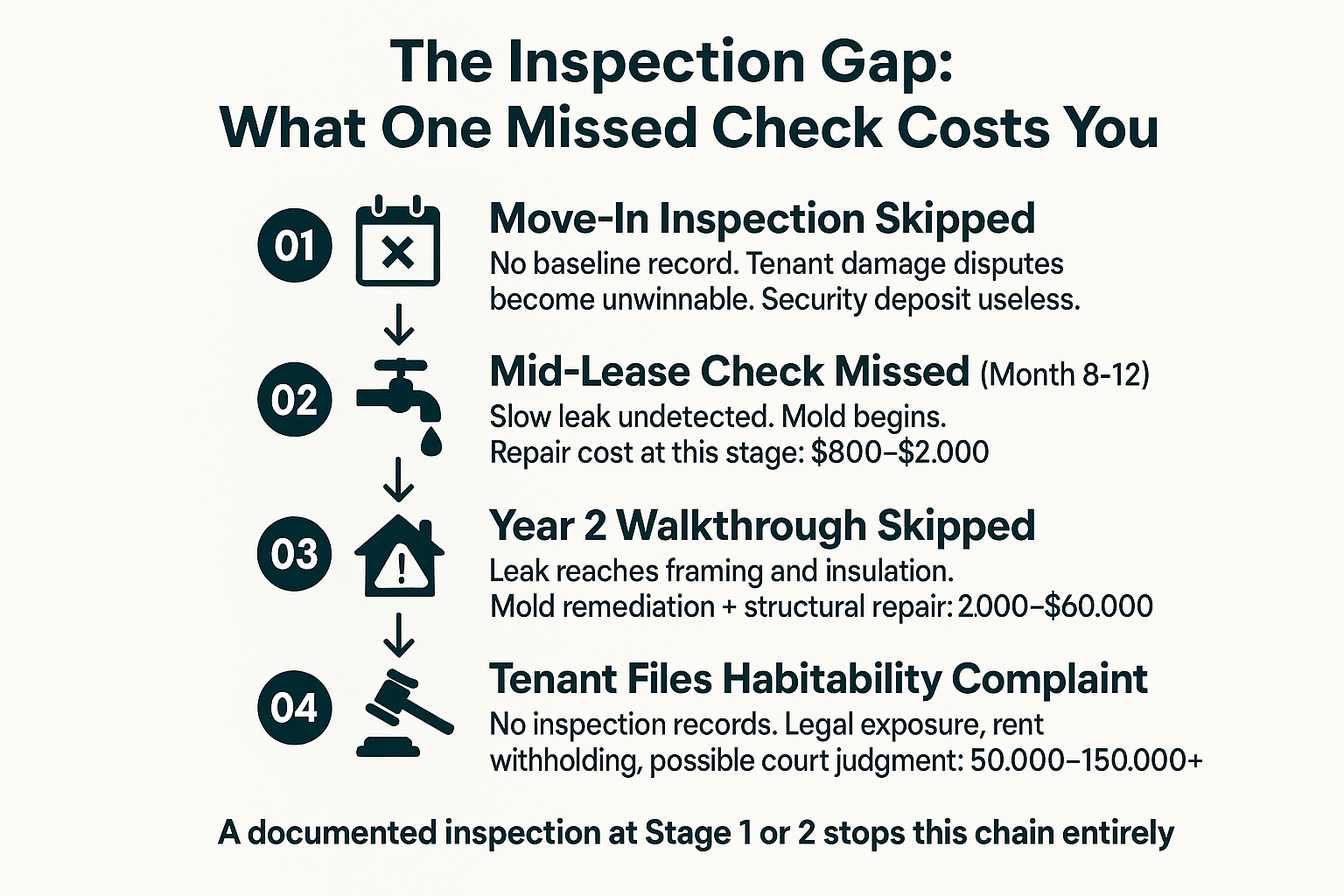
A slow roof leak in a Salinas rental might cost $800 to $1,200 to fix if caught in year one. Left alone for two to three years — which is common when owners skip regular inspections — that same leak can destroy insulation, rot structural framing, and trigger mold remediation. At that point, you’re looking at $30,000 to $80,000 depending on the scope, and that estimate doesn’t include tenant displacement, temporary housing costs, or lost rent during repairs.
The damage categories that compound fastest in Monterey County’s climate include:
- Roof and flashing failures — coastal fog and seasonal rain accelerate deterioration, especially on older homes near Pacific Grove or the beach corridors
- Plumbing slow leaks — inside walls and under slabs, invisible for months until drywall fails
- HVAC neglect — filter buildup leads to coil freeze, refrigerant loss, and eventual compressor failure, typically $3,500 to $6,000 to replace
- Pest intrusion — termites and rodents move fast in Central Coast properties with wood-frame construction; quarterly gaps in inspection let infestations establish
- Deferred tenant-caused damage — scuffs become gouges, small holes become structural concerns, and unreported modifications become your liability
None of these problems announce themselves. They surface when a tenant finally calls — or when you walk in after they leave. What a property manager looks for during a rental walkthrough covers the specific items that separate a professional inspection from a casual visit.
California Law and What It Actually Requires
California’s warranty of habitability under Civil Code 1941 doesn’t require you to be negligent to be liable. It requires only that the condition existed at your property. If a tenant can show they lived with a habitability problem — broken heat, water intrusion, mold — and that you had reasonable opportunity to discover and fix it, the legal exposure is substantial.
In practice, landlords who lack documented inspection records are in a much weaker position than those who can show a written inspection history. Courts and arbitrators look at what you knew, when you knew it, and what you did about it. A binder of dated, signed inspection reports is your paper trail. An informal memory of “checking in” is not.
Monterey County owners also need to be aware of the City of Salinas Residential Rental Registration Ordinance (Ordinance 2663), adopted in 2024, which requires rental property registration and creates a framework for city-initiated inspections. Failing to register or maintain compliant records puts owners at risk of fines and can complicate any future dispute — even one that originates from a civil habitability claim rather than a code complaint.
For a deeper look at how state and local regulations interact for multi-unit owners, how multi-unit owners in Monterey County stay legally compliant breaks down the compliance picture in practical terms.
The Inspection Gap: How Small Problems Become Large Losses
This infographic maps how a single missed inspection at each stage of a tenancy translates into a specific, predictable financial outcome.
What a Professional Inspection Process Actually Looks Like
There’s a meaningful difference between a landlord stopping by and a structured property inspection. The first is a social call. The second is a documented risk management event.
A professional inspection process includes:
- A written baseline at move-in — room-by-room condition notes, photos with timestamps, and a signed acknowledgment from the tenant
- Mid-lease walkthroughs at 6 to 12-month intervals — with 24-hour written notice per California Civil Code 1954, documented findings, and any repair requests issued in writing
- Move-out inspection with cost documentation — compared directly against the move-in baseline to support any security deposit deductions
- Vendor follow-up records — written confirmation that flagged repairs were completed, with receipts and dates
This isn’t bureaucracy. It’s the documentation that determines whether you win or lose a dispute.
Self-managing owners often skip the written records, either because they trust their tenants or because it feels like unnecessary paperwork. But California’s security deposit rules under Civil Code 1950.5 require itemized written documentation to justify any deduction — and without a move-in baseline, even a legitimate claim can fall apart. What Salinas property owners get wrong about self-managing covers this pattern in detail, including why good landlords still end up in bad situations.
Inspection Frequency and What Each Stage Protects
This table shows the three inspection points in a standard tenancy, what each one documents, and what financial exposure it protects against.
| Inspection Stage | What It Documents | Financial Risk It Mitigates |
|---|---|---|
| Move-In Baseline | Pre-existing condition, tenant acknowledgment, timestamped photos | Security deposit disputes, tenant damage claims, liability for pre-existing defects |
| Mid-Lease Walkthrough (6–12 months) | Maintenance needs, lease compliance, early damage identification | Compounding repair costs, habitability complaints, deferred maintenance liability |
| Move-Out Inspection | Condition changes since move-in, cost documentation for deductions | Security deposit litigation, small claims disputes, unreturned unit preparation costs |
The Legal Risk That Gets Overlooked Most Often
Landlords tend to think about inspection failures in terms of repair costs. But the deeper exposure is often legal — specifically, a tenant’s right to withhold rent or pursue damages under California’s repair-and-deduct provisions.
Under Civil Code 1942, a tenant can spend up to one month’s rent on repairs for habitability issues and deduct that amount from rent — without your approval — if you failed to address the problem within a reasonable time after notice. In Salinas, where average rents on single-family homes run $2,200 to $3,000 per month, that deduction right adds up fast. And it doesn’t require a lawsuit to trigger.
More serious habitability failures — mold, heating failure in winter, persistent water intrusion — can open the door to rent withholding claims that go months before resolution. By then, you’ve lost rental income, paid for emergency repairs, and possibly spent on legal defense. The total frequently exceeds $50,000 before any judgment is entered.
This is why documentation at every inspection stage isn’t just good practice. It’s your primary defense. And it’s worth reading why eviction rules make tenant disputes harder for Monterey County landlords to understand how the eviction framework connects to habitability disputes in this market specifically.
Carbon Monoxide, Smoke Detectors, and Items You Can’t Miss
Beyond physical damage, there’s a category of inspection items that carry direct statutory liability: life-safety equipment.
California requires working smoke detectors in every bedroom and on every level of a rental unit. Carbon monoxide detectors are required in any unit with an attached garage, gas appliance, or fireplace — which covers the vast majority of Monterey County rental homes. These aren’t optional upgrades. Failure to maintain them creates liability exposure that insurance doesn’t always cover cleanly.
Inspection visits are the consistent opportunity to test this equipment, replace batteries, and document that everything was functioning on a specific date. Without that record, a loss event becomes a legal event very quickly. The full breakdown of what California requires is in our guide on carbon monoxide alarms in rented properties.
And because inspections surface these items in real time, they also catch situations like a tenant who has disabled a smoke detector or added a gas appliance without disclosure — both of which shift liability in ways that matter under your insurance policy.
Frequently Asked Questions About Rental Property Inspections in Monterey County
How much notice do I have to give a tenant before a property inspection in California?
At least 24 hours written notice is required under California Civil Code 1954 for routine inspections. The inspection must happen during normal business hours unless the tenant agrees otherwise. There are narrow exceptions for emergencies, but for any planned walkthrough, 24-hour written notice is the floor — not a suggestion.
Can I do inspections more than once a year?
Yes. California law doesn’t set a hard cap on inspection frequency as long as you’re not harassing the tenant. Twice a year is standard and defensible. More frequent inspections are reasonable on a newer tenancy or a property where prior issues have been flagged. What matters is that each visit is documented.
What happens if I don’t have a move-in inspection report and the tenant damages the unit?
Without a documented baseline, your security deposit claim is significantly weakened. The tenant can simply argue the damage was pre-existing, and without a dated, signed move-in report, you have no documentation to contradict that. California courts have consistently sided with tenants in these disputes when landlords can’t show a baseline condition. This is one of the most common and most preventable losses in self-managed rentals.
Does the Salinas Rental Registration Ordinance require inspections?
The City of Salinas Ordinance 2663 (2024) requires rental property registration and creates a framework for city-initiated inspections. While it doesn’t mandate that owners conduct private inspections on a set schedule, failure to maintain compliant and registered properties can trigger city inspections — and any violations found create documented liability. Keeping your own detailed inspection records puts you in a much stronger position if the city comes calling.
Is a text message to my tenant enough to schedule an inspection legally?
Technically, written notice via text can satisfy the notice requirement if the tenant has previously used and accepted that communication method. But a documented notice — emailed, mailed, or delivered through a tenant portal — is far easier to prove in a dispute. Courts want a record. Screenshots of texts can disappear or be disputed. A portal message log or certified delivery is clean evidence.
How does a professional property manager handle inspections differently than a self-managing landlord?
The biggest difference is documentation discipline. Professional management uses standardized inspection checklists, timestamped photos, signed tenant acknowledgments, and software-tracked repair follow-ups. Every visit produces a written record that lives in a file. Self-managing landlords often rely on memory or informal notes — which hold little weight if a dispute escalates. The inspection itself is rarely the issue. It’s the paper trail that determines the outcome.
Want a Second Opinion on Your Current Inspection Process?
Coast & Valley Properties manages residential properties across Monterey County — from Salinas to Carmel — with a documented inspection process built to protect owners from exactly the kind of exposure described above. If you’re managing on your own and want to understand whether your current approach has gaps, reach out directly at (831) 757-1270 or through the contact form at coastandvalleypm.com. A short conversation can clarify a lot.