
Winter Weather Ahead: what Monterey County Property Owners Need to Know
The seasonal shift in Monterey County, from golden autumns to the atmospheric river storms of winter, demands more than just a change of wardrobe. It requires a strategic shift in property management. For owners of high-value homes in Salinas, Pebble Beach, or the serene hills of Carmel Valley, winter is a critical period where proactive maintenance directly translates to asset protection and tenant satisfaction. As a high-end property owner or investor in the Monterey Bay Area, you understand that a delayed response to storm-related damage can result in longer vacancies, liability issues, and expensive fixes that could have been avoided.
The difference between a smooth season and a series of expensive emergencies lies in preparation. This guide provides actionable, concierge-level insights tailored for the unique challenges of our local climate. We will explore the critical steps every discerning owner in Monterey County needs to know now, covering everything from gutter and roof integrity to plumbing protection and tenant communication. By implementing these measures, you can transform seasonal anxieties into confident readiness. This checklist is your roadmap to safeguarding your property’s value, protecting your return on investment, and ensuring a secure, uneventful winter through the stormiest months. Let’s begin.
1. Inspect and Clean Gutters and Downspouts
For high-end residential properties across Monterey County, from Salinas to the coastal communities, gutters and downspouts are the first line of defense against damaging winter rains. Overlooking this simple maintenance task can lead to catastrophic and expensive failures. When gutters clog with leaves, pine needles, and other debris, rainwater has nowhere to go but over the edge, under the roof eaves, or down the siding. This overflow can cause significant water damage to the roof, fascia, walls, and even the property’s foundation.
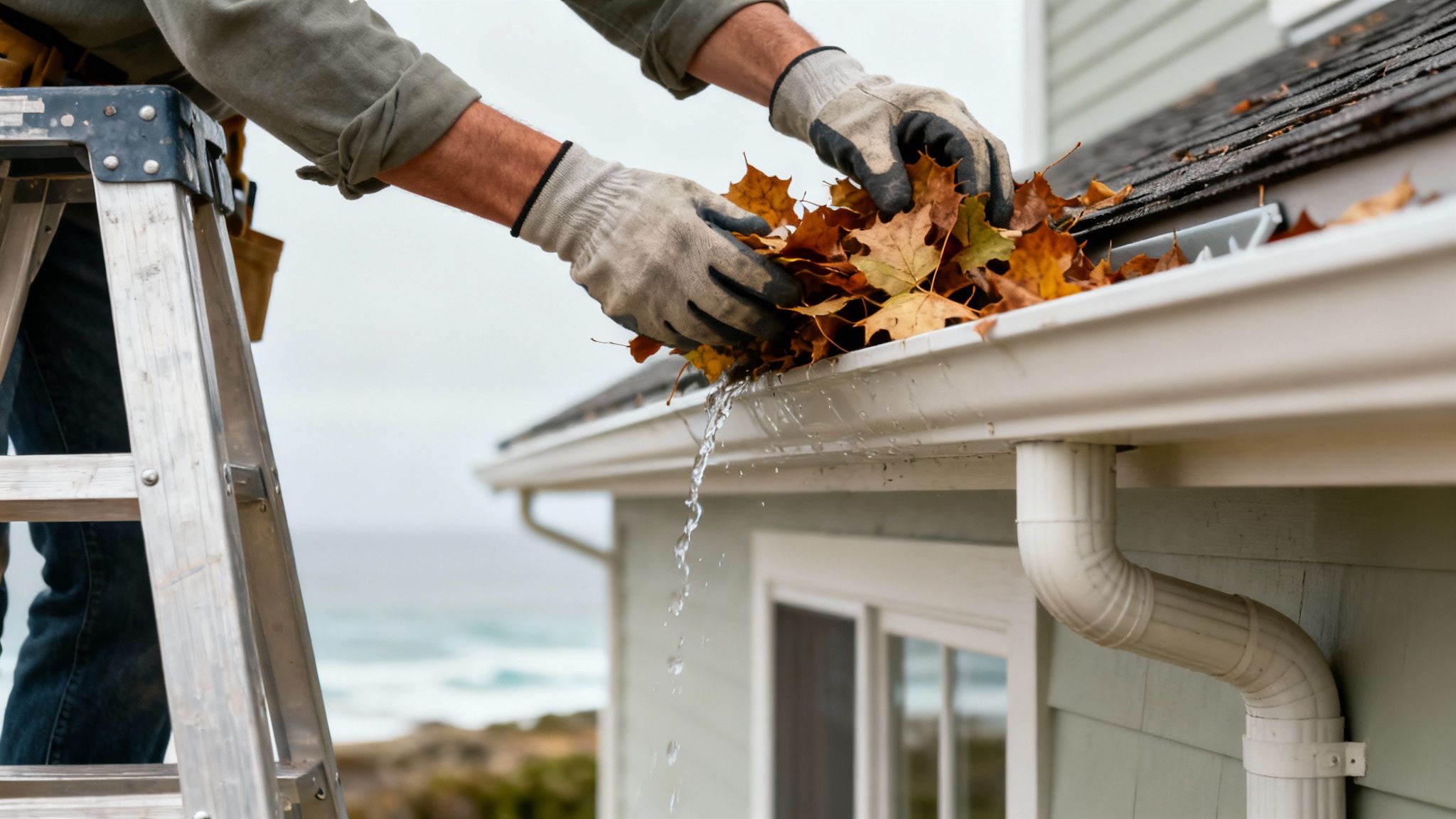
As local property managers, we know that what works in one part of the county might not be enough for another. For instance, a luxury home in Pebble Beach surrounded by Monterey Pines requires more frequent cleaning than a property in Soledad or King City. Similarly, coastal properties in Pacific Grove or Carmel can see a buildup of salt and sand that accelerates corrosion. Ignoring these hyper-local conditions is a risk that premium property owners cannot afford to take.
Actionable Steps for Gutter Maintenance
To effectively prepare your property, follow this step-by-step approach to gutter and downspout maintenance. A proactive plan prevents mid-storm emergencies and protects your investment.
- Schedule a Pre-Season Cleaning: The best time for a thorough cleaning is late fall, after most leaves have fallen but before the first significant storm.
- Ensure Proper Water Diversion: Check that downspouts extend at least 4 to 6 feet away from the foundation. This prevents water from pooling, which can lead to foundation cracks.
- Inspect for Damage: During cleaning, look for cracks, rust, loose fasteners, or sagging sections. These are signs of wear that must be addressed immediately to prevent system failure during a downpour.
- Consider Gutter Guards: For properties in heavily wooded areas like Carmel Valley, installing high-quality gutter guards can significantly reduce the frequency of cleanings and prevent stubborn clogs.
Pro Tip: Document the condition of your gutters with photos before and after cleaning. This record is invaluable for insurance purposes and for tracking long-term wear and tear on your property.
Proactive maintenance is a cornerstone of preserving property value. At Coast & Valley Properties, we coordinate this essential service for our clients, dispatching vetted professionals to ensure the work is done safely and correctly, protecting both your asset and its tenants.
2. Trim Trees and Remove Dead Branches
Monterey County's dramatic winter storms are notorious for high winds, a combination that turns overgrown trees into significant liabilities. For high-end properties, falling branches can cause devastating damage to roofs, vehicles, and power lines, leading to complex repairs. Proactively managing your property’s trees is not just about looks; it's a critical risk-reduction strategy to prepare for the winter weather ahead. Dead or weakened branches are the first to fail in a storm.
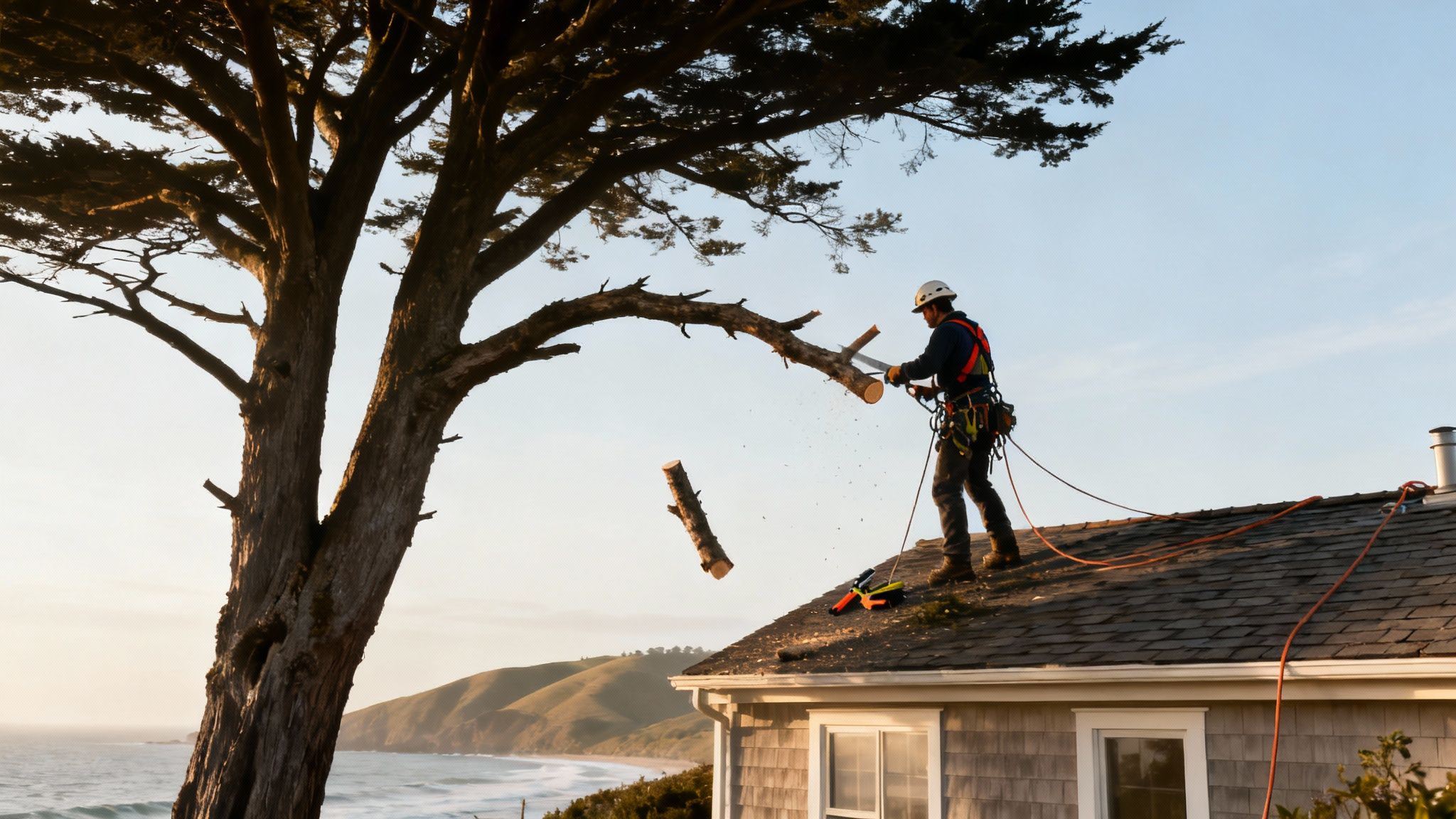
The needs vary significantly across the county. A property surrounded by mature coastal oaks in Carmel Valley or the dense Monterey Pines of Pebble Beach requires a different level of vigilance than a home in a newer Salinas development. Inland areas like Soledad and Gonzales are particularly susceptible to wind-driven tree failure. Neglecting this maintenance can lead to insurance claims and emergency call-out fees that are far more costly than a scheduled, preventative trim.
Actionable Steps for Tree Maintenance
A strategic approach to tree care ensures your property is secure and minimizes the chance of storm-related emergencies. This protects your investment and the safety of your tenants.
- Hire a Certified Arborist: Always engage an ISA-certified arborist for a professional assessment. They can identify weakened limbs and structural issues that an untrained eye would miss.
- Prioritize High-Risk Zones: Focus on trimming branches that are within 10 feet of the roof, windows, and utility lines. Also, address any limbs that overhang driveways or walkways.
- Remove Hazardous Branches: Instruct the arborist to remove any dead, dying, or broken branches.
- Schedule Work in the Fall: The ideal time for trimming is late fall, after the active growing season but before the first major winter storms arrive.
Pro Tip: Before any work begins near power lines, ensure your chosen arborist coordinates directly with the local utility company. This is a critical safety step that should never be overlooked.
Proactive landscape management is fundamental to protecting the value and safety of your rental property. At Coast & Valley Properties, we manage this entire process for our clients, from scheduling certified arborists to overseeing the work, ensuring your property is fortified against winter’s challenges.
3. Seal Air Leaks and Weatherproof Windows and Doors
As winter weather ahead brings cold temperatures and coastal winds to Monterey County, unsealed gaps around windows and doors become major liabilities. These small openings allow expensive heat to escape and invite moisture inside, leading to higher utility bills and potential water damage. For premium properties, maintaining a secure building envelope is not just about comfort; it's about protecting the structural integrity and interior finishes of a significant investment.
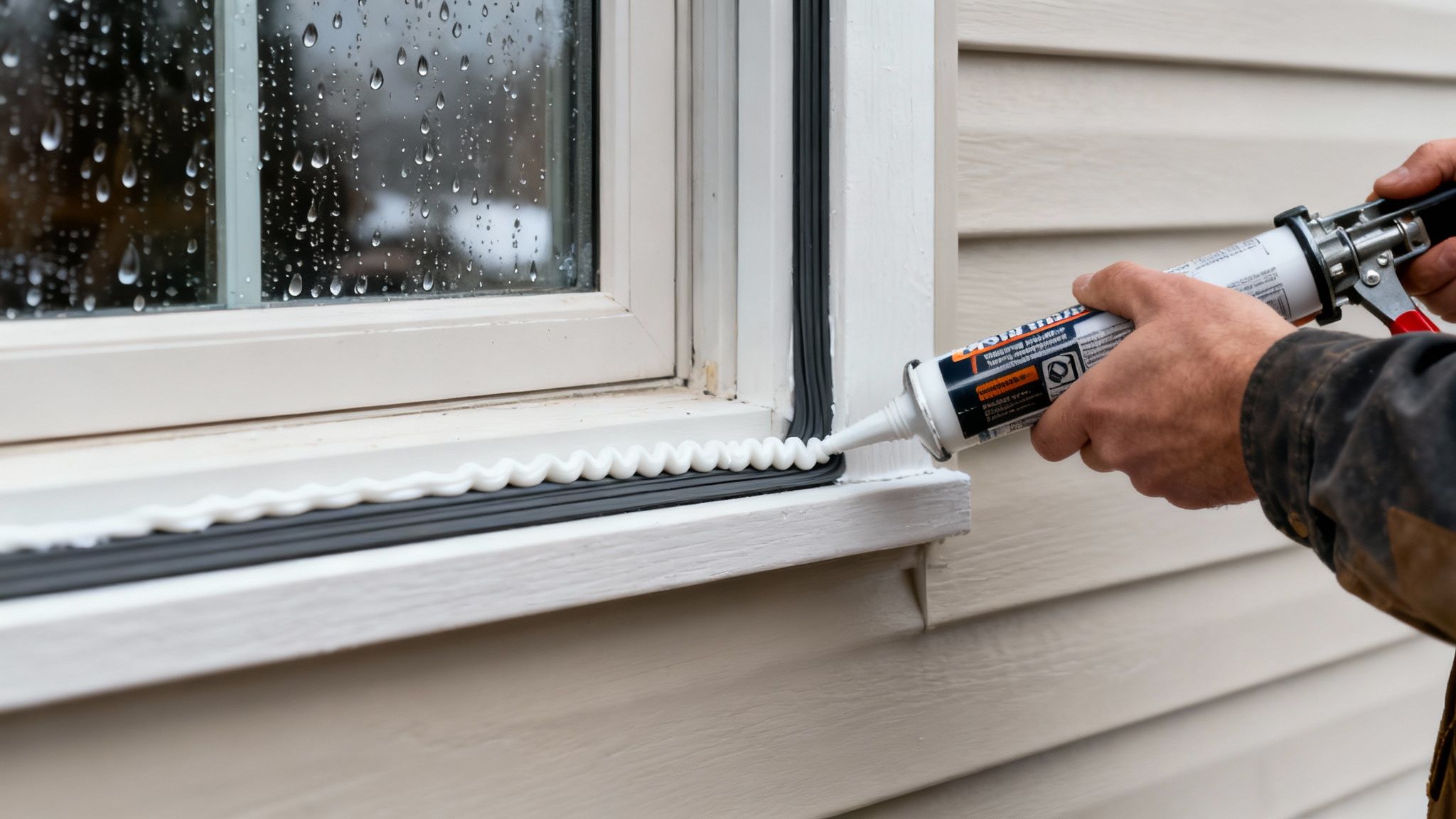
The need for meticulous weatherproofing varies across the county. The historic Victorian and Craftsman homes in Pacific Grove, for instance, often have original windows that require careful attention. Meanwhile, luxury coastal properties in Carmel and Pebble Beach face a constant battle against wind-driven rain and salt spray, which can accelerate the deterioration of seals. Ignoring these vulnerabilities is a risk that high-end property owners cannot afford.
Actionable Steps for Weatherproofing
A systematic approach to sealing your property ensures comprehensive protection against the elements, preventing costly emergency repairs and enhancing tenant satisfaction.
- Inspect and Caulk Gaps: Thoroughly examine the exterior where different materials meet, such as around window frames and door frames. Use a high-quality, exterior-grade silicone or acrylic caulk to fill any visible cracks or gaps.
- Apply or Replace Weatherstripping: Check the seals around all exterior doors and operable windows. If weatherstripping is cracked or missing, replace it to create an airtight seal that blocks drafts.
- Test for Hidden Leaks: On a windy day, carefully use an incense stick or smoke pen near windows and doors from the inside. If the smoke wavers, it indicates an air leak that needs to be addressed.
- Consider Window Film or Upgrades: For properties with older, single-pane windows, applying insulating window film can be a cost-effective solution. For a long-term fix, upgrading to double-pane windows is an investment that pays dividends in energy savings.
Pro Tip: Focus on entry points where utilities enter the home, like pipes and vents. These are often overlooked sources of significant air leakage and should be sealed with appropriate caulk or expanding foam.
Coast & Valley Properties manages these detailed inspections and coordinates with trusted local vendors to ensure your asset is sealed, secure, and ready for whatever the winter season brings.
4. Inspect and Repair Roof Condition
With winter weather ahead, a property’s roof is its primary shield against Monterey County’s potent combination of wind and rain. A seemingly minor issue like a single cracked tile can quickly escalate, leading to extensive interior water damage, mold growth, and costly emergency repairs. For owners of high-end properties, overlooking a pre-season roof inspection is a significant financial risk.
The diverse microclimates across the county demand a localized approach. Coastal homes in Monterey and Seaside face constant exposure to salt spray, which accelerates the corrosion of metal flashing. Meanwhile, the historic Spanish tile roofs common on luxury estates in Carmel require specialized contractors. Proactive inspection is the only way to catch these region-specific vulnerabilities before a storm does.
Actionable Steps for Roof Maintenance
A systematic approach to roof maintenance is crucial for protecting your asset and ensuring tenant safety. By addressing issues before the rainy season, you prevent small problems from becoming large, expensive ones.
- Schedule a Professional Inspection: It is recommended to have a licensed roofing contractor inspect your property’s roof every 3 to 5 years, or after any severe weather event. They can safely identify issues not visible from the ground.
- Address Minor Repairs Immediately: Small issues like missing shingles, cracked tiles, or damaged sealant around vents and chimneys should be repaired right away to prevent water intrusion.
- Document Everything: Keep a detailed record of all inspections, repairs, and maintenance, including photos and invoices. This documentation is essential for insurance claims.
- Perform Safe Post-Storm Checks: After a significant storm, visually inspect the roof from the ground with binoculars. Look for any obvious signs of damage before calling a professional for a closer look.
Pro Tip: For older roofs, consider applying a high-quality roof coating. This can extend the lifespan of the roofing material by several years, providing an added layer of protection as a cost-effective alternative to a full replacement.
Preventative maintenance is the key to maximizing your property's resilience and ROI. At Coast & Valley Properties, we manage these vital inspections by coordinating with trusted, insured roofing professionals. This ensures your investment is protected by experts who understand the unique demands of Monterey County weather, giving you complete peace of mind.
5. Clear Storm Drains and Property Drainage Systems
Monterey County's intense winter storms can unleash a deluge of rain, quickly overwhelming unprepared properties. A functional drainage system is not a luxury; it's a critical component of asset protection. When storm drains and on-site channels are blocked, water has nowhere to go. This leads to pooling around the foundation, which can crack concrete, flood basements, and trigger soil erosion.
The diverse topography of our region presents unique challenges. Hillside estates in Carmel Valley depend on clear diversion channels to prevent landslides, while low-lying coastal homes in areas like Moss Landing must manage high water tables. Overlooking these site-specific drainage needs is a gamble that sophisticated property owners cannot afford. Effective water management is key to preparing for winter, and what Monterey County property owners need to know now is that prevention is far less costly than repair.
Actionable Steps for Drainage System Maintenance
A proactive strategy ensures water is effectively channeled away from your property, safeguarding its structural integrity and preventing costly repairs.
- Map and Clear Surface Drainage: Before the rains begin, walk the property to identify and clear all surface drains, French drains, and natural water channels of leaves, silt, and debris.
- Verify Proper Grading: The soil around the foundation should slope downward, dropping at least six inches over the first 10 feet. If grading has flattened, add soil to re-establish this critical slope.
- Inspect Underground Drains: For properties with extensive underground drainage, consider a professional camera inspection every few years to identify hidden blockages or pipe collapses.
- Maintain Systems Post-Storm: After a significant rainfall, inspect all drainage systems again. Storms can wash a large amount of new debris into drains, creating new blockages that need to be cleared.
Pro Tip: For properties struggling with water saturation, consider installing a rain garden or bioswale. These landscape features are designed to slow and filter stormwater runoff, reducing the burden on your primary drainage system.
Managing property-wide drainage is a complex task. At Coast & Valley Properties, we coordinate comprehensive drainage assessments and maintenance with qualified experts, ensuring our clients’ investments are protected from the ground up through Monterey's challenging winter season.
6. Prepare Backup Power and Emergency Supplies
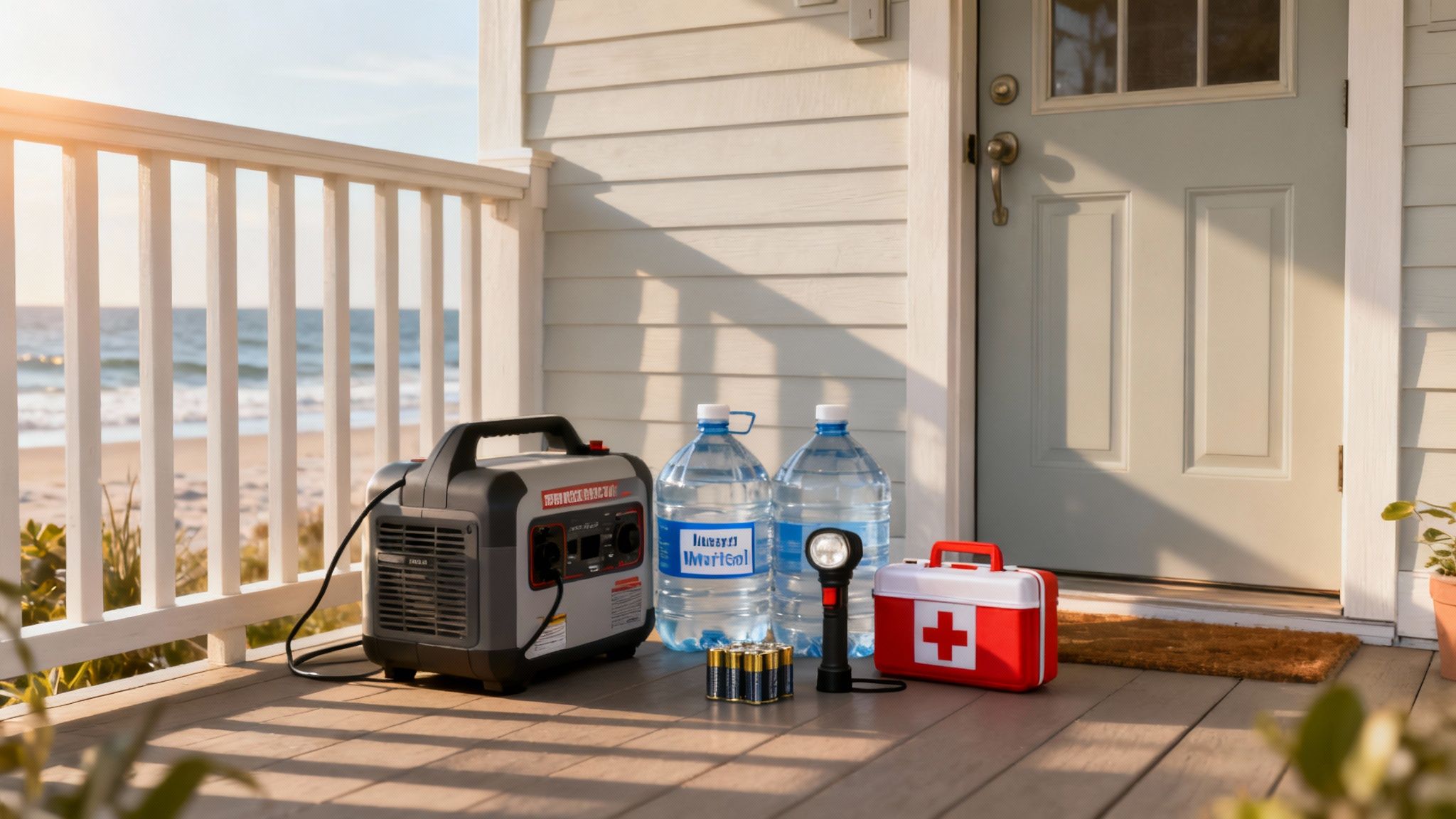
Winter storms in Monterey County, especially in more remote areas like Big Sur or inland parts of South County, frequently lead to power outages. For high-end properties, an outage is more than an inconvenience; it can disable essential systems like security gates, well pumps, heating, and refrigeration, creating significant liability issues for tenants. Preparing for these interruptions is a non-negotiable aspect of premium property management.
A home in Carmel Valley relying on a well for water can become uninhabitable without power to the pump. Likewise, a luxury rental in Salinas can lose its appeal quickly if the heating and security systems fail during a storm. Proactive preparation demonstrates a commitment to tenant safety and asset protection, differentiating a professionally managed property from others.
Actionable Steps for Emergency Preparedness
A well-documented emergency plan ensures that both your property and its occupants are safe when the grid goes down.
- Install and Test Backup Power: For homes with critical systems like well pumps, a generator is essential. Test it monthly and before winter begins. For continuous power during outages, consider finding the best backup generator for your home to match your property's specific needs.
- Assemble an Emergency Kit: Equip the property with a comprehensive emergency kit. This should include flashlights, fresh batteries, a first-aid kit, a battery-powered radio, and at least a three-day supply of non-perishable food and water. For rental properties, providing a basic starter kit is a valuable, concierge-level touch.
- Establish Safety Protocols: Educate tenants on safety measures. Emphasize that gas-powered generators must never be operated indoors or in an attached garage due to the risk of carbon monoxide poisoning.
- Communicate the Plan: Ensure tenants know where to find emergency supplies and how to report an outage. A clear communication plan prevents panic and ensures everyone remains safe.
Pro Tip: Create a laminated "Emergency Information" sheet for the property. Include contact numbers for utility companies, your property manager, and instructions for safely operating any backup power systems. Place it in a visible, accessible location.
At Coast & Valley Properties, we help owners develop and implement these emergency protocols. We coordinate generator testing and serve as the 24/7 emergency contact for tenants, ensuring your investment is protected and your tenants are cared for, no matter the weather.
7. Inspect and Maintain Heating Systems
As winter temperatures drop across Monterey County, a reliable heating system transitions from a convenience to an essential service. For high-end properties, ensuring tenant comfort and safety is non-negotiable. Proactive inspection of these systems prevents dangerous malfunctions, ensures energy efficiency, and avoids costly emergency repairs during a cold snap. A neglected furnace is not only a potential fire hazard but is also prone to failure when it is needed most.
The diverse property styles in our region demand a tailored approach. For example, older coastal homes in Monterey and Pacific Grove often rely on electric or radiant heating, which requires specialized inspection. Conversely, inland properties in Salinas or Soledad with gas furnaces may require annual service to ensure safe and efficient operation. Understanding these local nuances is critical for effective property management and is a key part of preparing for the winter weather ahead.
Actionable Steps for Heating System Maintenance
This checklist helps prevent mid-winter emergencies that can inconvenience tenants and lead to expensive after-hours service calls.
- Schedule a Professional HVAC Inspection: Book a full system check with a qualified technician in the early fall, before the heating season begins.
- Replace Filters Regularly: During periods of high use, furnace filters should be changed monthly to maintain air quality and system efficiency.
- Test Safety Devices: Install and regularly test all carbon monoxide detectors, especially near sleeping areas and fuel-burning appliances.
- Ensure Proper Clearances: Keep the area around furnaces, water heaters, and space heaters clear of all flammable materials to prevent fire risks.
Pro Tip: Consider upgrading to a smart thermostat. These devices optimize energy usage based on occupancy and weather patterns, offering significant cost savings and providing you with remote control and monitoring capabilities.
At Coast & Valley Properties, we manage this entire process for our clients, from scheduling certified technicians to documenting service history. This proactive oversight protects your investment, ensures tenant satisfaction, and provides peace of mind when the temperature drops.
8. Winterize Plumbing and Protect Exposed Pipes
While Monterey County is known for its mild climate, a brief dip near freezing, especially in higher elevations like parts of Carmel Valley, can be enough to freeze and burst exposed plumbing. A single ruptured pipe can release hundreds of gallons of water, leading to catastrophic damage to drywall, flooring, and personal belongings.
This risk is magnified in certain properties. Historic homes in Pacific Grove may have plumbing in uninsulated crawl spaces, while luxury vacation properties in Pebble Beach that sit vacant for periods are especially vulnerable. Without the regular flow of water and ambient heat from occupancy, the pipes are far more susceptible to freezing. Proactively winterizing plumbing is a non-negotiable step to avoid a preventable disaster.
Actionable Steps for Plumbing Protection
These small, preventative actions can save thousands in potential water damage and protect your asset’s value.
- Identify and Insulate Vulnerable Pipes: Locate all exposed water pipes in unheated areas such as crawl spaces, attics, and garages. Use foam pipe sleeves or heat tape to insulate them effectively.
- Manage Exterior Faucets: Disconnect, drain, and store all garden hoses. Install insulated faucet covers for an extra layer of protection.
- Educate Tenants on Cold-Weather Practices: For occupied properties, advise tenants to let faucets drip slowly during unusually cold nights and to open cabinet doors under sinks to allow warmer air to circulate around plumbing.
- Perform a System Check: Ensure you and your tenants know the location of the main water shut-off valve. In an emergency, being able to turn off the water supply immediately can dramatically reduce the extent of damage.
Pro Tip: For properties that will be vacant for an extended period during winter, consider a professional plumbing drain-down service. This involves completely emptying the water from the plumbing system to eliminate any risk of freezing.
A cornerstone of winter property preparedness is proactively learning about preparing your home's plumbing for winter. At Coast & Valley Properties, we manage these preventative measures for our clients, ensuring every property is secured against cold-weather risks well before the first frost arrives.
8-Point Winter Prep Guide for Monterey Properties
| Task | Implementation Complexity 🔄 | Resource & Speed ⚡ | Expected Outcomes 📊 | Ideal Use Cases 💡 | Key Advantages ⭐ | Estimated Cost |
|---|---|---|---|---|---|---|
| Inspect and Clean Gutters and Downspouts | Low–Medium — ladder work & seasonal checks | Low tools; time-consuming on large properties | Prevents roof leaks/foundation damage; high preventive impact 📊 | Homes with trees, coastal debris exposure; pre-winter | Cost-effective prevention; extends roof life ⭐ | $150–$400 pro; DIY minimal |
| Trim Trees and Remove Dead Branches | Medium–High — may need arborist and safety gear | Specialized equipment; slower, labor-intensive | Reduces storm damage risk; protects structures and lines 📊 | Properties with large/overhanging trees near structures | Mitigates falling-limb hazards; improves tree health ⭐ | $500–$3,000+ |
| Seal Air Leaks and Weatherproof Windows and Doors | Low — DIYable but requires technique | Low-cost materials; quick to implement ⚡ | Lowers heating costs 10–20%; reduces drafts and moisture 📊 | Older homes, single-pane windows, drafty units | Immediate comfort and energy savings; inexpensive ⭐ | $100–$500 DIY; $500–$2,000 pro |
| Inspect and Repair Roof Condition | High — professional inspection/repairs; safety risk | High materials/labor; weather-dependent timelines | Prevents major water damage and mold; long-term protection 📊 | Aging roofs, visible damage, coastal corrosion zones | Protects structure, may reduce insurance risk ⭐ | $150–$400 inspection; $500–$5,000+ repairs; $10k–$25k+ replacement |
| Clear Storm Drains and Property Drainage Systems | Low–Medium — physical labor; possible specialist for underground | Low DIY cost; professional work can be costly | Prevents flooding/erosion; protects foundation and landscaping 📊 | Hillsides, properties with poor grading or high water table | Relatively low-cost prevention of severe water damage ⭐ | $100–$500 DIY; $1,000–$5,000 pro |
| Prepare Backup Power and Emergency Supplies | Medium — planning, safe fuel storage, generator setup | High upfront cost for generators; ongoing testing/maintenance | Maintains essential services during outages; critical continuity 📊 | Rural wells, medical equipment, areas with frequent outages | Ensures power and safety during prolonged outages ⭐ | $200–$500 supplies; $1,500–$5,000+ generators |
| Inspect and Maintain Heating Systems | Medium — recommended professional service annually | Moderate recurring cost; scheduled maintenance | Reliable heating, improved efficiency, safety (CO risk) 📊 | Older systems, gas furnaces, cold periods | Prevents failures, extends equipment life; safety assurance ⭐ | $150–$300 service; $5,000–$15,000+ replacement |
| Winterize Plumbing and Protect Exposed Pipes | Low–Medium — DIY insulation or plumber for complex work | Low material cost; moderate labor; heat tape uses power | Prevents burst pipes and water damage; reduces emergency calls 📊 | Higher elevations, unheated spaces, seasonal/vacation homes | Inexpensive prevention of costly repairs; protects property value ⭐ | $100–$300 DIY; $500–$1,500 pro |
Partner with Coast & Valley for Year-Round Peace of Mind
Navigating the winter season in Monterey County requires more than a casual glance at your property. As we've detailed, preparing for the months ahead involves a meticulous approach. From ensuring gutters are clear to prevent water damage in Salinas, to trimming precarious tree branches that could threaten homes in Pebble Beach, each step is a crucial layer of protection for your valuable real estate investment.
This checklist serves as your roadmap. However, true readiness is not a one-time task; it is an ongoing strategy. For busy professionals and serious investors, the question isn't just what to do, but who has the expertise and local insight to execute it flawlessly. Knowing winter weather ahead? what Monterey County property owners need to know now is about shifting from a reactive mindset to a proactive one.
From Checklist to Comprehensive Strategy
The difference between a well-managed property and one at risk lies in implementing a strategic, year-round asset management plan.
- Proactive vs. Reactive: Fixing a leak after a storm is a costly reaction. A proactive approach involves seasonal roof inspections and ensuring drainage systems are optimized before the first rains arrive.
- Tenant Retention: A prompt, professional response to a heating failure during a winter storm builds tenant trust. In a competitive seasonal market, this level of service can be the deciding factor in a tenant’s decision to renew their lease.
- ROI Preservation: Every dollar spent on preventative maintenance can save thousands in emergency repairs and lost rent. Sealing drafts, servicing the furnace, and protecting pipes are direct investments in your property's long-term profitability.
A well-prepared property is a hallmark of a sophisticated investment. It demonstrates a commitment to quality that attracts and retains high-caliber tenants, minimizes liability, and ultimately enhances the asset's overall performance. This is the standard we uphold at Coast & Valley Properties.
The Coast & Valley Advantage: Your Local Partner in Protection
Managing a high-end property portfolio demands constant vigilance, something that can be nearly impossible to provide on your own. This is where our concierge-level service becomes your greatest asset. Led by fourth-generation Salinas native Amy Salmina, our team possesses an intimate understanding of the unique challenges presented by Monterey County’s diverse microclimates.
We don’t just manage properties; we safeguard them. Our proactive seasonal inspections are designed to identify and address vulnerabilities long before they become emergencies. We coordinate with a network of vetted, trusted local vendors to ensure every task, from gutter clearing to HVAC servicing, is performed to the highest standard. When unexpected issues do arise, our 24/7 emergency response system ensures swift, effective action, protecting both your property and your tenants.
Don’t wait for the next storm to find out your property isn’t ready. Contact Coast & Valley Properties today to schedule a seasonal inspection and learn how we protect Salinas-area rentals with proactive winter maintenance planning.
Are you ready to transform your winter property prep from a seasonal chore into a seamless, year-round asset protection strategy? Partner with Coast and Valley Properties to ensure your investment receives the proactive, concierge-level care it deserves. Visit Coast and Valley Properties to schedule a comprehensive property evaluation and discover the peace of mind that comes with expert management.