6 Things You Inherit When You Buy a Tenant-Occupied Salinas Rental
Direct Answer: You inherit the existing leases, the security deposits, the condition records, the deferred maintenance, the shared building systems, and the tenants’ expectations. Almost all of it is easier to verify during escrow than after.
The best call I get from a buyer comes while the deal is still in escrow. One prospective owner reached out to us before closing on a Monterey County investment property just to get a manager lined up first, and that instinct is right. Almost everything on this list is easier to fix before the deed records than after.
When you buy a vacant house, you get a house. When you buy a tenant-occupied duplex on the east side of Salinas or a fourplex near Oldtown, you get a running business with existing obligations, existing wear, and existing people who did not choose you.
Here are the six things that come with the building, and what I would ask the seller for on each one during your due diligence window.
1. The Existing Leases, Including the Deals Nobody Wrote Down
Leases run with the property, not the owner. Whatever the seller agreed to, you agreed to, and that includes the handshake stuff that never made it into the file.
The rent roll spreadsheet is a summary, not a document. I have seen rent rolls that were quietly wrong about half the units in a small building.
During escrow, ask for the signed lease and every addendum for each unit, then confirm the terms in writing with each tenant. You are checking:
- Rent amount and the next renewal or expiration date
- Pet allowances, including the pet nobody put on paper
- Assigned parking, extra spaces, and storage
- Who pays water, sewer, trash, and gas
- Verbal side arrangements, like a rent break for yard work or a promise that a family member can stay
Rent history matters too. Under AB 1482, past increases affect what you can do next, and the clock does not reset because the building sold. That is one of several ways state rules can shift the ground under an existing lease.
2. The Security Deposits and the Condition Records Behind Them
This is the item buyers shortchange most often. Deposits should transfer to you at closing with a per tenant breakdown, not a single lump sum on a settlement statement.
Under California Civil Code 1950.5, the deposit obligation follows the property. When that tenant moves out three years from now, you are the one who has to account for every dollar, even the dollars the seller collected in 2019.
The money is only half of it. Ask for:
- Move-in photos for every occupied unit
- Signed move-in condition reports or inspection checklists
- Any written record of damage charges already assessed
- Documentation of pet deposits or additional deposits
Without that paper trail, every scuffed wall, stained carpet, and cracked outlet cover becomes yours to prove. Move-out disputes are the number one source of tenant complaints in this market, and you cannot win one with photos you never received.
3. The Deferred Maintenance That Comes With the Keys
Sellers show you the vacant unit. Walk the occupied ones.
Tenant accounts of rentals around Salinas describe the same pattern over and over: an irrigation leak that pushed a water bill toward $300 a month, an appliance that sat broken for weeks, a dryer venting into a crawl space instead of outside. Those were somebody else’s problems last month. They are yours the day you close.
Ask for the full maintenance request history, not a summary. A list of work orders with dates tells you what actually happens in that building.
What I look at hardest in older Salinas housing stock:
- Irrigation and sprinkler zones, since a hidden leak shows up on a bill, not on a wall
- Water heaters, furnaces, and carbon monoxide and smoke alarms
- Sewer laterals and repeat drain backups
- Dryer venting, bathroom fans, and anything that was clearly done without a permit
California’s warranty of habitability does not care who owned the building when the problem started. Neither does a tenant who has been waiting since spring.
4. The Shared Systems in a Small Multifamily Building
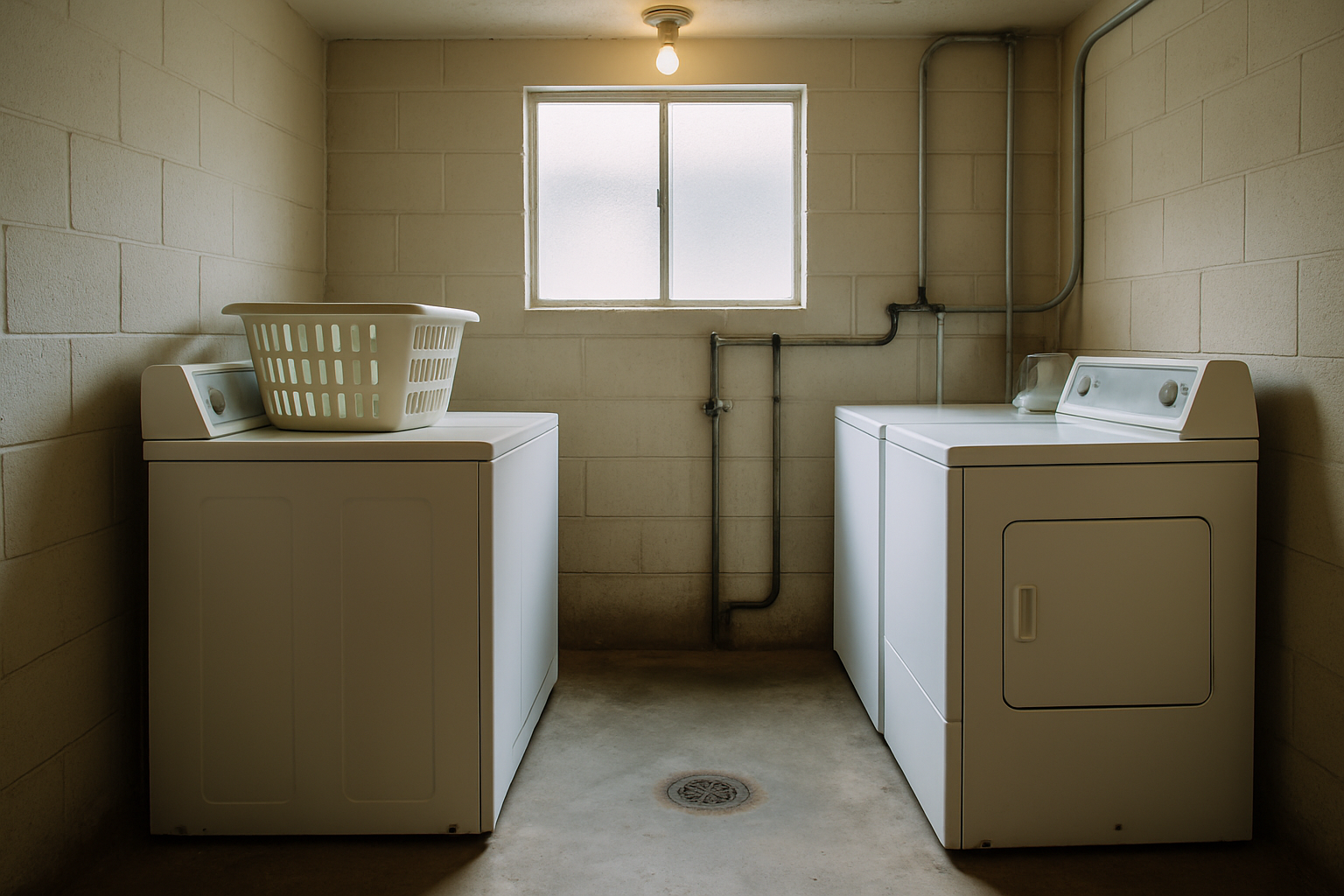
Apartment property management in Salinas gets complicated fast once units start sharing things. Older downtown and east side fourplexes often have one water service, one trash enclosure, a shared laundry room, and a gate or intercom nobody has serviced in years.
Shared infrastructure changes three practical decisions:
- Utility billing. One meter for four units means you either absorb the cost or set up a fair allocation method, and you need to know which before you underwrite the deal.
- Vendor needs. Shared landscaping, a common area light, and a laundry machine contract all require someone to schedule and inspect the work.
- Neighbor conflict. Overflowing trash, a blocked driveway, or a car taking two spaces turns into a complaint about you within a week.
A broken gate is the one I would fix first. When access hardware fails at a Salinas complex and stays broken, safety complaints follow, and they escalate quickly.
This is the part of ownership that scales in a way people do not expect, which I get into more in what changes as you add doors.
Your Escrow Due Diligence at a Glance
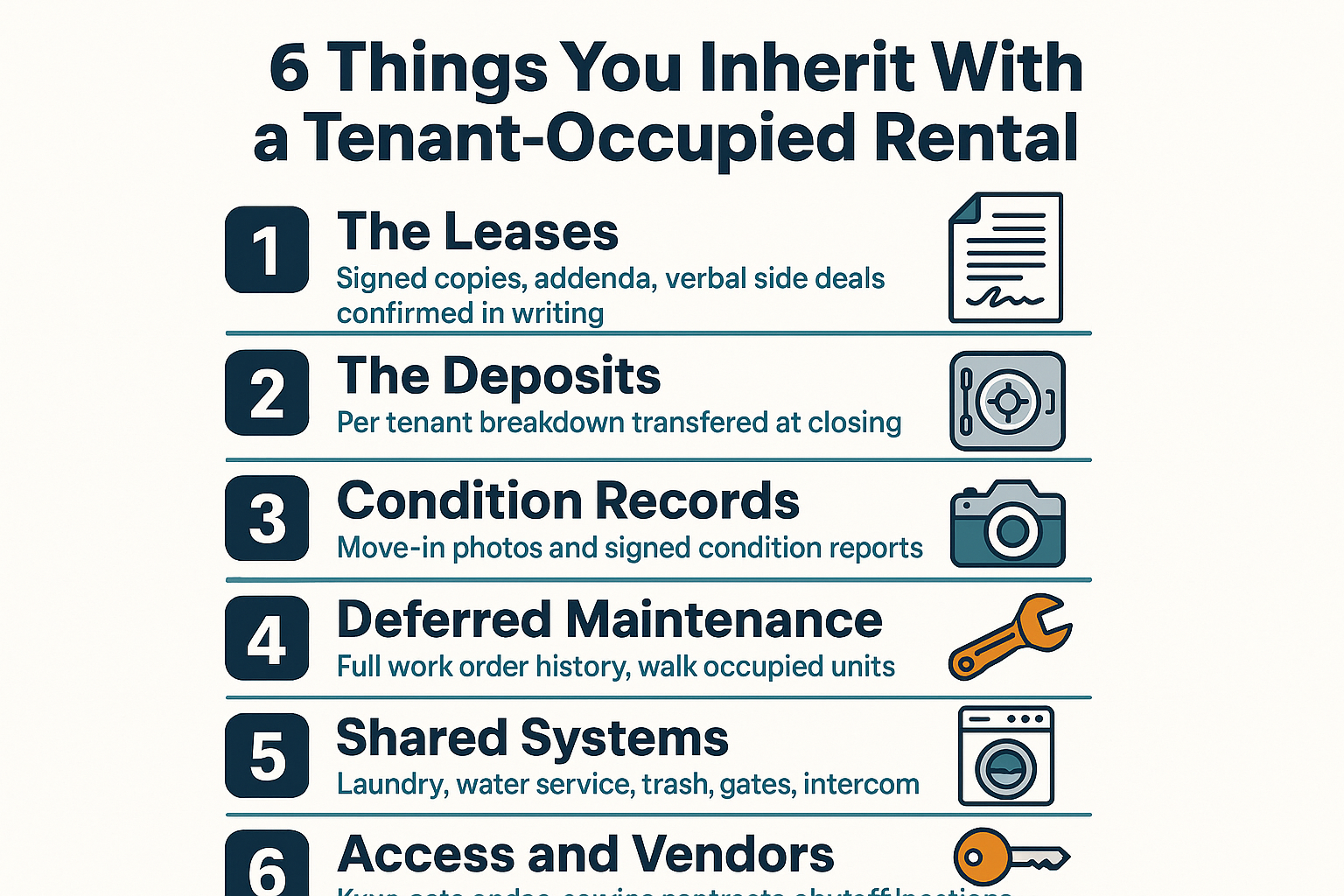
Here is the short version of what to collect before the deed records, grouped by the six things that transfer with the building.
5. Keys, Codes, Contracts, and Whoever Has Been Letting the Plumber In
This is the boring one that ruins your first month. The seller knows which key opens the laundry room. Once they hand you the deed and fly back to wherever they live now, that knowledge leaves with them.
Build the access list before closing:
- Keys for every unit, plus mailbox, laundry, storage, and gate keys
- Gate codes, intercom codes, and any lockbox combinations
- Landscape, pest, pool, and laundry equipment contracts with renewal dates
- Appliance warranties and the age of each unit’s water heater and furnace
- Locations of the main water shutoff, gas shutoff, and electrical panels
- Who has been meeting vendors on site, and whether any tenant holds a spare key
Without that list, your first after hours call turns into a locksmith call at Salinas emergency rates. With it, a plumber gets in the door in twenty minutes.
I also ask for the seller’s vendor contacts. A plumber who already knows a 1960s fourplex on the east side is worth more than a cheaper bid from someone seeing it for the first time.
6. Tenants Who Are Already Bracing for New Ownership
Tenants read a sale as a coming change in policy, and they are usually right. Reviews of Central Coast complexes that changed hands follow a familiar arc: residents who felt fine under the old owner, then resentful within a month of the new one.
The trigger is rarely the rent. It is finding out about a new fee, a new rule, and a new payment system all in the same letter.
What works in the first two weeks:
- A short written introduction with your management contact and hours
- Portal setup for rent payments and maintenance requests
- One clear channel for repairs, so nothing gets lost in a text thread
- No fee changes or rule changes announced alongside the introduction
Save policy changes for later, and give them their own notice with proper timing. You also need to handle the administrative side, including the City of Salinas residential rental registration ordinance adopted in 2024, which puts current owner and contact information on record.
How you open that conversation sets the tone for years. I have written more about what good owner and tenant communication looks like.
What to Request Before the Deed Records
Print this and hand it to your agent. Every item is easier to get while the seller still needs your signature.
| What to Request | Who Has It | Why It Matters Later |
|---|---|---|
| Signed leases and all addenda | Seller or current manager | You are bound by terms you never negotiated |
| Written confirmation of terms from each tenant | The tenants | Catches verbal deals the rent roll missed |
| Per tenant deposit breakdown | Seller and escrow | You must account for every dollar at move-out |
| Move-in photos and condition reports | Seller or current manager | Without them, old damage becomes your damage |
| Full maintenance request history | Seller or current manager | Shows repeat problems and ignored requests |
| Utility bills for the last 12 months | Seller | Reveals leaks and shared meter surprises |
| Keys, codes, and access list | Seller | Prevents a locksmith call on your first emergency |
| Active vendor and service contracts | Seller | Tells you what auto-renews and what you inherit |
Frequently Asked Questions About Buying an Occupied Rental in Monterey County
Can I raise the rent right after I buy the building?
Not automatically. Existing leases stay in force until they expire, and if the property falls under AB 1482, the rent cap and just cause rules apply based on the unit’s history, not your purchase date. Some properties are exempt and some are not, so this is worth confirming during escrow rather than after.
What happens if the seller cannot produce move-in photos?
You do the next best thing. Document current condition yourself before or right at closing, unit by unit, with dated photos, and put a note in the file that the record starts there. It is not as strong as a signed move-in report, but it beats arguing from memory two years later.
Do I have to keep the seller’s property manager?
No. Management agreements are between the seller and the manager, and they do not transfer to you the way leases do. Read the existing agreement anyway, because it tells you how the building has been run, what the tenants are used to, and whether any notice period applies before that manager stops.
Should I meet the tenants before closing?
Usually yes, if the seller allows it and the timing is handled respectfully. A short conversation confirms lease terms, surfaces open repair issues, and tells you a great deal about how the building has been maintained. Just be careful not to promise anything about rent or rules before you own it.
Is a small fourplex really different from managing a single rental house?
Yes, and it surprises people. Shared water, shared laundry, shared parking, and a shared trash enclosure mean tenant behavior in one unit becomes an owner problem across four. The bookkeeping, vendor coordination, and complaint volume all step up at the same time.
Thinking Through a Purchase in Monterey County?
If you are in escrow on an occupied property anywhere from Salinas to Pacific Grove and want a second set of eyes on the leases, deposits, and maintenance history, our team at Coast & Valley Properties is available to talk it through. You can reach the office at (831) 757-1270 or through the contact form at coastandvalleypm.com. Even if you plan to manage it yourself, walking the building with someone who has seen a hundred of them is worth an hour.