What Counts as an Emergency at 2 a.m., and What Waits Until Monday
Direct Answer: A true after hours emergency threatens safety, security, or the building itself: no water, sewage backup, a spreading leak, no heat, gas odor, fire or electrical smell, or an unsecured door.
The phone rings at 2:07 a.m. A tenant says water is coming up through the shower drain and the toilet will not flush. You are in Carmel, or you are asleep in San Jose, and you have about thirty seconds to decide whether this is a plumber call right now or a Monday morning call.
I take these calls for owners across Monterey County, and the hardest part is never the repair. It is the triage. Owners and tenants almost never agree on what an emergency is, and that gap costs money in both directions.
So let me give you the list I actually work from, the local situations that test it, and how spending authority should be set up before the phone ever rings.
The After Hours Emergency List for a Rental Property
An after hours emergency is something that threatens safety, security, or the building itself if it sits for eight more hours. That is the whole test.
Here is what makes the list:
- No water at all to the unit
- Sewage backing up into a tub, shower, or floor drain
- An active leak that is spreading, not a drip into a bucket
- No heat during a cold snap, which matters more than people think in a January Salinas Valley night
- A gas odor of any kind
- A failed exterior door, window, or gate that leaves the unit unsecured
- Anything involving fire or an electrical burning smell
That is the list. Everything else is a next business day item.
A broken dishwasher waits. A stuck window waits. A downed fence panel waits. A dead garbage disposal, a burned out oven element, a slow bathroom sink, a chattering closet door, all of it waits until morning.
Gas is the one exception where nobody triages anything. If a tenant smells gas, they leave the building first and call the utility from outside, and Ready.gov’s guidance on natural gas leaks reflects that same order of operations. The repair conversation happens after everyone is standing in the driveway.
Three Real Situations, Three Different Right Answers
Abstract rules fall apart fast. Renters in this market describe things that sound similar and are not remotely the same problem.
Water shutting off and backing up into the showers, twice in one month. That is a same night call, both times. No water is a habitability issue and a backup is a sanitation issue, and a repeat inside thirty days says the first visit treated a symptom instead of the cause. The second call should trigger a camera on the line, not another auger.
Birds getting into a stove vent from outside. This one is not a 2 a.m. dispatch, but it is also not a shrug. A blocked vent is an airflow problem and a fire risk, and telling a tenant to handle it themselves is how a small item turns into a review that follows the property around. Next business day, with a vendor, plus a screen so it does not happen again.
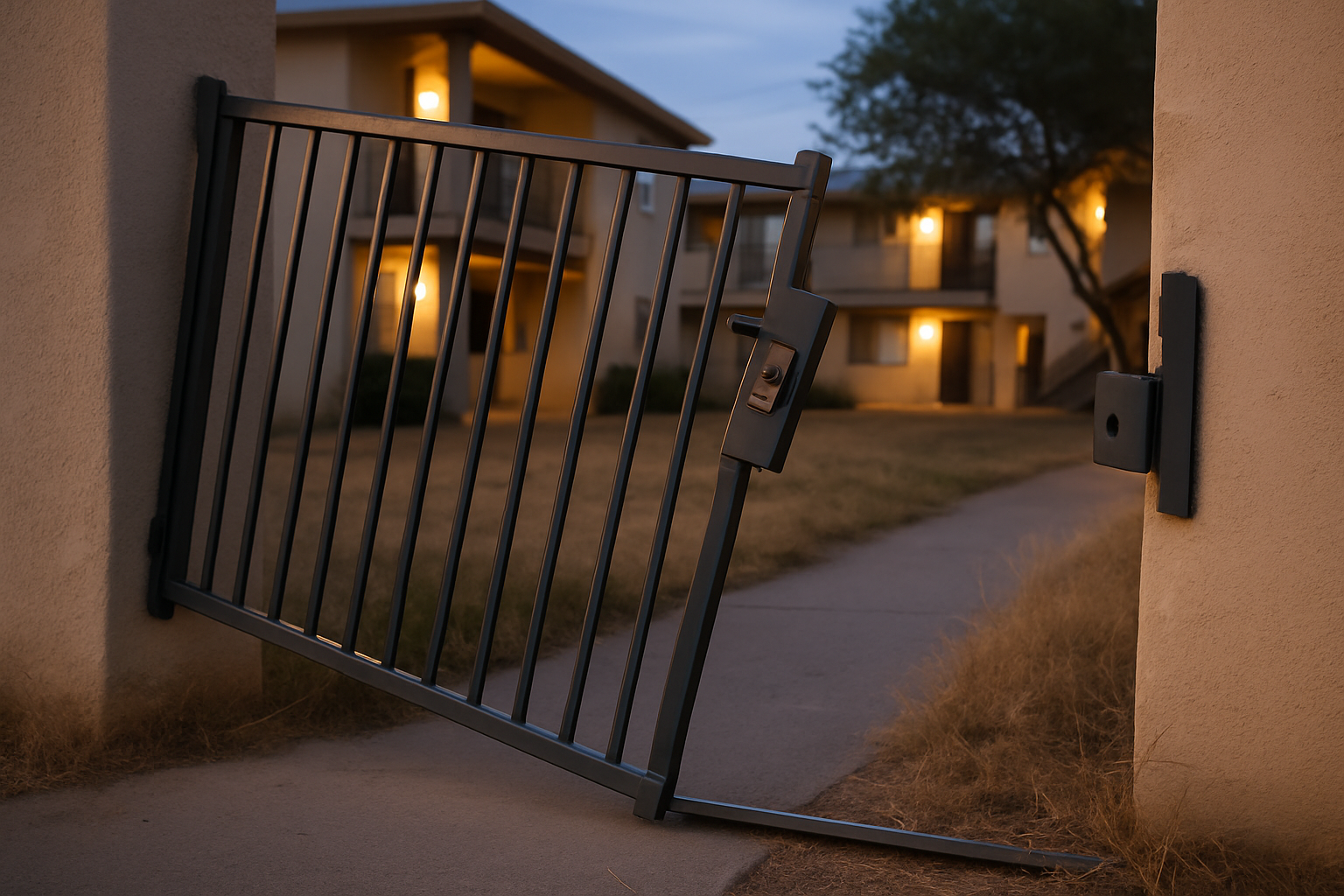
A complex gate that stays broken for months. The single failure is a next business day repair. Month three is a liability problem and a vacancy problem. When people can wander into a property where children live, the clock stopped being about maintenance and started being about the owner’s exposure.
The pattern I want you to notice: urgency and importance are different axes. Some things need a plumber tonight. Some things need to stop being ignored, which is a management problem, not an after hours one.
Call Tonight or Wait Until Monday
This is roughly the mental sort I run when a call comes in after hours. Your property may shift a line or two, and that is worth discussing in advance.
| Situation | After Hours or Next Business Day | Why |
|---|---|---|
| No water to the unit | After hours | Habitability and no safe workaround |
| Sewage backing up into a tub or shower | After hours | Sanitation risk and fast property damage |
| Active leak that is spreading | After hours | Every hour adds subfloor and drywall damage |
| No heat during a cold snap | After hours | Health risk for kids, elderly, and pets |
| Gas odor | Evacuate, then utility | Life safety before anything else |
| Front door or gate will not lock | After hours | Unit is unsecured |
| Burning electrical smell | After hours | Fire risk |
| Broken dishwasher or disposal | Next business day | No safety or damage exposure |
| Stuck window, fence panel down | Next business day | Inconvenience, not risk |
| Slow drain, one drip under a sink | Next business day | Containable overnight with a bucket |
The Real Problem Is Not the List. It Is Whether Anyone Picks Up.
The most common complaint in this entire industry is not price. It is that nobody answers the phone.
Renters describe maintenance contacts they could not reach by phone or email for long stretches. Owners pay for that in three ways, and none of them show up on a monthly statement.
- Secondary damage. A small leak reported at 11 p.m. and answered at 11:20 is a plumber call. The same leak discovered Monday morning is a flooring claim.
- Tenants who stop reporting. Once someone learns nothing happens, they stop calling. You find out at move out.
- Public reviews. Slow after hours response shows up in writing, and it makes the next vacancy harder and slower to fill.
Answering is not the same as fixing. Half of a good after hours call is a person who picks up, knows the property, tells the tenant how to shut off the angle stop under the sink, and gets a vendor scheduled for 7 a.m. That call costs nothing and saves a claim. It is the same standard I apply to how a property manager should communicate with owners and tenants during normal business hours, just harder to pull off at 2 a.m.
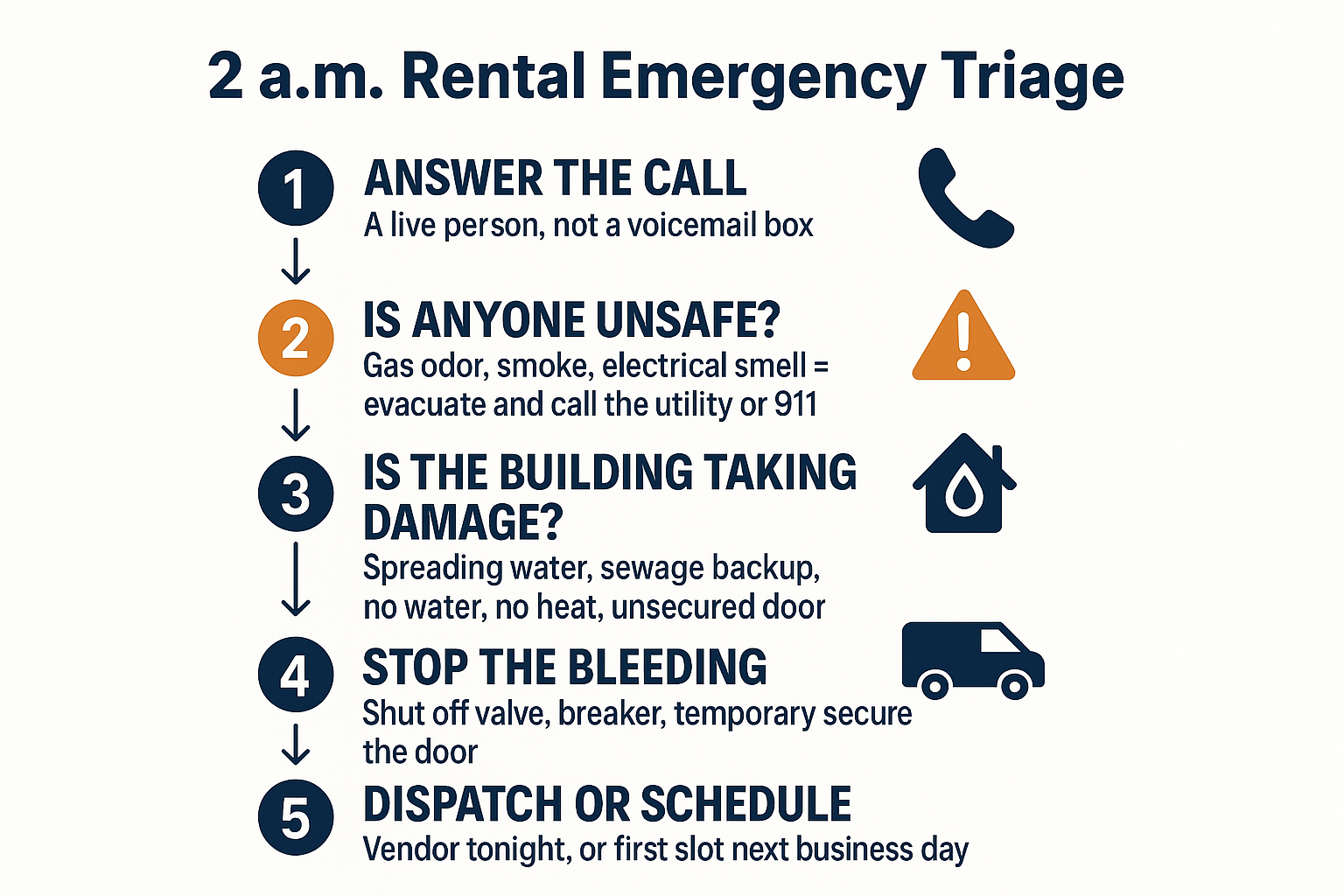
The 2 a.m. Triage Sequence
This is the order the decision actually happens in, from the tenant’s first call to the vendor showing up.
Money Is the Reason Triage Exists
Every after hours dispatch costs more than the same work in daylight. Trades in this area generally charge a premium for nights, weekends, and holidays, and the exact multiplier varies by trade and by how far the tech has to drive. Plumbers and restoration crews sit at the higher end.
So sending a vendor at 2 a.m. for something that could wait until 8 a.m. is a real, avoidable cost to you. And waiting on something that should not wait is a much larger one.
Here is how spending authority normally works in practice. The owner sets a per incident approval limit in advance, in writing. Below that number, the manager acts immediately and reports after. Above it, the owner gets a call, even at 2 a.m.
I will not quote you a figure, because the right limit depends on the property, the age of the systems, and how reachable you are overnight. An owner who travels internationally wants a higher limit than one who sleeps ten minutes away. That is a conversation to have when the agreement is signed, not while water is running.
If you are weighing this against handling calls yourself, it is worth reading about the hidden workload behind managing a single rental home, because the 2 a.m. calls are the part owners underestimate most.
The Monterey County Layer
Response windows here are not uniform. Where your property sits changes what a realistic answer looks like.
- Winter storms. Wind damage runs high on the Peninsula, from Pacific Grove through Pebble Beach, while drainage and standing water are the recurring Salinas Valley problem. During a storm week, every plumber and tree crew in the county is already booked.
- Power outages. Outages take out well pumps and gate motors. A property on a well loses water when it loses power, which looks like a plumbing emergency and is not one. Storm readiness on a Salinas rental is largely about preventing these calls in the first place.
- South County distance. Vendor response in Greenfield or King City at midnight is simply slower than in Salinas. Fewer trades run true after hours coverage that far south, and drive time is real. Owners with property in South County should expect a wider window and plan for temporary fixes to carry more weight overnight.
None of that is a reason to avoid owning down valley. It is a reason to know the honest number before an emergency sets your expectation for you.
Frequently Asked Questions About After Hours Rental Emergencies
Is no hot water an emergency?
Usually not overnight. No water at all is an emergency. No hot water is a next business day item unless the water heater is leaking, which turns it into a spreading water problem.
What if a tenant calls something an emergency and I disagree?
That argument should never happen at 2 a.m. The standard belongs in the lease and in the move in conversation, with the emergency list spelled out plainly. When tenants know the line in advance, the after hours volume drops on its own and the calls you do get are real.
Who pays if the tenant caused the problem?
The bill still gets handled that night so the damage stops. Responsibility is sorted afterward based on cause and what the lease says. Arguing about fault while water is running is how a repair becomes a claim.
Should I give my cell number to tenants for emergencies?
Most owners who try it stop within a year. The problem is not the true 3 a.m. emergencies, which are rare. It is the steady stream of 9 p.m. dishwasher calls, and the fact that you probably cannot get a plumber to pick up for you at midnight the way an established vendor relationship can.
How fast should someone respond after hours?
A live human within roughly 15 to 30 minutes, and a vendor on site the same night for true emergencies in Salinas and on the Peninsula. Farther south, the vendor window is realistically longer, so the first phone call and a temporary shutoff matter even more.
Thinking Through Your Own After Hours Plan?
A 24/7 line only works when it is answered by people who know the property and can reach vendors who will actually pick up at midnight in Greenfield or on the Peninsula. That is a local relationship problem, not a technology problem, and it took us years in Monterey County to build. If you are working out what your own emergency plan and approval limit should look like, our team at Coast & Valley Properties is reachable at (831) 757-1270 or through the contact form at coastandvalleypm.com.