Inheriting a Rental in Monterey County: The First Decisions
Direct Answer: Find the current lease, rent payment history, and security deposit records. Confirm insurance and tax accounts name the right party. Then walk the property with a camera before you decide to hold or sell.
Most people who inherit a rental never planned to be a landlord. One month you are sorting through a parent’s belongings, and the next you are the person a tenant expects rent checks and repair answers from.
I take these calls regularly from heirs of homes in Salinas, Pacific Grove, Monterey, and Carmel. The questions are almost always the same three: what do I actually own, what am I on the hook for, and do I keep it or sell it.
This is not the same as buying a tenant-occupied house. Below is what I would look for first, how to handle the family arrangements that come attached, and a clear way to think about holding versus selling.
Why an Inherited Rental Property Is Different From One You Bought
When you buy a tenant-occupied property, everything arrives in a transaction file. Escrow hands you the lease, the deposit gets transferred on a settlement statement, and a title company points the tax bill at your name.
Inheriting works nothing like that. Ownership often sits in a trust or an estate, sometimes with more than one heir involved, and the records live in a filing cabinet, a checkbook register, or nowhere at all.
So the first work is not a decision. It is a search. Before anything else, I want to know:
- The current signed lease, and whether it has already rolled month to month
- The actual rent being paid, which is not always the rent written in the lease
- How much security deposit was collected and what account it is sitting in
- Whether the insurance policy is still active and who it names
- Whether property taxes, utilities, and any mortgage are being paid and by whom
That last one catches people. Bills keep arriving at a house whether or not anyone is opening the mail, and a lapsed insurance policy on an inherited home is a problem you only discover at the worst possible moment.
Many of the same handoff issues show up when you purchase a rental with people already living in it. If that is useful background, we covered what transfers with a tenant-occupied property separately.
Where the Paperwork Usually Turns Up
Almost nothing on this list arrives in a neat folder. Here is where I have actually found each piece.
| What You Need | Why It Matters | Where It Usually Turns Up |
|---|---|---|
| Signed lease | Sets rent, term, and who handles what | A filing cabinet, a past agent’s files, or the tenant’s own copy |
| Rent payment history | Shows what is really being paid, not just what was written | Old bank statements or a checkbook register |
| Security deposit records | Deposit money belongs to the tenant and must be accounted for | A bank statement, a deposit slip, or a note in the lease folder |
| Insurance policy | Coverage terms can shift when a home sits empty or ownership changes | Mail from the carrier, or by calling the carrier directly |
| Tax and utility accounts | Bills keep coming regardless of who is watching | County records and account numbers printed on old bills |
| Vendor contacts | The plumber who already knows the house saves hours later | Phone contacts, the checkbook, or the tenant’s memory |
Family Homes Come With Family Arrangements Attached
This is the part nobody warns heirs about. A rental that has been in one family for decades usually carries agreements that were never written down.
I see the same patterns across Salinas and the Peninsula:
- A tenant who has lived there fifteen or twenty years and pays well under current market
- A handshake rent discount given years ago, with no paperwork behind it
- A tenant who has been doing yard work or small repairs in exchange for a rent break
- Deferred maintenance that got postponed each year because the tenant never complained
- A relative or family friend living there on terms nobody can quite reconstruct
None of that is a disaster. But it does have to be untangled carefully, and slowly, because California’s rental rules are detailed and they change often. Moving fast on a long-tenured tenant is how heirs create problems that outlast the estate.
The honest advice is to document what exists before you change anything. Write down what is actually being paid, what the tenant believes the arrangement is, and where the two differ.
Rule changes can reach an existing tenancy in the middle of a lease term, which is worth understanding before you plan any adjustments. We walked through how mid-lease legal changes affect an existing rental in more detail.
Do Not Skip the Empty House Problem
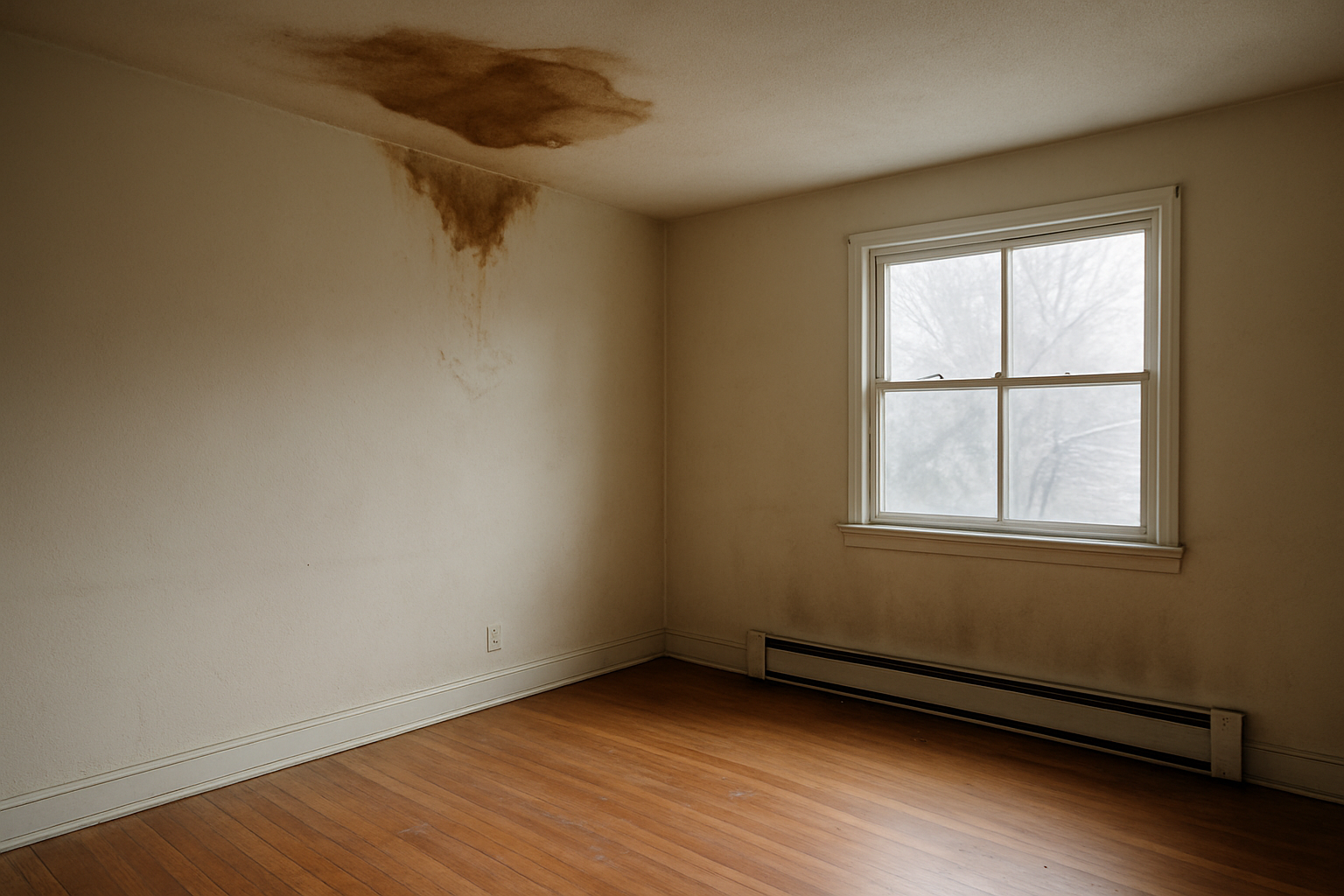
Estates take time to settle. During that stretch, an inherited home often sits empty for months, and empty is when the expensive things happen quietly.
What I find in houses that have been closed up since a settlement:
- Slow supply line or toilet leaks that ran for weeks with nobody home to hear them
- Rodent damage in crawl spaces, attics, and behind appliances
- Break-ins or squatting, especially where mail and packages pile up
- Dead landscaping and clogged gutters that turn into drainage damage in the first real storm
- A water heater or furnace that quit sometime in month two
Insurance is the piece heirs miss most. Coverage on a home can be treated differently once it is unoccupied for an extended period, so the carrier needs to know the house is empty and who owns it now. Do not assume the old policy still does what it did.
My standing advice is simple. Get inside early, walk every room, and take photographs of everything, including the roof line, water heater, under-sink cabinets, crawl space access, and every wall and floor.
Those photos protect the heirs later whether the house sells or gets leased. They also settle disagreements between siblings about what condition the place was really in. Our pre-storm walkthrough checklist works well for this, since it follows the same order I would use on a first inspection.
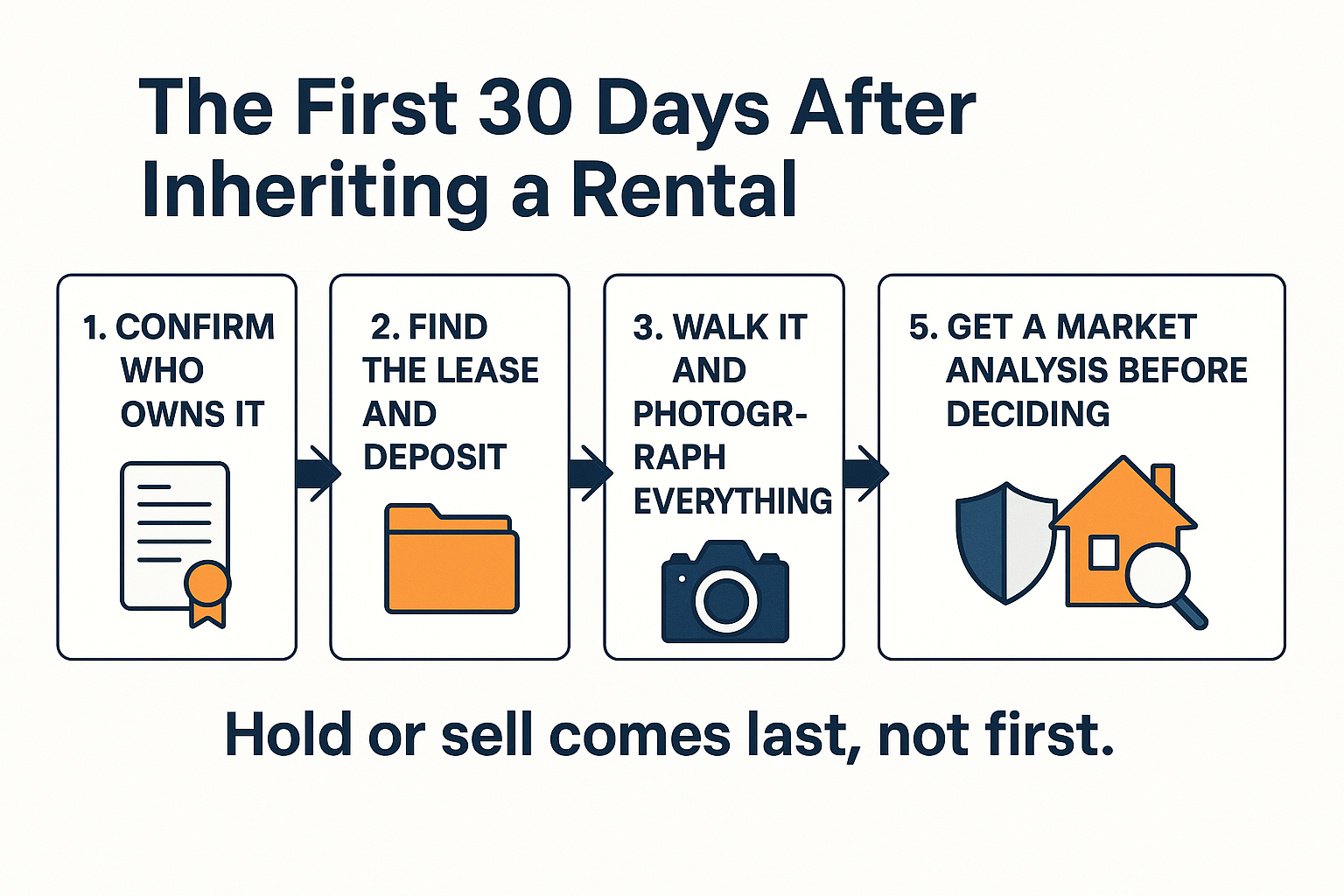
The First 30 Days, In Order
If you do nothing else, work through these five steps in this sequence.
Who Takes the 2 a.m. Call When You Live Four Hours Away
Here is the practical crux of the whole thing. Most heirs do not live near the property.
The inquiries I get come from people in the Bay Area, from Southern California, and from other states entirely. The house is in Salinas or Pacific Grove. They are not.
So the real question is not whether you can handle a rental. It is who does these things when you are four hours up the road:
- Answers the phone at 2 a.m. when a water heater lets go
- Meets the plumber at 9 a.m. on a Tuesday, then meets him again when the part comes in
- Walks the property after a winter storm to check the roof and the drainage
- Handles a rent payment that stops arriving, correctly and on the right timeline
- Turns the unit over between tenants, which is a two to four week job of coordination
Self-managing from a distance works for some owners. It works when you have a reliable local contact, flexible daytime hours, and the stomach for direct tenant conversations.
It stops working when you have a full-time job and no one nearby. We wrote about what to line up before renting out a house from out of state, and separately about what actually counts as a 2 a.m. emergency versus what can wait until Monday morning.
Answer the distance question honestly first. The hold or sell decision gets much easier once you have.
Hold or Sell: A Way to Think About It Without Guessing the Market
I will not speculate on where prices go. Nobody should. But you can make this decision on inputs you can actually verify.
There are four:
- Property condition. Deferred maintenance is not a small line item. A roof, a sewer line, or a full electrical update changes the math for either path.
- Tenancy. Is someone in place, on what terms, and at what rent relative to the market?
- Agreement among heirs. If three siblings want three different outcomes, that is the real obstacle, not the house.
- Realistic numbers on both sides. What it would sell for, and what it would honestly lease for.
For rough context, market trackers put the Monterey County median single family sale price near $903,000 in early 2026, with Peninsula communities like Pebble Beach running far above that. The same trackers have shown Monterey area asking rents landing somewhere in the mid to high $2,000s, depending heavily on the neighborhood and the condition of the unit.
Treat those as background, not as your number. A 1950s Salinas house with original plumbing and a long-term tenant does not price like the county median, and neither does a Carmel cottage.
One more thing worth raising with your accountant early: the property’s value as of the date of death matters for tax purposes, and the IRS explains how basis works for inherited property. That conversation is easier when you have a documented walkthrough and a current rent analysis in hand.
Online rent estimates are not a substitute for that. We broke down why automated rent estimates miss in this county and what a real analysis looks at instead.
Frequently Asked Questions About Inheriting a Rental in Monterey County
Do I have to honor the lease my parent signed?
Generally, a lease stays with the property when ownership changes, so the tenancy does not simply reset because a new owner is on title. The details depend on the lease terms and the situation, so this is a question for your attorney before you take any action with the tenant.
There is no written lease at all. What now?
This is more common than you would think with family-held rentals. Start by documenting what is actually happening: what is being paid, how often, and since when. A tenancy can exist without a written lease, so the goal is to establish facts carefully, not to make quick changes.
My siblings and I disagree about keeping it. What breaks the tie?
Real numbers usually do. When everyone is looking at the same condition report, the same repair estimates, and the same realistic lease figure, the conversation shifts from opinion to arithmetic. Get those three things before the next family discussion.
The house has been vacant for six months. What do I check first?
Water, in every form. Look under every sink, at the water heater, at the ceilings, and around the foundation. Then check for rodent entry, confirm the insurance carrier knows the home is unoccupied, and photograph every room before anyone moves anything.
Can I raise the rent to market right away?
Not something to do on instinct. California has detailed rules around increases and they get updated regularly, and a long-tenured tenant paying well under market is exactly the situation where mistakes get expensive. Get professional guidance on both the amount and the timing before sending anything in writing.
Thinking Through an Inherited Property in Monterey County?
For heirs who are still deciding, the useful first step is usually an in-person walkthrough of the property paired with an analysis of what it would realistically lease for in its current condition. As a broker-owner led firm that has worked Monterey County since 2009, that is where Coast & Valley Properties typically starts, and it is worth having even before you know whether you are keeping the house. If you would like to talk it through, we are reachable at (831) 757-1270 or through the contact form at coastandvalleypm.com.