Your Salinas Tenant’s Lease Ends in January. Renew, Raise, or Re-List?
Direct Answer: Check the end date before the rent number. A lease that expires between November and February lands in the slowest leasing stretch here, so a modest renewal usually beats a turnover.
Most owners call me about a renewal and open with a number. They want to know how much they can raise the rent. But the first thing I look at is not the rent, it is the date the lease expires.
A lease that ends in January puts you in a different position than one that ends in June. December through March is our wet season on the Central Coast, and it is also the stretch when the local applicant pool thins out. If that tenant walks, you are marketing a vacant house in the rain.
So before you decide what to ask for, let me walk you through how I think about a lease renewal on a Salinas rental when the clock runs out in the middle of winter. We will cover the calendar, the honest math on a small increase, and how to judge whether the tenant you have is worth keeping.
Start With the Date on the Lease, Not the Rent Number
Every January our phone rings more than it does in any other month. Owners reach out about units that are vacant, nearly ready, or about to turn over, and they are usually a few weeks behind where I wish they were.
The pattern is consistent. Nobody wants a unit sitting empty through the rain, and that is exactly what a winter expiration date threatens.
Here is why the season matters so much in Monterey County:
- Fewer people move in winter. Families do not pull kids out of school in February. Job relocations cluster in spring and summer.
- Showings get harder. Short days, wet driveways, and a soggy yard do not help a house show well.
- Make-ready work slows down. Painters and flooring crews cannot work around our rain the way they can in July.
- You are negotiating from behind. A tenant does not need to know the market is slow to sense that you would rather not start over in January.
The National Weather Service office that covers Monterey County tracks our wet season, and the pattern is reliable enough to plan a lease around. I treat it the way a farmer treats a planting calendar.
None of this means you have to renew. It means the calendar changes the price of being wrong.
The Honest Math on a Small Increase Versus a Turnover
Most owners assume rent goes up every year because their costs went up every year. Insurance, taxes, and vendor rates all moved. That logic is fair, but the market does not care about your expenses.
Public rent trackers put the Salinas apartment average somewhere in the mid $2,000s, and several of them show close to flat movement over the past year, roughly half a percent to one percent of annual change. One major portal has described this market as cool. Those are general market snapshots, not a quote for your property.
The gap across the county is wide. Public data on three bedroom single family homes in Monterey County often lands well above $4,000, which is a different animal from a Salinas apartment. Two owners can read the same headline and both be wrong about their own house.
Here is the part that decides it. An increase only pays off if it survives everything it might trigger:
- Weeks of vacancy while you market and show
- Make-ready work, paint, cleaning, and any deferred item you have been putting off
- Leasing time, screening, and lease preparation
- The risk that the replacement tenant is not as good as the one who left
I have watched a modest number on a tenant who stays beat an ambitious number on a tenant who leaves more times than I can count. If you want to understand why the online estimate on your address is probably off, I wrote about how rent actually gets set here, and we cover what an empty unit really costs separately. For a real number, you want a walkthrough and current comparables from the same neighborhood.
Renew, Raise, or Re-List: How I Weigh the Three Options
This is the quick version of the conversation I have with owners every December and January. The right answer depends far more on the tenant and the date than on the market headline.
| Option | Best when | What it risks |
|---|---|---|
| Renew at the current rent | Strong tenant, winter expiration, property is in good shape and you want zero disruption | You fall further behind the market if this becomes a habit |
| Renew with a modest increase | Solid tenant, rent sits below comparable homes nearby, you can document why | A tenant already stretched may start shopping, so timing and delivery matter |
| Push for a larger increase | Rent is clearly under market and the tenant has strong reasons to stay | Turnover in the slowest leasing months of the year |
| Let it go and re-list | Payment problems, condition issues, or the property needs work only an empty house allows | Vacancy through the wet season plus full make-ready and leasing costs |
Judge the Tenant, Not Just the Rent
Most owners I meet know the rent arrives on time. Far fewer have seen the inside of their property in the past year. That is the gap that makes renewal decisions feel like guesswork.
When I put together a renewal recommendation, the rent history is one line in a longer picture. Annual inspections and an annual market analysis are part of full management on our side, which means the recommendation rests on a documented walkthrough rather than a hunch.
Here is the short list I weigh:
- Payment history. Not just whether it came, but whether it came on the same day every month without a reminder.
- How repair requests come in. A tenant who reports a leak the day it starts is protecting your asset. A tenant who mentions it eight months later during an inspection has cost you money.
- Condition between visits. How the place looks when nobody told them you were coming.
- The yard and exterior. Overgrown landscaping and a neglected fence line tend to show up well before interior problems do.
- Neighbor friction. Trash, parking, and noise complaints are early signals, and they are worth taking seriously before renewal.
There is a financial reason to care beyond the obvious. If you read public reviews of property managers across this county, the complaints cluster heavily around move-out charges and deposit deductions. Turnover is where the money and the goodwill both get tested, and reading those reviews correctly takes some context.
A tenant who treats your house carefully is worth real money at renewal. Price accordingly.
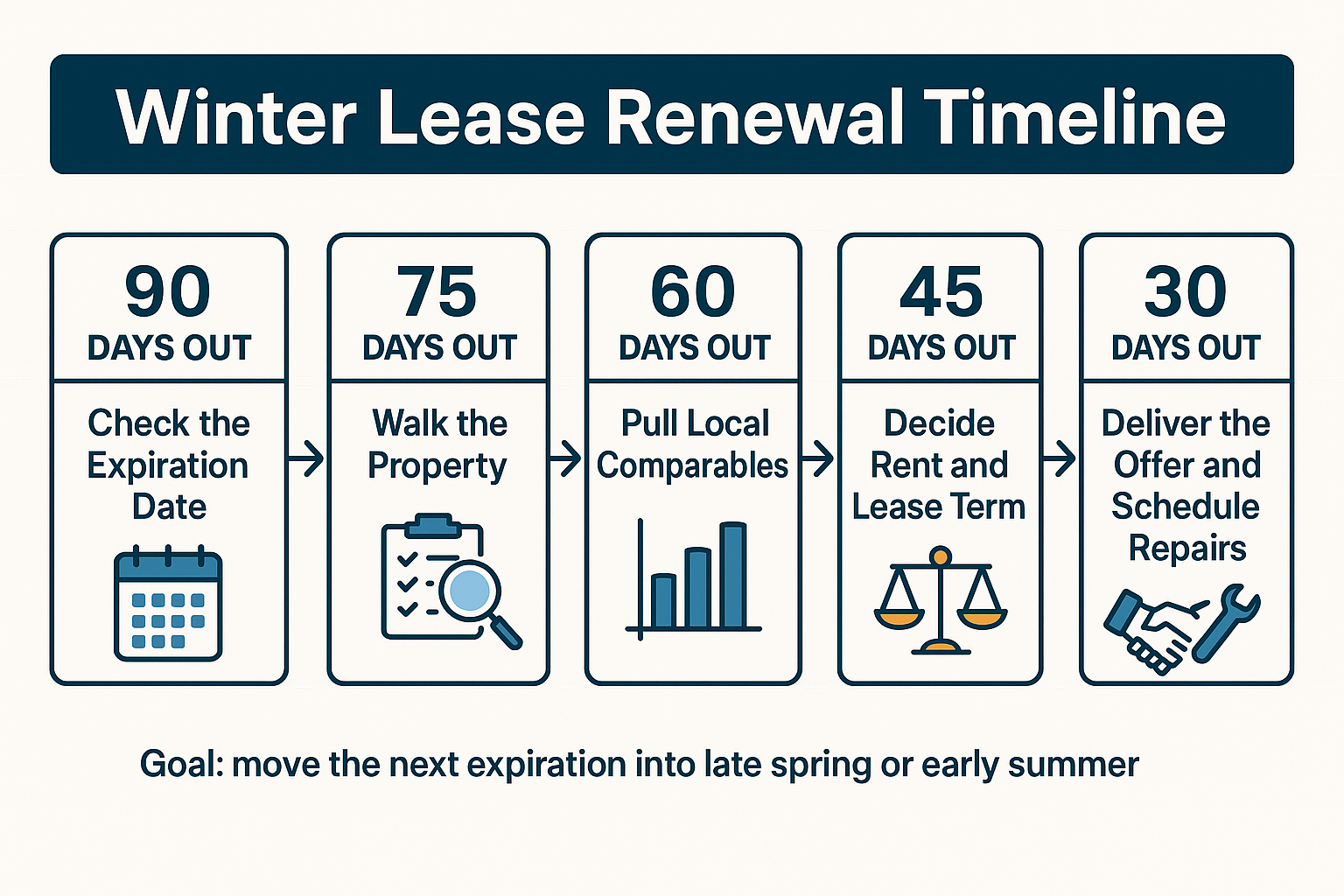
A Winter Renewal Timeline That Actually Works
This is the sequence I follow when a lease expires in the wet months. Starting late is the single most common mistake I see.
Renewal Is the Cheapest Time to Fund Winter Maintenance
A tenant who is staying is far easier to schedule work around than an empty house competing for space on a crew’s calendar. That is the practical argument for pairing the renewal conversation with a short maintenance plan.
The Salinas Valley hands us a specific list. Valley fog, agricultural dust, inland temperature swings, and genuine flood exposure near the river all show up in the same places year after year.
At renewal I want to know the status of four things:
- Roof and gutter condition. Full gutters are the cheapest problem on this list to fix and the most expensive to ignore.
- Drainage away from the slab. Where does the water go when it comes off the roof.
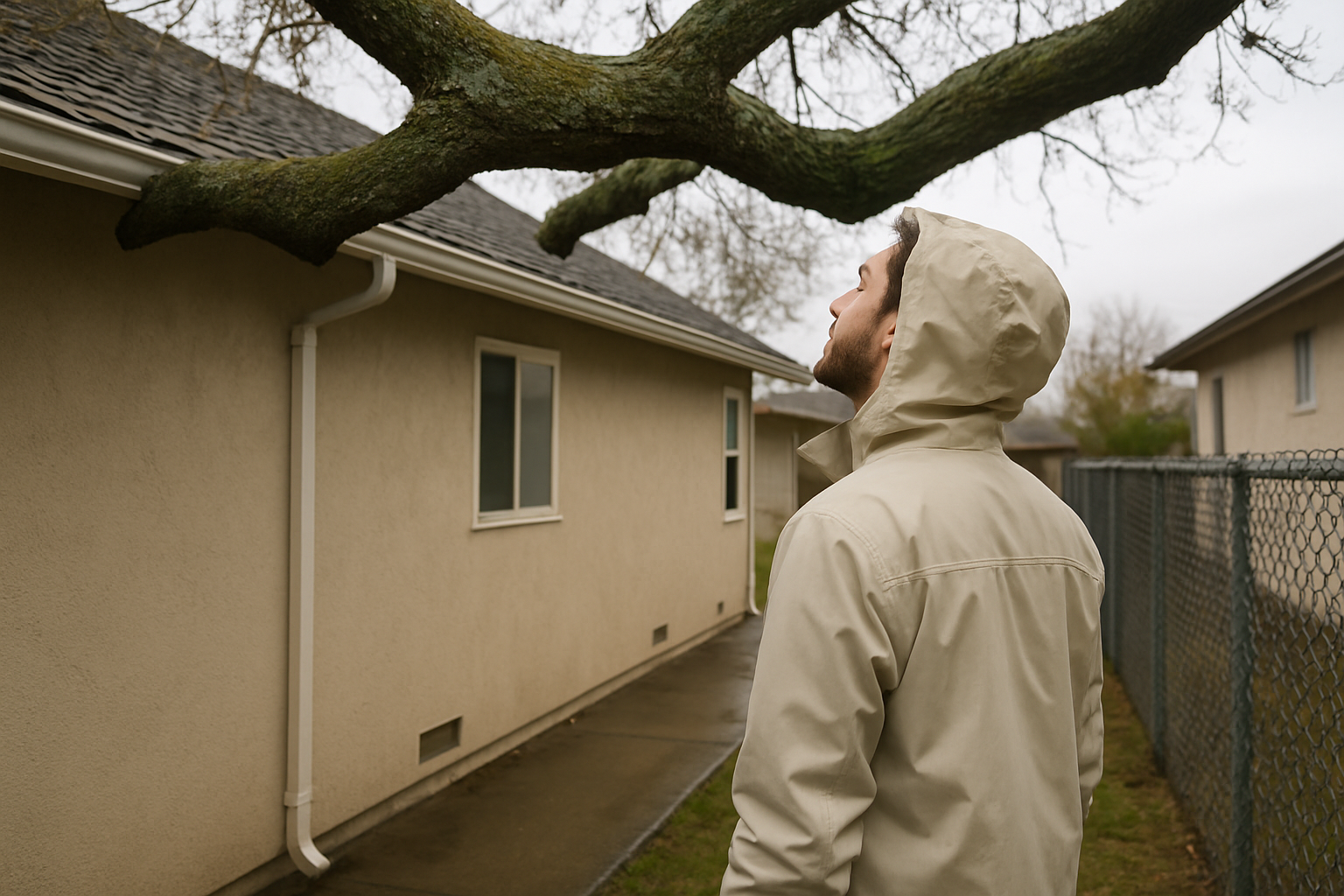
- Tree limbs over the roofline. One Salinas owner asked us twice in a single season whether the front yard tree had been trimmed, calling it severely overgrown, and wanted photos of the finished work. That is a reasonable thing to want.
- Anything the last inspection flagged. Deferred items do not stay the same size over a winter.
On the Peninsula the list looks different. In Pacific Grove, Carmel, and Pebble Beach, marine air and salt exposure drive the conversation toward hardware, finishes, and moisture, and mildew on an interior wall is not always a maintenance failure.
If you want the full walkthrough order, we cover what to check before the first storm in its own article. And if you have ever wondered how you confirm a repair actually got done, that matters more than most owners expect.
You Can Reset a Badly Timed Lease at Renewal
This is the part almost nobody knows, and it is the most useful thing in this article. You are not stuck with the lease cycle you inherited.
Plenty of owners end up with a January expiration because of a previous owner, a mid-year move-out, or a tenant placement that happened at an awkward time. A renewal term of a few months more or less can permanently move that date into late spring or early summer, when the applicant pool here is at its deepest.
In practice that might mean a fifteen month term instead of twelve, or a nine month term if you want to get there faster. I treat it as a one-time correction, then go back to standard terms afterward.
Two cautions. Start the conversation well ahead of expiration, because marketing, showings, and screening take real time to run properly. And California’s rules around increases and renewals shift often enough that the how and the when matter as much as the number, which is worth getting right rather than guessing at.
If you are curious how the fall market behaves before winter sets in, leasing after Labor Day covers that shift in detail.
Frequently Asked Questions About Winter Lease Renewals in Monterey County
How far ahead should I start the renewal conversation?
I like to be looking at it about 90 days out. That gives room to walk the property, pull comparables, decide on a term, and still deliver the offer with plenty of notice. Starting 30 days out means you are reacting instead of deciding.
Is it better to raise rent a little every year or a lot every few years?
Small and regular is almost always easier on everyone. A tenant who sees a modest adjustment each year plans for it. A tenant who gets hit with a large correction after three flat years starts looking at listings, and in a slow season that is the last thing you want.
My tenant pays on time but the yard looks rough. Should I renew?
Usually yes, with conditions. Landscaping neglect is fixable and far less expensive than a vacancy in February. I would renew, spell out the yard expectations clearly in the new term, and schedule the tree or fence work while the tenant is still in place to let the crew in.
What if I want to sell the property next year?
Then the lease term matters more than the rent. A buyer inherits whatever is in place, and so does the next owner’s plan. We wrote about what comes with a tenant-occupied purchase, and the same list applies in reverse when you are the one selling.
Can I just use an online rent estimate to set the renewal number?
You can look at one, but I would not price off it. Those estimates pull from database averages and cannot see your flooring, your layout, your parking situation, or what the house two streets over actually leased for last month. A walkthrough plus current local comparables gets you a defensible number.
Thinking Through a Winter Renewal on Your Monterey County Rental?
A renewal recommendation is only as good as the information behind it, which is why ours starts with someone who has physically walked the property and priced comparable homes in the same neighborhood. We have worked Monterey County from one office since 2009, broker owner led, which is a different experience from a call center handling a portfolio across four states. Owners weighing a renewal can reach our office at (831) 757-1270 or through the contact form at coastandvalleypm.com.