Is Your Salinas Rental Property Ready for a Super El Niño? What Monterey County Owners Need to Know
Direct Answer: A Super El Niño brings heavier rainfall, flooding risk, and accelerated wear to Monterey County rentals. Owners who prepare now — with inspections, vendor relationships, and documented maintenance — avoid the costly surprises that hit self-managing landlords hardest.
When weather forecasters use the phrase Super El Niño, it means something specific for the Salinas Valley — not just wet winters, but sustained, heavier-than-average rainfall over multiple months. For the low-lying areas around Salinas, that translates to flooded drainage systems, saturated soil, and stress on roofs, gutters, and foundations that may have gone years without a close look.
Most rental property owners don’t think about storm readiness until water is coming through a ceiling. By then, you’re not managing a maintenance issue — you’re managing an emergency, a displaced tenant, and a potential legal exposure under California’s Warranty of Habitability all at the same time.
This article is about what preparation actually looks like before the storms arrive — which systems are most vulnerable in Monterey County properties, what California law requires of you when conditions deteriorate, and how the gap between proactive and reactive management tends to show up most clearly when the weather does.
What a Super El Niño Actually Means for Monterey County
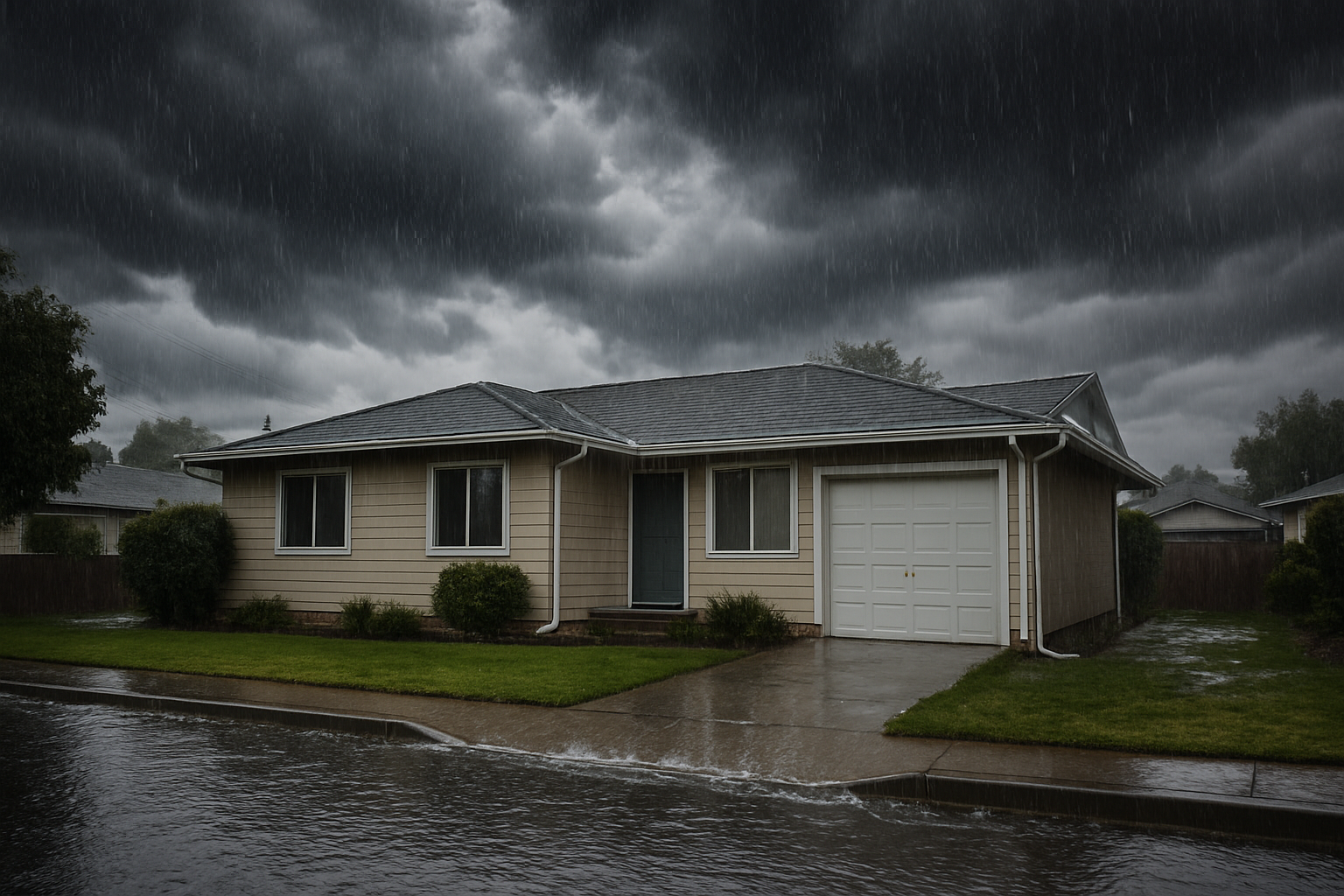
A Super El Niño isn’t a national headline for this region — it’s a local weather event with specific local consequences. The Salinas Valley sits in a natural drainage basin. When atmospheric rivers stack back-to-back, as they did during the 2022-2023 season when Monterey County experienced some of its most significant flooding in decades, the valley floor absorbs the impact first.
Property owners in neighborhoods near the Salinas River corridor, lower Alisal, or parts of east Salinas have seen firsthand what that kind of rainfall does to aging infrastructure. But even properties on higher ground in Monterey, Pacific Grove, and Carmel aren’t immune — coastal storms hit rooflines, exposed wood trim, and older drainage systems just as hard.
The risk profile for a rental property during an El Niño year typically clusters around a few specific vulnerabilities:
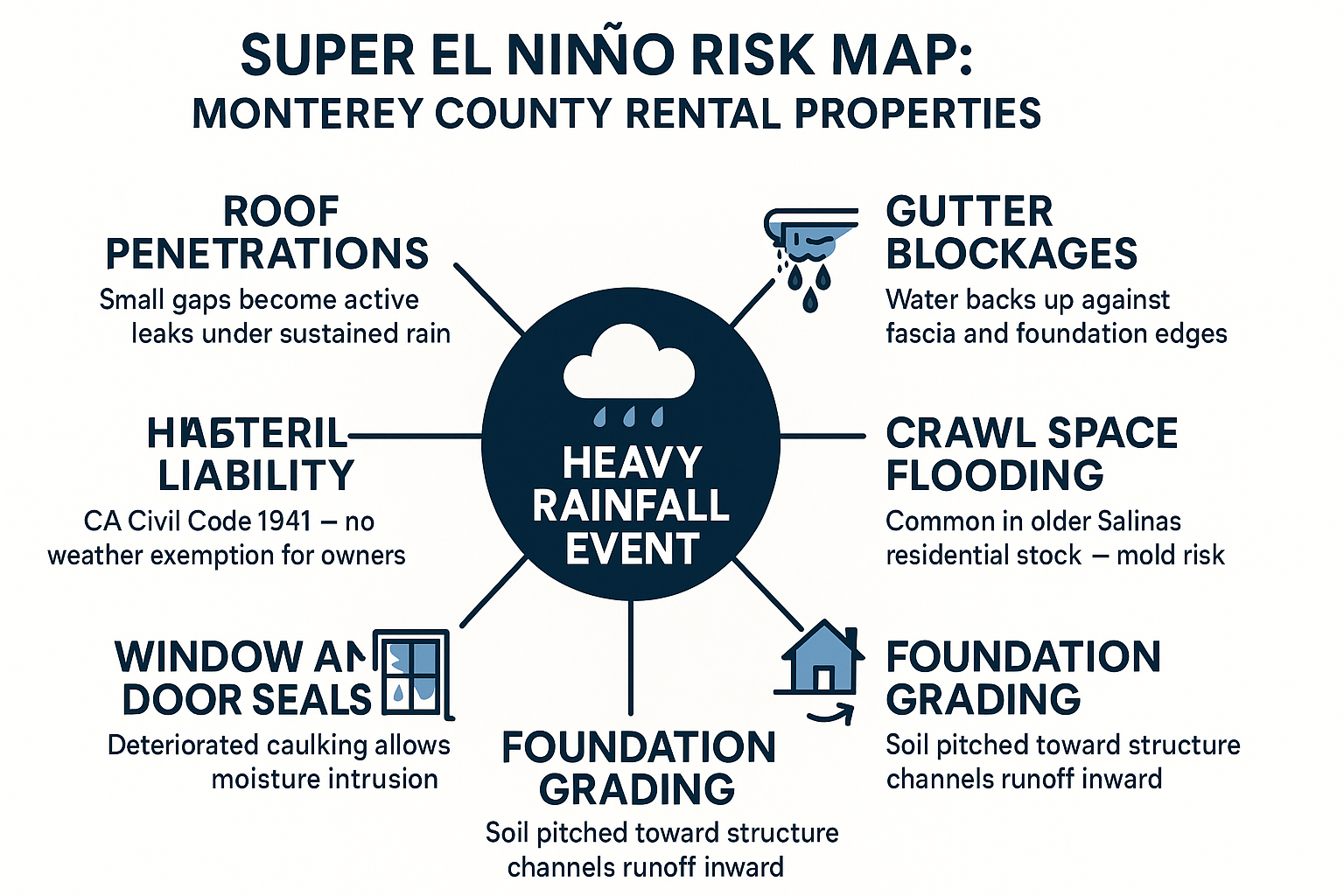
- Roof penetrations and aging shingles — small gaps that leak slowly under normal rain become active problems under sustained downpour
- Gutters and downspouts — blocked or undersized systems cause water to back up against fascia boards and foundation edges
- Crawl space drainage — a common issue in older Salinas residential stock, where standing water under a home can damage subfloor framing and create mold conditions quickly
- Exterior grading — soil that slopes toward a foundation rather than away from it channels runoff directly against the structure
- Window and door seals — deteriorated caulking allows moisture intrusion that doesn’t show up until walls start to discolor
None of these are catastrophic on their own in a normal rain year. Under Super El Niño conditions, deferred maintenance on any one of them can escalate into a five-figure repair and a habitability complaint in the same week.
California’s Warranty of Habitability Doesn’t Pause for Storms
California Civil Code Section 1941 requires landlords to maintain rental properties in a habitable condition at all times. That obligation doesn’t have a weather exemption. If a roof leak or flooded crawl space makes a unit unsafe or uninhabitable during a storm, the owner is legally responsible — regardless of whether they had advance warning.
This is the part that catches self-managing landlords off guard. The storm is the event, but deferred maintenance is almost always the underlying cause. A roof that was borderline two years ago doesn’t get a pass because rain was unusually heavy. A drainage system that backed up last winter and was never properly cleared creates the same liability the second time as the first.
When a tenant reports a habitability issue, California law gives landlords a reasonable timeframe to respond — but what counts as reasonable shrinks considerably during an active storm event. A tenant who can document a leak, a flooded unit, or a loss of heat because of weather-related damage has a clear path to withholding rent, repair-and-deduct remedies, or pursuing damages under state law.
For owners who are self-managing their Salinas properties, this is where the exposure is highest. There’s no documented inspection record. There’s no 24/7 response system. And there’s no paper trail showing that the owner identified and addressed deferred maintenance before the weather arrived. When something goes wrong, that absence of documentation is its own problem.
Professionally managed properties carry a different posture into storm season — not because the weather is kinder to them, but because the groundwork has already been laid.
Storm Season Risk: Where Monterey County Rentals Are Most Vulnerable
This overview maps the most common failure points in Monterey County rental properties during heavy rainfall — and what each one means for owner liability.
What Storm Preparation Looks Like for a Professionally Managed Property
The difference between a property that weathers an El Niño season without incident and one that generates an emergency call at midnight on a Saturday isn’t luck. It’s what happened in the two to three months before the first major storm.
For professionally managed properties, storm readiness starts with a seasonal inspection before winter sets in. That means a documented walk-through that looks specifically at the vulnerabilities that El Niño conditions exploit — rooflines, gutters, drainage, crawl spaces, and exterior seals. Not a general once-over, but a targeted review with written records and photos that establish the property’s condition before any weather event occurs.
Beyond inspection, the preparation that matters most is vendor relationships. When a roof starts leaking during a storm, the property owner without a management relationship in place is calling around cold — leaving voicemails for roofers who are already booked, waiting days for a callback while water damage accumulates. A firm with established vendor relationships in Monterey County can dispatch a qualified contractor quickly, because those relationships exist before the emergency arises.
The maintenance request system matters here too. When a tenant submits a report through a professional portal — rather than texting a landlord’s personal cell at 10pm — there is a documented timestamp, a record of the complaint, and a traceable response chain. That documentation protects the owner if a habitability dispute arises later.
Owners who have wondered what full-service property management actually covers often find that storm season is when the answer becomes concrete. The 24/7 emergency response, the vendor network, the inspection records — these aren’t marketing language. They’re the infrastructure that keeps a single weather event from becoming a legal and financial problem.
Self-Managing vs. Professionally Managed: Storm Season Comparison
The gap between these two approaches tends to be invisible during dry summers. It becomes very visible once the first atmospheric river hits.
| Scenario | Self-Managing Owner | Professionally Managed Property |
|---|---|---|
| Pre-season inspection | Rarely scheduled, often skipped | Documented seasonal walk-through before winter |
| Vendor availability during storm | Cold calls — often delayed days | Established contractor relationships, faster dispatch |
| Tenant maintenance report | Text to personal cell, informal | Timestamped portal submission, documented response chain |
| 24/7 emergency response | Owner’s personal availability | Dedicated after-hours response system |
| Habitability documentation | Limited or none | Inspection records, repair logs, written communication trail |
| Legal exposure if unit becomes uninhabitable | Higher — no documented due diligence | Lower — proactive record of maintenance and response |
The Hidden Cost of Getting Caught Off Guard
Property owners in Salinas and across Monterey County who are currently managing their own rentals often reach a breaking point after something goes wrong — not before. Several owners who have come to professional management in recent years described the same pattern: a maintenance issue they knew about but hadn’t gotten around to addressing became a much larger problem when weather accelerated it.
One common scenario is a roof that showed minor wear signs but wasn’t leaking badly enough to feel urgent. Under a normal winter, it holds. Under a sustained atmospheric river event, it doesn’t — and by then, the repair cost is compounded by interior damage, tenant displacement costs, and potential liability exposure.
The hidden workload of managing a single rental home is significant in dry weather. In an El Niño year, that workload doesn’t just increase — it compresses. Vendors are stretched thin across the county. Materials take longer to source. Every other landlord who deferred the same maintenance is calling the same contractors at the same time.
Owners who have professional management in place don’t scramble during those windows, because the preparation was done months earlier. Those who don’t are making decisions in the dark, under pressure, without documentation, while water is actively entering a property they’re legally responsible for maintaining.
The Salinas Rental Registration Ordinance Adds Another Layer
Storm readiness isn’t purely a maintenance conversation for Salinas landlords — it has a regulatory dimension too. The City of Salinas Residential Rental Registration Ordinance (City Ord. 2663, 2024) requires rental properties in Salinas to be registered with the city, and that registration process includes compliance with habitability standards.
An El Niño event that exposes deferred maintenance doesn’t just create a repair problem. If a property is found to be out of compliance with habitability standards — whether through a tenant complaint or a city inspection — the owner is dealing with both a physical repair and a regulatory response at the same time.
For owners with multiple Salinas units, staying legally compliant across a portfolio in Monterey County becomes meaningfully harder when storm damage is also in play. And California’s AB 1482 Tenant Protection Act creates additional layers around rent adjustments and lease modifications that can come into play if a unit becomes temporarily uninhabitable.
Professional management doesn’t make regulations disappear. But it means someone is tracking those requirements year-round — not scrambling to understand them during a weather emergency.
Frequently Asked Questions: El Niño and Monterey County Rental Properties
When should property owners in Salinas start preparing for El Niño storm season?
September and October are the right window — before the first major atmospheric river events typically arrive on the Central Coast. That’s when inspections, gutter cleaning, and vendor outreach can happen without competition from other owners doing the same thing in a panic. By November, the window starts to close.
If a storm causes damage to my rental, am I responsible even if the weather was unusually severe?
In most cases, yes. California’s Warranty of Habitability under Civil Code Section 1941 doesn’t include an exception for severe weather. If a property had deferred maintenance that the storm exposed — an aging roof, blocked drainage, deteriorated seals — the owner’s prior knowledge of those conditions matters in any dispute. The storm is rarely the sole cause; it’s the event that reveals what wasn’t addressed.
What specific parts of a Salinas rental property are most likely to fail during heavy rain?
Roof penetrations, clogged gutters and downspouts, crawl space drainage, and foundation grading are the four most common failure points in older Salinas residential stock. Window and door seals are also worth checking — deteriorated caulking causes moisture intrusion that often isn’t visible until it’s already caused damage inside walls.
Does the City of Salinas Rental Registration Ordinance affect how I handle storm damage?
It can. City Ord. 2663 (2024) requires registered Salinas rentals to meet habitability standards. A storm that reveals pre-existing maintenance deficiencies could trigger both a repair obligation and a compliance review if a tenant files a complaint with the city. Having documented inspection records and a clear maintenance response history is the best protection an owner can have in that situation.
I manage my own property. What should I do right now to prepare for a heavy rain season?
Start with the roof — hire a licensed roofer to inspect and document condition, especially around any penetrations, skylights, or older flashing. Then clear gutters and verify downspouts discharge water away from the foundation. Check crawl space vents and drainage. And make sure you have vendor contacts lined up before the storms arrive, not after. Every roofing and plumbing contractor in Monterey County is harder to reach once the first major storm hits.
Can a tenant legally withhold rent if storm damage makes the unit uninhabitable?
Under California law, tenants have several remedies when a rental becomes uninhabitable — including repair-and-deduct rights and the ability to argue rent withholding in certain circumstances. The specific rules depend on factors like how quickly the owner responded and whether the owner had prior notice of the maintenance issue. This is exactly the scenario where having documented maintenance records and a timestamped response chain is the difference between a manageable situation and a legal dispute.
Storm Season Is Coming — Preparation Is the Work That Happens Before It
Property owners across Salinas, Monterey, and the surrounding communities who have professional management in place going into an El Niño season aren’t scrambling when the first atmospheric river arrives. The inspections are done. The vendors are relationships, not cold calls. The documentation exists. If you’re a Monterey County property owner thinking about what this season could mean for your rental, Coast & Valley Properties is available to talk through your specific situation. Reach the team directly at (831) 757-1270 or through the contact form at coastandvalleypm.com.