How Rent Gets Set on a Monterey County Rental, and Why Online Estimates Miss
Direct Answer: Rent is set by comparing what similar nearby units actually leased for in the last 60 to 90 days, then adjusting for condition, amenities and timing after an in-person walkthrough.
Almost every owner who reaches out asks the same two things in one breath: what do you charge, and what could my property rent for. One owner recently asked for our fees, a rent estimate, and anything else we thought was important to know. Another wanted a number for the same Salinas home both furnished and unfurnished.
It is a fair question. It is also the one question I will not answer with a single number over email, and I want to explain why in a way that is actually useful to you.
What follows is how a defensible rent range gets built on a Monterey County home, why the free online estimators miss badly here, and what overpricing by even $100 a month really costs you in year one.
Why nobody credible quotes a rent number by email
When someone gives you a firm rent figure without seeing the property, they are doing one of two things. They are either reading the same public data you can read, or they are telling you a high number to win your business.
Both are easy. Neither holds up when the listing goes live and the phone does not ring.
A number I can stand behind needs three inputs that no email can supply:
- Condition in person. Paint, flooring, kitchen age, window condition, yard state, and the smell of the place when you walk in.
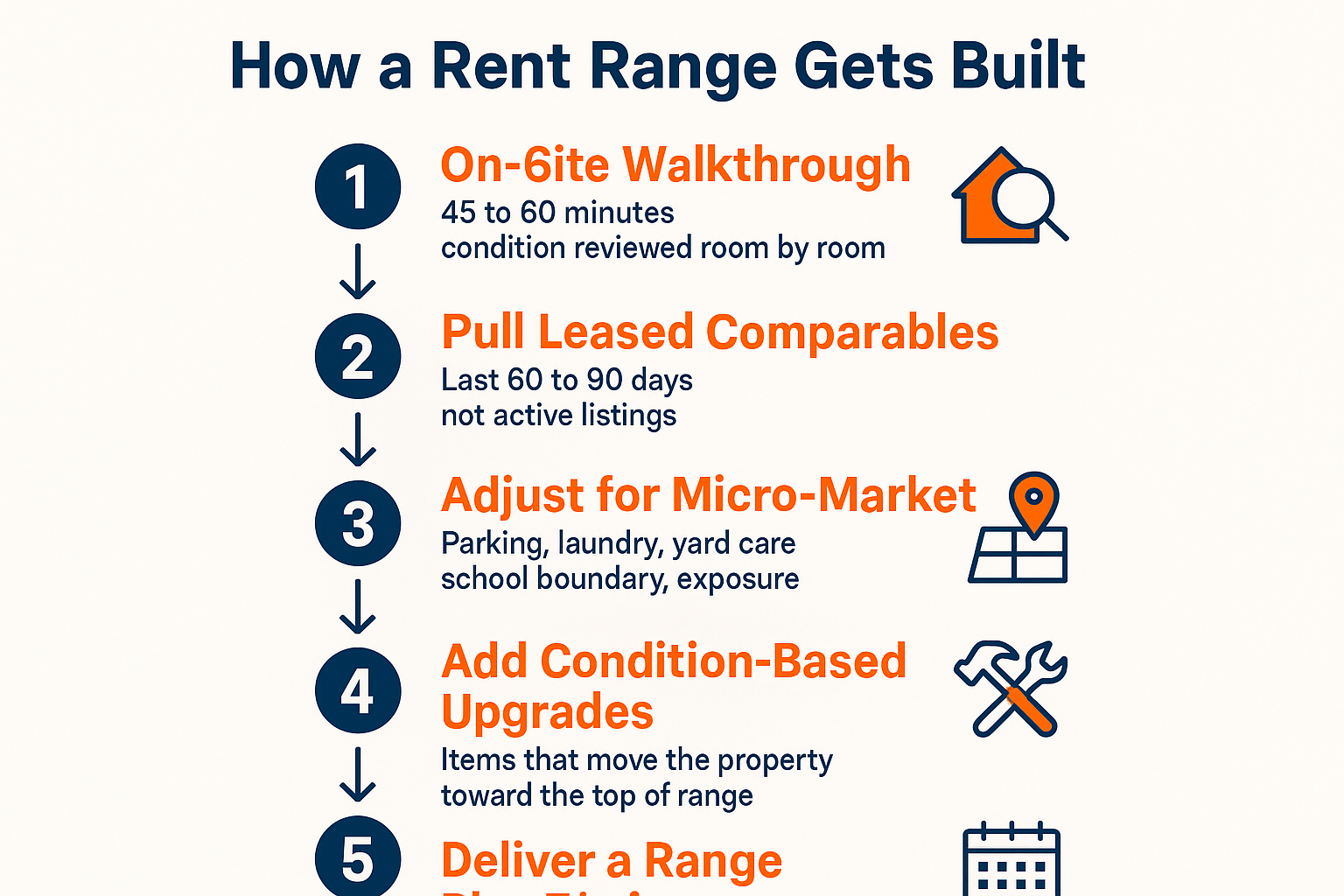
- Leased comparables, not active listings, from the last 60 to 90 days in that specific pocket of the county.
- Timing. A vacancy hitting the market in June behaves differently than one hitting in late December.
That is why a proper consultation is an in-person visit of about 45 minutes to an hour, not a quick reply. You get a range, the reasoning behind it, and a short list of condition items that would move the property toward the top of that range instead of the bottom.
If you are still weighing whether to rent at all, our guide on whether to sell or rent your house in Salinas walks through that decision first.
Micro-markets beat square footage, and that is where the algorithms break
Monterey County is not one rental market. It is a dozen small ones stacked inside the same county lines.
A three bedroom in north Salinas, a three bedroom in Marina, a three bedroom in Pacific Grove and a three bedroom in Gonzales are four different products with four different applicant pools. Same bedroom count, same rough square footage, very different rent.
Automated estimates average across a ZIP code. They cannot see:
- School attendance boundaries, which can split one street into two demand pools
- Ag corridor exposure, including dust, spray schedules and equipment traffic
- Off-street parking, which matters enormously in older Salinas neighborhoods and on the Peninsula
- Who maintains the yard, and whether that cost lands on you or the resident
- In-unit laundry versus a shared room versus nothing at all
- Coastal exposure and how fast weather chews through exterior finishes
I have seen two homes a mile apart in Salinas price nearly $400 a month apart for reasons that never appear in a public data field. This is the same reason how well your property manager knows your neighborhood is not a soft question. It is the whole job.
Use the countywide average as orientation, not as a valuation
Local reporting has put the average Salinas rent somewhere in the neighborhood of $2,000 a month in early 2026, running above the national average because supply here stays tight. Treat that as a starting point for a conversation, nothing more.
County and city averages blend studios with four bedroom homes, remodeled units with tired ones, and Greenfield with Carmel. Individual properties land well above or well below that figure for reasons only an in-person look reveals.
If you want a broader public reference point, the U.S. Department of Housing and Urban Development publishes fair market rent data by county that is useful for context. Just remember it is built for program administration, not for pricing your specific home.
Averaging is the whole problem. Your property is not an average.
What a walkthrough catches that an online estimate does not
Here are the details I look at during a visit and how they typically move the number.
| Property detail | Effect on rent or lease speed | Visible to an online estimator? |
|---|---|---|
| In-unit washer and dryer | Raises rent and shortens days on market | Rarely |
| Off-street or garage parking | Significant in older neighborhoods | No |
| School attendance boundary | Shifts the applicant pool entirely | No |
| Yard care responsibility | Affects rent and resident retention | No |
| Kitchen and flooring condition | Often the difference between top and bottom of range | No |
| Ag corridor or coastal exposure | Affects demand and upkeep costs | No |
| Bedroom count and square footage | Baseline only | Yes |
How a rent range actually gets built
This is the sequence I follow on every property, from first visit to the annual review.
Amenities move the number and the calendar
Rent is not just a price. It is a price paired with how long the unit sits empty, and amenities move both.
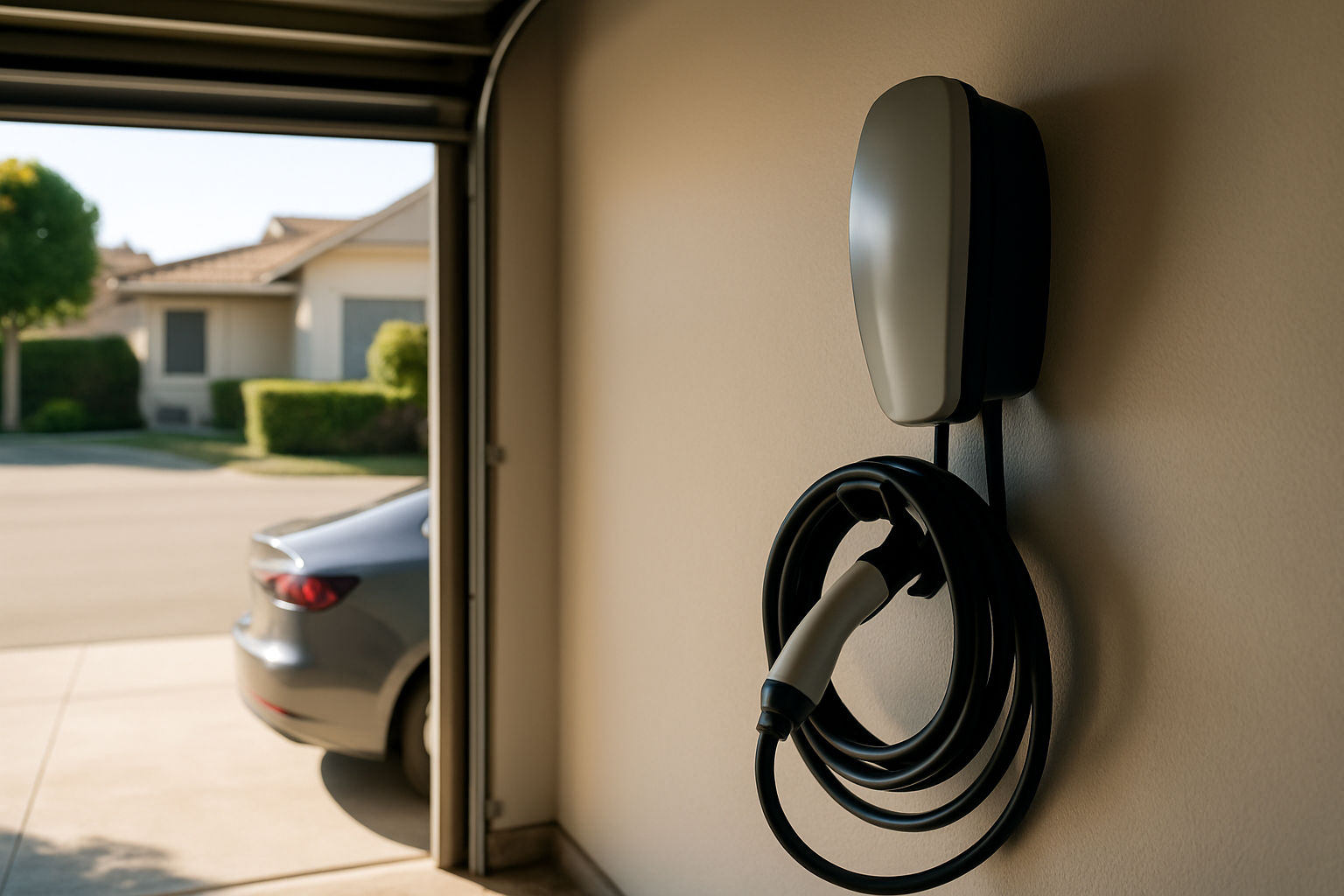
One Salinas rental we handled leased roughly 30 percent faster after an EV charger was added. The rent held, but the vacancy window shrank, and that is real money.
The features that consistently shorten days on market here:
- In-unit laundry, still the single most requested item on our showings
- EV charging, increasingly expected on the Peninsula and in newer Salinas neighborhoods
- Keyless entry and smart thermostats
- Reliable high-speed internet service at the address
- Secure off-street parking
There is also a process piece owners underestimate. Renters now expect to tour, apply and pay online. A listing with none of that tends to sit while comparable units lease, no matter how the price is set.
The plain math on overpricing
Chasing a higher number feels like upside. Run it out over twelve months and it usually is not.
Say a home would lease at $3,000 in about three weeks. You push for $3,100 instead. That extra hundred is $1,200 over a full year.
Now assume the stretch adds one extra month of vacancy. That is $3,000 of lost rent plus a month of carrying costs on a property nobody is paying for. You are down roughly $1,800 in year one and you have not made it back yet in year two.
The second cost is quieter and worse. Stretched applicants accept an aggressive rent more readily than well-qualified ones do, because well-qualified applicants have options and simply move on.
So an inflated number can quietly trade a strong resident for a fragile one, and turnover risk follows that trade. When owners tell me self-management stopped penciling out, this pattern is usually part of why.
Leased comps, not asking prices
Here is the habit that separates a real range from a guess. Asking rents on active listings are aspirations. Some of those units will sit for two months and then lease $200 under the ask.
What matters is what similar units actually leased for recently, in what condition, and how quickly. That is the data I build from, along with what I saw walking your property.
Markets here also move. A range that was right in March may be soft by November, which is why annual market analysis is part of ongoing management rather than a one-time exercise. Pricing questions and fee questions both deserve a direct conversation, and what management fees actually cover is worth reading before you compare any two proposals.
Frequently Asked Questions About Setting Rent in Monterey County
Can you at least give me a ballpark over the phone?
I can tell you what similar properties in that area have leased for recently, and I am happy to. What I will not do is turn that into a firm number for your specific home before I have seen it, because condition alone can swing the figure by hundreds of dollars a month.
Should I rent my place furnished or unfurnished?
This comes up constantly, especially from owners whose home was previously listed on a short-term platform. Furnished long-term rentals serve a much smaller applicant pool in this county, so the higher rent often gets eaten by longer vacancy. We cover the transition in more detail in our guide on turning a former Airbnb into a long-term rental.
How long is a rent estimate good for?
Treat it as current for that season. Monterey County demand shifts with school calendars, agricultural cycles and the general flow of relocations, so we revisit market analysis annually on properties we manage rather than setting a number once and forgetting it.
Do online rent estimators ever get it right?
Sometimes, on plain vanilla properties in dense neighborhoods with lots of recent turnover. They struggle most on the properties that matter most: older homes, coastal exposure, unusual layouts, larger lots, and anything in a small city where the comparable pool is thin.
What upgrades actually pay for themselves before listing?
Usually paint, flooring, and anything that removes a resident’s daily annoyance, such as adding laundry or fixing parking. Cosmetic work that photographs well tends to shorten vacancy, and shorter vacancy is where the return actually shows up.
Want a rent range you can actually plan around?
A licensed local agent spending 45 minutes to an hour at your property, reviewing condition, recent leased comparables and timing, is how a rent range stays honest and stays current. Coast & Valley Properties has been doing that across Salinas, Monterey, Carmel and the rest of Monterey County since 2009, and we revisit market analysis each year for the properties we manage. If you have pricing or fee questions, they are worth a direct conversation at (831) 757-1270 rather than a number typed into an email.