Who Gets Inside Your Vacant Salinas Rental Before It’s Leased
Direct Answer: On a well run vacancy, nobody enters without being qualified first and accompanied by your agent. Every visit is logged, and dated move-in photos are taken before keys are released.
When an owner calls me about renting out a house for the first time, the question underneath the question is rarely about fees or lease length. It is about who will be standing inside an empty house they own, and whether they will hear about it.
We get that question constantly from owners in Salinas, Soledad, Gonzales, and up on the Peninsula. One owner wrote in asking for help understanding the listing process from scratch. Another with a condo in South County simply asked how getting a property managed works and what is included.
So here is my position, plainly. No one should get through the door of a vacant rental without being qualified first and accompanied by someone who answers to you, and every one of those visits should double as a condition check on the building. Below is the order things actually happen in, and the decisions you get to make along the way.
What Happens Between the Listing Going Live and the Keys Changing Hands
Most owners have no mental picture of this sequence, which is why the access part feels unsettling. Here is the order, start to finish:
- Pricing and prep walkthrough. Someone walks the property in person, notes condition, and sets a realistic rent range for that street and that season.
- Photos and listing. The listing goes live with accurate bedroom count, lease term, and photos that match what a prospect will actually see.
- Inquiry handling. Calls, emails, and portal messages come in. Many are tire kickers. Some are already living two hours away and want a video.
- Qualifying the prospect. Income, move-in date, household size, pets, and sometimes a completed application before a door opens.
- The showing. Accompanied, by appointment, with the agent present the whole time.
- Application review. Credit, background, rental history, and employment verification, then your approval before anyone signs.
- Lease execution.
- Move-in evaluation with dated photos, deposit and first month collected, then keys.
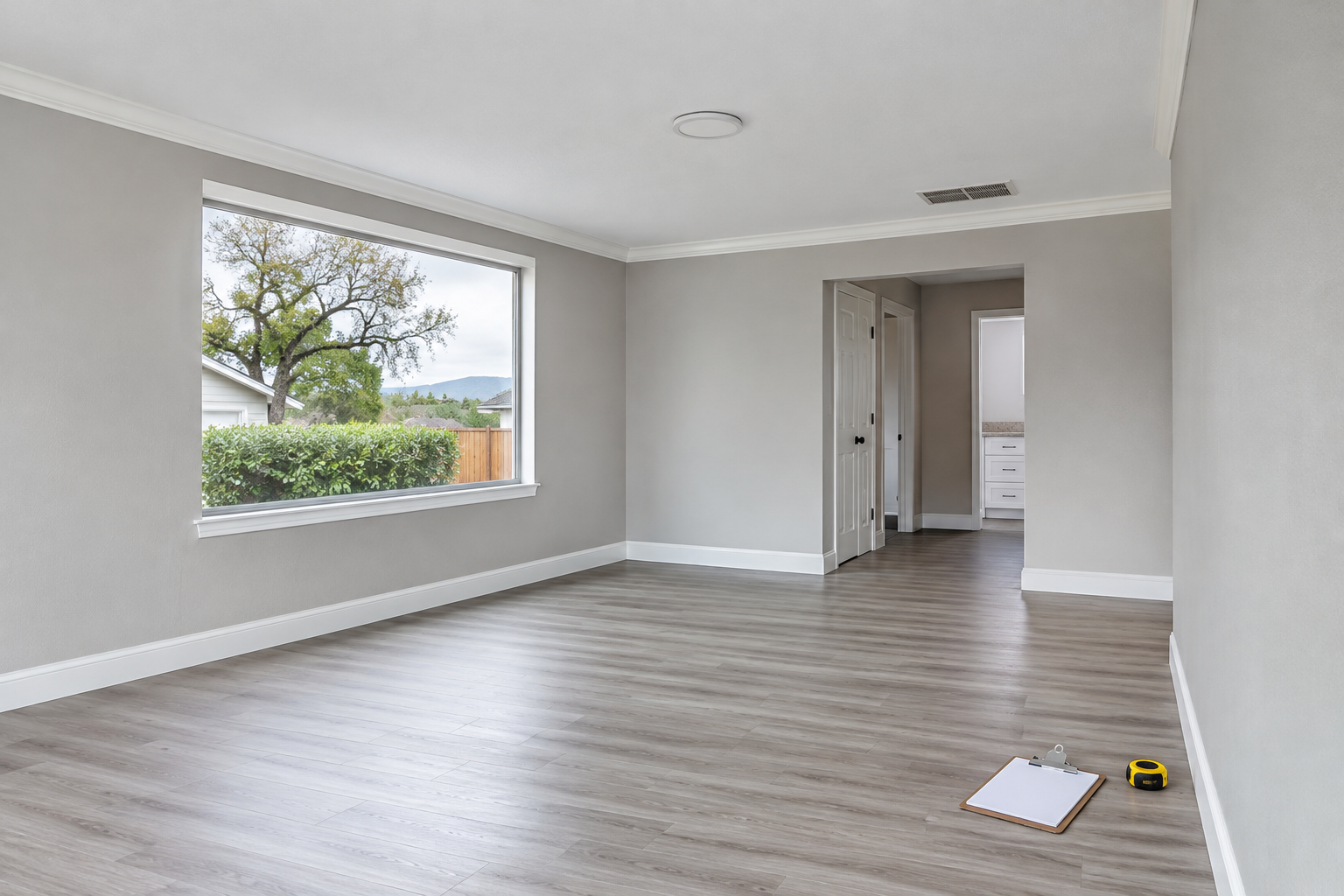
That whole run takes weeks, not days, and the property is empty for all of it. If your house is freshly remodeled, the prep step matters even more, because a remodel does not automatically mean rent ready.
Showing Policy Is a Real Fork in the Road, and It Is Your Call
This is where owners quietly disagree with each other, and both sides have a point.
Open the door to anyone who calls and you get volume. More eyes means a faster lease, and on a vacancy you are carrying, speed has real value. But you also get no shows, unqualified traffic, and strangers wandering a house you own.
Tighten it up and you get fewer, better visits. Read the public reviews of management firms around Monterey County and you will find renters who are genuinely annoyed at being asked to apply or qualify before touring. That frustration is real, and it does shrink your applicant pool.
Now look at it from the owner side. The owners who care most about this are the ones with a remodeled fourplex sitting vacant or an estate in Pebble Beach where discretion is the whole point. They do not want their empty house treated like an open house.
My honest answer: there is no single right policy. A $2,000 unit in Greenfield and a Carmel home are not the same risk. What I will say firmly is this. Decide the policy before the listing goes live, put it in writing, and never leave a lockbox code circulating. Application fees in this market commonly land somewhere in the $40 to $60 range per adult, but ask directly rather than assuming, because that number shapes how many people will apply sight unseen.
Four Showing Approaches, and What Each One Trades
Here is how the common approaches compare on speed, control, and risk. None of them is wrong for every property.
| Approach | What you gain | What it costs you |
|---|---|---|
| Open to anyone who calls | Highest traffic, fastest lease in a slow season | Unvetted strangers inside, high no show rate, more wear on a clean unit |
| Phone prequalify, then accompanied showing | Filters out obvious mismatches, keeps volume decent | Takes staff time, some prospects drop off |
| Application first, then showing | Only serious applicants walk through, strong control | Smaller pool, public pushback from renters, slower in soft markets |
| Self access with a lockbox code | Very fast, no scheduling needed | No one watching the property, hardest to document who entered |
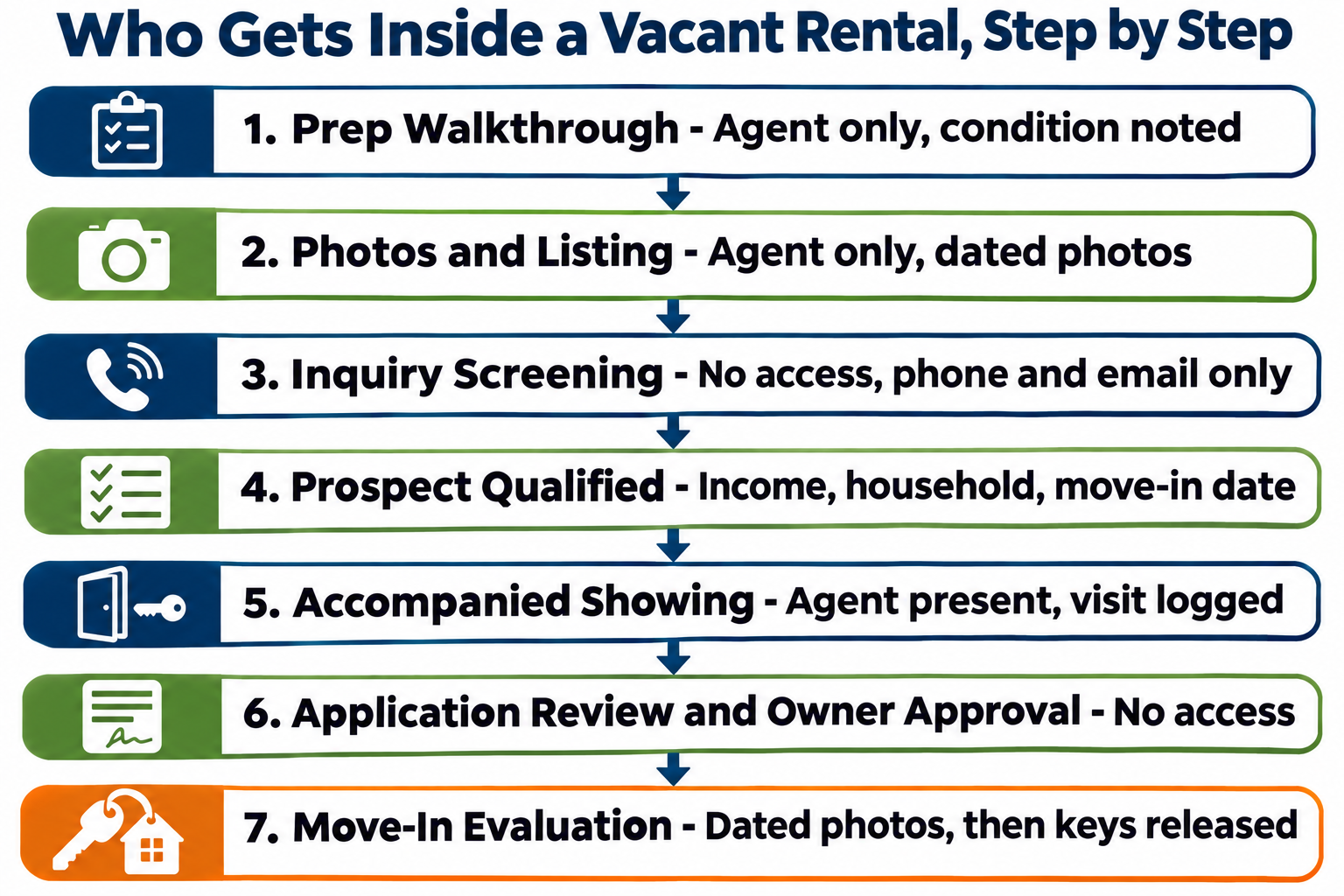
The Access Chain on a Vacant Rental
This is the sequence I walk first time owners through so they can picture exactly where their property sits at any point.
An Empty House in a Wet Monterey County Winter Needs Eyes on It
Here is the part owners underestimate. A vacancy that stretches from October into March is a vacancy carried through storm season.
NOAA forecasters have announced El Nino conditions and expect the pattern to strengthen through fall and winter, with strong events historically bringing heavier rain and more atmospheric river activity to the Central Coast. Salinas Valley properties sit near a river that floods. Peninsula homes fight marine layer moisture every month of the year.
An empty house has no one inside to notice problems. There is no tenant to call you about:
- A gutter running over onto the foundation
- Standing water pooling at the side of the house
- A drip under a sink that has been going for three weeks
- Mildew starting in a closed back bedroom
- A side gate blown open
This is why I argue against lockbox access so strongly in winter. Every accompanied showing is also a condition check, but only if the person opening the door knows what to look for and reports it to you the same day. If your property goes empty in December, it is worth reading up on who moves in the rain and what to walk before the first storm.
Vendors Are the Forgotten Half of the Access Question
Owners almost never ask me who lets the landscaper in. Then a tenant complains and it becomes the only thing anyone is talking about.
One tenant review in this market described a sprinkler technician walking into the backyard with no notice and taking photos while the family was home. That is a small access failure that turns into a formal complaint, a bad review, and sometimes a lost tenant.
And there are more outside hands near your property than you think. We get unsolicited pitches through our website every month from landscaping crews, flooring installers, even a security patrol company, all asking to be added to the vendor list.
The difference that matters is a vendor list versus a vendor protocol. Anyone can hire a gardener. A protocol answers four questions every time:
- Who is scheduled to be on the property, and on what date
- Was proper notice given to the tenant
- Who holds a key, and is it returned
- Did the owner get confirmation the visit actually happened
How vendors get approved in the first place is its own topic, and I covered it in who shows up to fix your rental and how they got on the list.
The Move-In Walkthrough Is Worth More Than Any Clause in the Lease
If you take one thing from this article, take this. Dated photos taken before a single box comes through the door settle every condition argument twelve months later.
Read the deposit disputes in this market and you see the same fight over and over. Paint touch ups. Weather stripping that was already torn. Cleaning standards at move out. In more than one of those disputes, the damage in question was visible in the original move-in photos, which is exactly why the photos exist.
A proper move-in evaluation should capture:
- Every room, wide shot plus close ups of existing wear
- Floors, walls, and baseboards
- Appliance condition and serial plates
- Utility meter readings on the move-in date
- Yard, fencing, and exterior condition
- A date stamp on every single image
Those files should not live on someone’s phone. They belong in your owner portal where you can pull them up yourself at midnight without asking anyone. Owners ask us for this all the time, including one who wanted photo proof that a fence was finished and a front tree was trimmed before he approved the invoice. As one client put it in a review, “everything was done electronically which made it really convenient.” You should never have to take anyone’s word for what your property looked like on day one.
Frequently Asked Questions About Showings and Access on a Vacant Rental
Can someone tour my property before they apply?
That depends on the showing policy you and your manager agree on. Some owners want qualified-only access, which cuts foot traffic and protects a remodeled home. Others want maximum volume to fill a vacancy fast. Both are defensible, and it should be your decision, made before the listing goes live.
Who holds the keys while my house sits empty?
In our process, keys stay controlled by the office and showings are accompanied. I am not a fan of codes floating around on a vacant property, especially in winter when nobody is inside to notice a leak or an open gate.
How often is anyone at my property between showings?
It varies with how much interest the listing is getting. In a slow stretch, that can mean a week or more with nobody there, which is exactly why each visit should include a condition check and a same day note to the owner, not just an unlock and relock.
Do I get to approve the tenant before the lease is signed?
Yes. Screening results, including credit, background, rental history, and employment verification, go to you for review before any lease is executed. Screening is handled in house, not routed to a national call center.
What if a vendor needs to get in while the house is occupied?
It should be scheduled, with notice to the tenant, by a vendor who is already on an approved list, and you should get confirmation the visit happened. Unannounced entry is how a decent tenant relationship goes sideways over something small.
Questions About How Showings Work on Your Own Property?
We have been working out of a Main Street office in Salinas since 2009, broker owner led, serving owners across the Monterey Peninsula and the Salinas Valley. If you want to talk through how showings, vendor access, and move-in documentation would be handled on your specific property, the office line is (831) 757-1270 and we are glad to walk you through it.