
CAM Reconciliation Season: What a Monterey County Commercial Owner Should See
It is October. Your tenant's lease renews after the first of the year, and somewhere in the back of your mind is a quiet question you have not asked out loud: what exactly is the year-end accounting supposed to produce, and will it hold up if the tenant pushes back?
I get this call every fall from owners of small retail strips, office suites, and light industrial buildings around Salinas and the Peninsula. They have been collecting a monthly CAM estimate all year. They are not entirely sure what happens next.
This article walks through what a CAM reconciliation commercial lease arrangement should actually produce, the reports you should be able to pull up without phoning anyone, and the fall work that decides whether January is calm or expensive.
What a CAM Reconciliation Actually Is
CAM stands for common area maintenance. Through the year, your tenant pays an estimated monthly share of the costs of running the building: landscaping, parking lot upkeep, common area lighting, trash, insurance, and whatever else the lease folds in.
At year-end, those estimates get compared against what the building really spent. The gap goes one of two directions:
- The tenant overpaid, and gets a credit applied or refunded.
- The tenant underpaid, and gets a true-up bill for the difference.
- The two land close together, which is what a well-set estimate looks like.
Here is the part owners are often surprised by. None of this is driven by an outside rule. It is driven entirely by the language in your lease. The definition of recoverable costs, the exclusions, the cap on increases, the deadline to deliver the statement, the tenant's audit rights, all of it lives in the document you signed.
That is why two buildings on the same block in Monterey can reconcile completely differently. One lease may exclude capital work on the roof. The next one down may pass it through on a schedule. If you have never read your own CAM clause line by line, the fall is the time. Our breakdown of what the 'NNN' in a triple net lease actually means for owners covers how those pass-through structures are built.
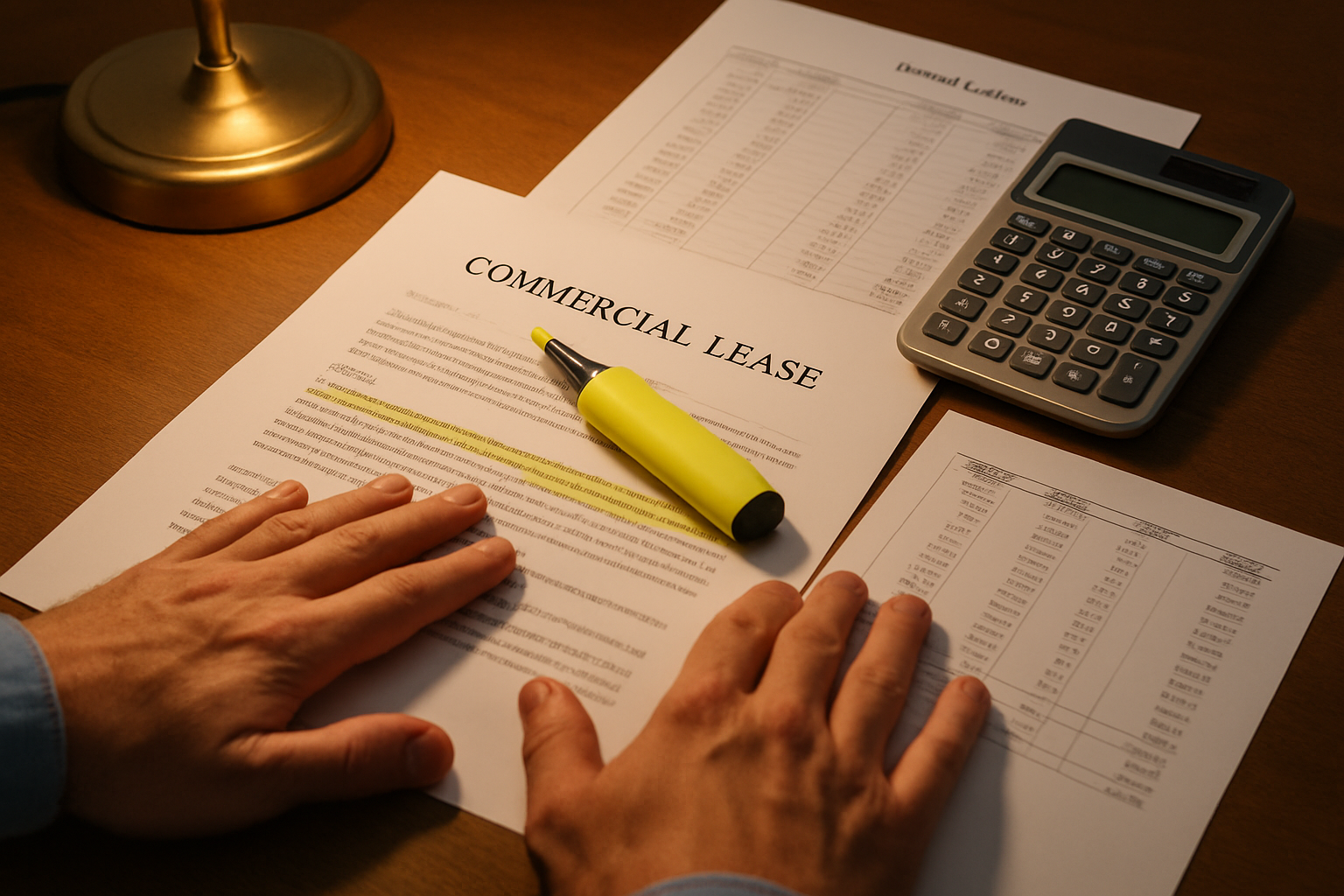
The Reports You Should Be Able to Pull Up on Your Own
Before a reconciliation goes out to a tenant, you should be able to open a portal and see the whole year yourself. Not request it. See it.
The standard set for a commercial building looks like this:
- Monthly balance sheet so you know what the property owns and owes.
- Income statement showing the month and the year to date.
- General ledger, the transaction-level record of every dollar in and out.
- Accounts payable detail showing what is owed to which vendor.
- Aged report showing who is behind on rent and by how long.
- Bank statement reconciliations tying the books to the actual account.
The general ledger carries the most weight in December. It is the record the reconciliation is built from, and it is the same record your CPA will ask for in January.
I have watched this go badly more than once. When an owner cannot see the full year in one place before the statement goes to the tenant, that reconciliation turns into an argument, and the argument happens in the same month you are trying to sign a renewal. Clean records end the conversation before it starts. If you are unsure what normal reporting rhythm looks like, we wrote about how much you should hear from your property manager in a typical month.
Year-End Commercial Reports and When Each One Matters
A quick reference for which report answers which question during reconciliation season.
| Report | What It Tells You | When It Matters Most |
|---|---|---|
| General ledger | Every transaction for the year, line by line | December reconciliation and January tax prep |
| Income statement | Revenue and operating costs for the period | Setting next year's CAM estimate |
| Accounts payable detail | What is owed and to which vendor | Verifying vendor totals before the true-up |
| Aged report | Which tenants are behind and how far | Renewal decisions and collection follow-up |
| Bank reconciliations | Books matched against actual account activity | Any time a tenant questions a number |
| Balance sheet | Property assets, liabilities, and reserves | Capital planning and lender requests |
Next Year's Budget Sets Next Year's CAM Estimates
This is the step that gets the least attention and causes the most trouble. The budget you build now is what sets the monthly estimate your tenant pays all next year.
A working draft should exist a couple of months before the new fiscal year begins. It gets built from two inputs:
- What the building actually spent in prior years, pulled from the ledger.
- Any projects you already know are coming, like a parking lot reseal or an HVAC replacement.
Now the trap. It is tempting to set the estimate low so the tenant's monthly number stays friendly, especially during a renewal negotiation. That does not make the cost disappear. It moves it to next December, when your tenant opens a large true-up bill and starts questioning every line on it.
I would rather deliver an estimate that lands within a few percent of actual and have a reconciliation nobody argues about. A tenant who trusts the math renews more easily, and a tenant who feels ambushed starts shopping other buildings on Alvarado Street or out toward the Highway 68 corridor.
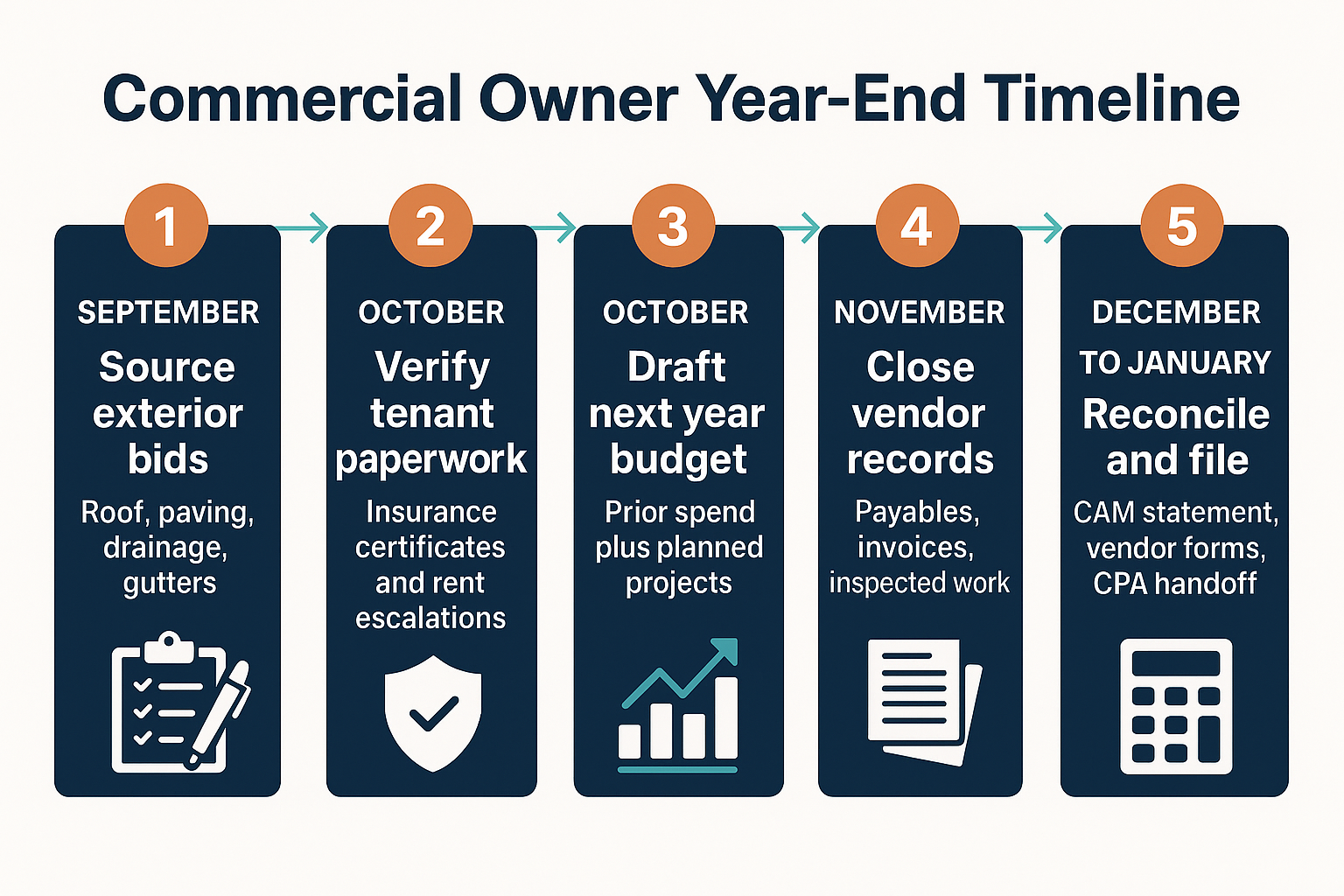
The Commercial Owner's Fall-to-January Calendar
Here is the order the work actually happens in, from bid season through the tenant's reconciliation statement.
Why January Gets Expensive for Owners With a Shoebox of Receipts
Plenty of commercial owners in Monterey County hold the building in an LLC or a family partnership, often because the property came through a parent or a business partner. That adds a reporting layer on top of the personal return.
When that owner hands their accountant a box of receipts, the accountant does bookkeeping at accountant rates. Hours of reconstruction work that could have been avoided show up as a bill.
What makes the handoff simple instead:
- Vendor 1099 preparation already handled, with current W-9s on file for every contractor who worked on the property. The IRS publishes the details on the form used to report payments to vendors.
- Complete payables records showing what was paid, to whom, and for what.
- A clean ledger that ties to the bank statements with no unexplained entries.
A year of loose bookkeeping does not feel like a problem in June. It becomes a real cost in January. For a broader look at what is and is not an owner's responsibility on the commercial side, see our piece on what California commercial landlords are actually responsible for.
Fall Is Bid Season for Anything on the Outside of the Building
On the Central Coast, exterior work has a window, and it is closing now. Roof repairs, parking lot sealing, drainage corrections, and gutter clearing all get harder to schedule and more expensive once winter rain settles in over Monterey Bay.
The better roofing and paving crews serving Salinas and the Peninsula book out weeks ahead. Waiting until a leak shows up in January means taking whoever is available, at whatever they quote.
Three things I would insist on with any exterior project:
- Competing proposals, sourced and compared on the same scope, not on three different scopes.
- Finished work inspected before the vendor gets paid, with photos in the file.
- Written owner approval for any change in scope or cost, before the change happens.
That last one matters more than people expect. An owner should never discover a scope change by reading a monthly statement after the fact. Approving it in advance keeps the budget honest and keeps the reconciliation defensible.
Verify the Tenant Paperwork Instead of Assuming It
Certificates of insurance lapse quietly. Nobody notices until there is a claim or a lender asks for a copy, and then it becomes urgent in the worst way.
Ahead of a January renewal, three items are worth confirming in writing:
- The tenant's insurance certificate is current and names the right parties.
- Any rent escalation written into the lease matches what is actually being billed.
- The renewal conversation has started, in the fall, not in the last two weeks of December.
I have seen escalation clauses sit unbilled for two or three years because nobody went back to the lease. That money is usually gone. Starting the renewal talk early also gives you room to negotiate from the budget you just built, instead of guessing.
Frequently Asked Questions About CAM Reconciliation
When should a CAM reconciliation statement go out to the tenant?
Whatever your lease says. Most commercial leases name a window after the fiscal year closes. The practical answer is to deliver it as early as your books allow, because a statement that arrives months late invites scrutiny you do not need.
What if the tenant disputes the reconciliation?
This is where the general ledger earns its keep. A dispute usually resolves fast when you can produce the transaction-level detail and the invoices behind each category. It drags on when all you have is a summary number with no backup.
Can I include a new roof in CAM charges?
Depends entirely on your lease. Some commercial leases exclude capital improvements from recoverable costs. Others allow them to be amortized over a period of years. Read the clause before you spend, not after.
My building is small. Is all this reporting overkill?
Not really. A four-suite retail strip still needs a ledger, a payables record, and vendor forms at year-end. The volume is smaller. The categories are the same, and so is the cost of reconstructing a year of records in January.
What does commercial property management cost in Monterey County?
It varies with the size of the building, the number of tenants, and the scope of services involved, so there is no single number worth quoting. We do not publish pricing, and the honest answer comes from a conversation about your specific property.
Thinking Through Your Year-End Commercial Accounting?
We have managed commercial property in Monterey County since 2009 under a broker owner, and the commercial side of our work is built around this exact calendar: reporting available through an owner portal, a budget drafted ahead of the new fiscal year, vendor proposals sourced and work inspected before payment, 1099 preparation, and support for your own accountant at tax time. Our team works out of Main Street in Salinas and is around for commercial questions at (831) 757-1270 or through the contact form at coastandvalleypm.com. No rush, and no pitch if you are just trying to understand how your own reconciliation should look.

Leasing Your Monterey Home to a Company for Employee Housing
A company calls about your home in Monterey, Carmel, or Salinas. They want a 12 month lease for their staff, they say the business will pay the rent, and they ask if you are open to it.
Most owners I talk to want to say yes. Then they realize they have no idea how that lease should be written, who they are actually screening, or what happens when the employee living there gets reassigned.
Two real inquiries got me writing this. One owner asked whether we handle corporate rentals. A business contact asked what financial documents make sense for a company lease of a residential home. Both questions come from the same gap, so here are the answers I give on the phone.
Do you handle corporate rentals? And is that the same as a short-term rental?
Long term leases to employers are a normal part of both residential and commercial property management in Monterey County. A company signs a lease, houses its own staff in the home for months at a time, and pays rent like any other tenant.
That is a very different arrangement from renting by the night or the week. Owners across the Monterey Peninsula have been treating that line much more carefully in recent years, and for good reason.
A few plain distinctions:
- Nightly and weekly stays involve constant turnover, marketing to travelers, and local rules that vary by city and by unincorporated area.
- A company lease is one signed agreement, one paying entity, and a fixed term.
- Furnished does not automatically mean short term. Plenty of long leases come furnished.
We do not manage vacation or nightly rentals, so I will not pretend to advise on that path. If your property used to run that way, this walkthrough on converting a former Airbnb covers the shift. And check with your own counsel about your specific parcel, since the answer is not the same everywhere in the county.
Who is the tenant when a company signs?
The entity is the tenant. The employees living in the home are named occupants, not parties to the lease. That single fact changes several clauses.
What I want spelled out in writing:
- Occupancy language that allows staff rotation, with a cap on how many people may live there and a requirement that the company notify us in writing before anyone moves in or out.
- A named responsible contact at the company, usually an HR or operations manager, with a direct phone number and a backup.
- Damage responsibility resting with the company, not with whoever happened to be sleeping in the back bedroom.
- A clear statement that occupants gain no separate tenancy rights of their own.
Mid term employee changes are the part owners forget. When the engineer or the site supervisor moves on, the lease does not end. The company swaps in the next person, and a good lease already describes how that swap gets documented, including an interim condition check with photos.
This is also where knowing who handles what between a landlord and a manager saves headaches, because there are now three parties in the conversation instead of two.

What financial verification makes sense for a business tenant?
You cannot run a credit report on a company the way you run one on a person, so the paperwork looks different. Here is the package I like to see before signing anything.
- Entity filings and good standing. Confirm the business exists, is active, and that the person signing has authority. California filings are public and searchable through the Secretary of State business search.
- Two or three years of financials or tax returns. For a private company, reviewed statements are usually the realistic ask.
- Bank references and a current bank letter confirming the operating relationship.
- An officer signature, and where warranted, a corporate guaranty.
- Proof of insurance with the owner listed, plus confirmation of what the policy actually covers in a leased home.
- References from prior housing arrangements, which tell you more than the financials do.
Size drives the outcome. A hospital system or a large grower can often hand you a corporate guaranty without blinking. A three year old company usually cannot, and that is when a personal guaranty from an officer or a larger security position enters the conversation.
A smaller company is not automatically a bad tenant. It just means the protection has to come from somewhere else.
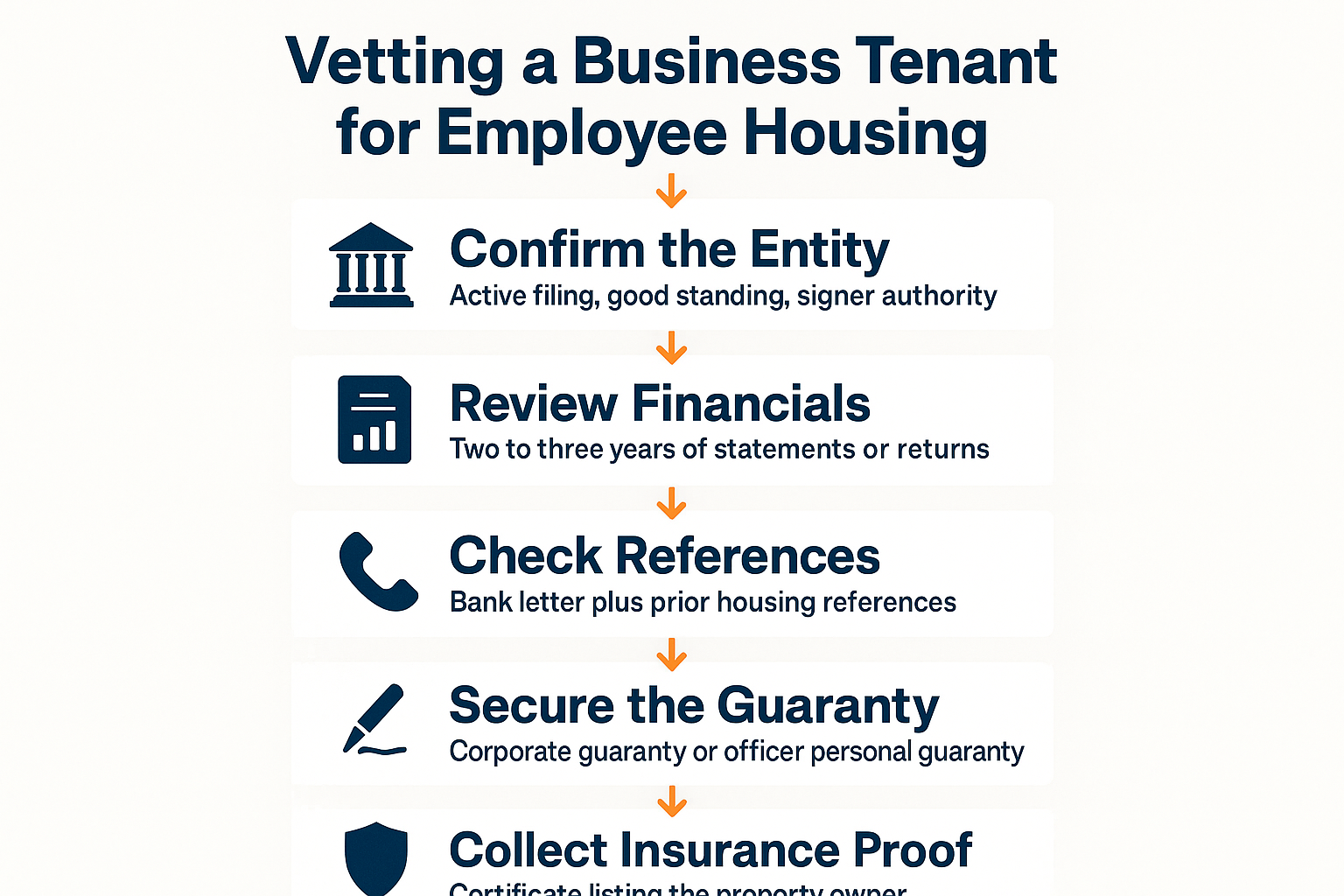
The verification sequence I follow
This is the order I work through when a business wants to lease a residential home for staff.
Furnished or unfurnished, and why the inventory list matters most
Employers placing traveling staff in Monterey and Salinas very often want the home furnished. Their person is flying in for four months and is not shipping a couch.
Furnished changes the paperwork more than owners expect. You now need an itemized inventory with photos, room by room, down to the number of dining chairs and the make of the coffee maker.
You also need written standards for the things that wear out fast:
- Linens, towels, and pillows, with a stated replacement expectation at end of term.
- Small appliances and cookware, listed individually with condition noted.
- Electronics, patio furniture, and anything with a serial number.
- Consumables the company replaces on its own dime.
The inventory list is the single most useful document in a furnished corporate lease. It is what turns an end of lease disagreement into a line item accounting conversation instead of a memory contest.
I would rather spend three hours photographing a furnished home before move in than three weeks arguing about a missing set of flatware after move out.
Standard residential tenancy vs. company employee housing lease
Same house, two very different agreements. This is where the differences show up in practice.
| Item | Standard residential lease | Company employee housing lease |
|---|---|---|
| Who signs | Individual adults as tenants | The business entity, signed by an officer |
| Who lives there | The people who signed | Named employees as occupants, subject to rotation |
| Screening focus | Credit, rental history, employment | Entity standing, financials, bank and housing references |
| Backup for rent | Deposit, sometimes a cosigner | Corporate guaranty or officer personal guaranty |
| Furnishings | Usually unfurnished | Often furnished with an itemized inventory |
| Mid term change | Lease assignment or new lease | Occupant swap documented under the same lease |
| End of term | Deposit accounting | Deposit plus inventory reconciliation |
Who is actually renting this way on the Central Coast?
The demand here is real, but it is lumpy. It follows project calendars, not the usual spring and summer moving season.
What I see most often around Monterey County:
- Ag industry management during season, with supervisors placed in Salinas, Gonzales, and Greenfield.
- Hospital and hospitality staffing, including traveling clinical staff and rotating management.
- Defense and language institute related placements around Monterey, often with predictable term lengths.
- Construction supervisors on multi month projects, where the lease ends when the job does.
Because the timing is driven by work, not by school calendars, lease length is a negotiation rather than a default. Some employers want nine months. Some want a two year term with a break option. Others renew three times in a row and stay four years.
That is not a bad thing, but it changes how you price and how you plan vacancy. Rent for these leases is set by condition, location, furnishing level, and term, so any number I threw out here would be a guess. A walkthrough and a current market analysis is the only honest way to land on a figure.
Why one roof matters for this particular lease
A corporate housing lease sits between residential and commercial. The property is a home, but the tenant is a business, and the document borrows from both worlds.
Most residential-only firms in this area have never drafted one. Most commercial firms do not manage single family homes. Handling both service lines under one roof is what makes this workable, because the same team that understands commercial landlord responsibilities is the team inspecting the house and coordinating the vendors.
And whatever the tenant is, the lease still has to hold up under California's rental rules, which shift often enough that keeping current is part of the job. Before you sign anything, it is worth reading what a management agreement actually says so you know where the responsibility for that work sits.
Frequently Asked Questions About Company Leases for Employee Housing
How long are these leases usually?
Most land somewhere between six and twenty four months, and the term tends to match a project or a staffing cycle rather than a calendar year. I have seen nine month construction terms renew twice and turn into a three year tenancy.
What happens if the employee living there leaves halfway through the lease?
Nothing happens to the lease. The company is still the tenant and still owes the rent. The employee moving out should trigger written notice, a documented occupant change, and an interim condition check with photos, which is why that clause needs to be in the lease from day one.
Is it reasonable to ask a small company for a personal guaranty?
Yes, and it is common. A large employer can usually offer a corporate guaranty backed by real financials. A newer or smaller company often cannot, so a personal guaranty from an officer or a larger security position is the fair trade for taking on that risk.
Can I charge more for a corporate lease?
Sometimes, particularly when the home is furnished and the term is shorter than a standard year. But furnished leases also carry replacement costs, deeper turnover work, and more detailed accounting, so the higher number is not all upside. Pricing depends on the property, so it takes a walkthrough and current market data to answer honestly.
Do I need different insurance for this?
Talk to your carrier before you sign. A business tenant, furnished contents, and rotating occupants are all facts your insurer will want to know about, and you should also ask the company for a certificate listing you as the property owner.
Thinking through a company lease on your Monterey County property?
Every one of these leases looks a little different depending on the employer, the term, and whether the home goes out furnished. Coast & Valley Properties handles both residential and commercial management across Monterey County, and we are glad to walk through the questions above with an owner who is weighing one of these offers. The office number is (831) 757-1270 if you want a conversation about how your property fits.

Maximize Deductions with 7 Tax-Saving Strategies for Commercial Property Owners

Being a commercial property owner comes with its own set of financial responsibilities, including taxes. However, with a strategic approach and the right knowledge, you can maximize deductions and save on your tax bill. In this article, we will explore seven effective tax-saving strategies specifically tailored for owners of commercial properties.
Understanding the Basics of Commercial Property Tax
Before diving into the tax-saving strategies, it's important to have a good grasp of the basics of commercial property tax. Commercial property tax is a levy imposed by local governments on owners of commercial properties based on the assessed value of the property. Understanding how this tax works is crucial for implementing effective tax-saving strategies.
Commercial property tax is a significant expense for property owners, and having a solid understanding of how it is calculated can help you make informed financial decisions. The assessed value of a commercial property is determined by local assessors who evaluate the property's market value, taking into account factors such as location, size, and condition. This assessed value is then multiplied by the mill rate, which is the rate used to calculate the property tax owed.
The Importance of Tax Planning for Commercial Property Owners
Effective planning is essential for commercial property owners when it comes to taxes. By carefully reviewing your financial situation, property assessment, and applicable tax laws, you can identify opportunities to minimize your tax liability and maximize your deductions. Engaging the services of a qualified tax professional can greatly help in devising a tax plan tailored to your specific circumstances.
Tax planning is not a one-time task but an ongoing process that should be revisited regularly to ensure that you are taking advantage of all available tax-saving opportunities. Changes in tax laws, property values, and your financial situation can all impact the effectiveness of your tax plan, making regular reviews crucial for optimizing your tax strategy.
Key Terms in Commercial Property Taxation
Before exploring the tax-saving strategies in detail, it's important to familiarize yourself with key terms related to commercial property taxation. Some of these terms include assessed value, mill rate, tax exemptions, and abatement. Understanding these terms will help you navigate the tax landscape better and make informed decisions.
Assessed value is the value assigned to a property for tax purposes and is used as the basis for calculating property taxes. The mill rate, on the other hand, is the rate per thousand dollars of assessed value that is used to calculate the property tax due. Tax exemptions and abatements are incentives provided by local governments to reduce the tax burden on certain properties, such as historic buildings or properties used for charitable purposes.
The Role of Depreciation in Tax Savings
Depreciation is an essential concept that commercial property owners should be well-versed in, as it plays a crucial role in tax savings. Depreciation allows you to deduct the costs of acquiring and improving your property over time, rather than all at once. This can significantly reduce your taxable income and increase your deductions, resulting in substantial tax savings.
Understanding the nuances of depreciation can empower property owners to make informed financial decisions and optimize their tax liabilities. By leveraging depreciation strategies effectively, property owners can not only save on taxes but also enhance their overall financial position.
How Depreciation Works in Commercial Real Estate
In commercial real estate, depreciation is typically calculated over a 39-year period for non-residential properties and 27.5 years for residential rental properties. The depreciation deduction is spread out evenly over this period, allowing you to deduct a portion of the property's value each year. This systematic approach to depreciation provides a steady stream of tax savings over the long term.
Depreciation can also reflect the actual wear and tear of a property over time, aligning tax deductions with the property's decreasing value. This not only benefits property owners from a tax perspective but also ensures a fair representation of the property's economic reality.
Maximize Deductions through Accelerated Depreciation
Accelerated depreciation is a strategy that allows you to front-load your depreciation deductions, thereby maximizing your tax savings in the earlier years of property ownership. By using methods such as bonus depreciation and Section 179 expensing, you can deduct a significant portion of the property's value in the first year. This can provide immediate tax benefits and help free up cash flow for further property investments.
Property owners can strategically utilize accelerated depreciation to optimize their tax planning, improve cash flow, and reinvest in their properties for long-term growth. By understanding the benefits of accelerated depreciation, owners can take advantage of valuable tax incentives and enhance their property investment strategies.
Exploring Cost Segregation Studies
Cost segregation studies are a valuable tool for commercial property owners looking to maximize their deductions. These studies involve the identification and reclassification of certain building components into shorter recovery periods, such as five, seven, or fifteen years, rather than the standard 27.5 or 39 years for depreciation purposes. This allows for accelerated deductions and significant tax savings.
When delving into the world of cost segregation studies, it's essential to understand the intricate details involved in the process. Each component of a commercial property is carefully evaluated to determine its proper classification for depreciation purposes. This meticulous examination can uncover hidden opportunities for tax savings that may have been previously overlooked. By conducting a thorough cost segregation study, property owners can unlock the full potential of their tax benefits.
The Benefits of Cost Segregation
Cost segregation offers numerous benefits beyond accelerated deductions. By segregating the costs of different components of your commercial property, you gain a better understanding of the building's true value. This information can be used for insurance purposes, financial reporting, and even potential future sales. Cost segregation studies can result in increased cash flow, as tax savings can be reinvested into your property or other ventures.
The insights gained from a comprehensive cost segregation study can provide strategic advantages for property owners. Understanding the specific depreciation timelines of various building components can inform decisions regarding maintenance, renovations, and overall asset management. This knowledge empowers property owners to make informed choices that optimize their financial position and long-term investment strategies.
Implementing Cost Segregation in Your Tax Strategy
To implement cost segregation effectively, it is crucial to engage the services of a qualified professional with expertise in this area. They will conduct a detailed study of your property and identify components that can be reclassified for accelerated depreciation. This not only ensures compliance with applicable tax laws but also maximizes your tax savings while minimizing potential audit risks.
Working hand in hand with a knowledgeable specialist in cost segregation can streamline the process and provide peace of mind for property owners. Their expertise and experience in navigating the complexities of tax regulations ensure that every opportunity for savings is leveraged to its fullest extent. By incorporating cost segregation into your overall tax strategy, you can position yourself for long-term financial success and enhanced profitability in the realm of commercial property ownership.
Utilizing the 1031 Exchange for Tax Deferral
The 1031 exchange, also known as a like-kind exchange, is a powerful tax-deferral strategy available to commercial property owners. By selling a property and reinvesting the proceeds into a similar property, you can defer capital gains taxes. This allows you to keep more of your investment capital working for you and potentially grow your wealth further.
The Basics of a 1031 Exchange
A 1031 exchange involves the sale of a commercial property and the subsequent purchase of another property that is of "like-kind." The term "like-kind" is broad and encompasses a variety of property types, as long as they are held for productive use in a trade or business or for investment purposes. When executed correctly, a 1031 exchange can provide substantial tax deferral benefits.
Strategic Use of 1031 Exchanges in Commercial Real Estate
Commercial property owners can strategically use 1031 exchanges to their advantage. By continually reinvesting in like-kind properties, you can defer taxes indefinitely, potentially accumulating a substantial real estate portfolio while deferring capital gains obligations. It's important to work with a qualified intermediary to ensure compliance with IRS regulations and maximize the benefits of this tax-saving strategy.
Capitalizing on Opportunity Zone Investments
Opportunity zones are designated areas that provide tax benefits to investors who choose to invest in economically distressed communities. Commercial property owners can utilize this tax-saving strategy to not only reduce their tax bill but also make a positive impact on communities in need of revitalization.
Understanding Opportunity Zones
Opportunity zones were established as part of the Tax Cuts and Jobs Act of 2017 to encourage investment in underserved areas. These zones offer attractive tax incentives, including the deferral of capital gains, partial reduction of capital gains taxes, and potential tax-free growth on qualified investments. Understanding the intricacies of opportunity zones can help you make informed investment decisions.
Tax Advantages of Investing in Opportunity Zones
Investing in opportunity zones can provide significant tax advantages. By investing capital gains into a qualified opportunity zone fund, you can defer taxes on those gains until 2026 or until you sell your investment, whichever comes first. Additionally, if you hold the investment for at least ten years, any future appreciation on that investment will be tax-free. This can be a powerful tool for growing your wealth while minimizing your tax liability.
Implementing these seven tax-saving strategies can provide commercial property owners with substantial savings and increased cash flow. By understanding the basics of commercial property tax, depreciating assets effectively, utilizing cost segregation studies, strategically executing 1031 exchanges, and capitalizing on opportunity zone investments, you can maximize deductions and optimize your tax position. Remember, it's always wise to consult with a qualified tax professional to ensure compliance and take full advantage of the available tax benefits.