
How Much Should You Hear From Your Property Manager in a Normal Month?
Most owners do not reach out to me because a repair went badly. They reach out because they have no idea whether it happened at all.
We hear a version of this constantly. One Salinas owner asked whether the fence on the left side of her property had been finished and whether the overgrown tree out front had been trimmed. Months later she asked the exact same two questions, and added one line: "I would appreciate some pictures of the completed work."
That is the gap no service page ever addresses. Everyone tells you what management includes before you sign. Almost nobody tells you what should land in your inbox afterward without you chasing it.
What a Normal Month Should Actually Look Like
The baseline is simple, and it does not change much whether you own one house in Pacific Grove or four doors in Salinas.
Every single month, you should receive a statement. It shows rent collected, expenses paid, and what was disbursed to you, with a running ledger you can follow line by line. If a month goes by with no statement and no explanation, that is not a small thing.
Then there are the items that arrive less often but matter just as much:
- An annual inspection report with photos so you can see condition, not just read about it
- A market rent review before each renewal, so the renewal decision is based on what the block is actually renting for
- A year-end financial package your accountant can work from without calling anyone
- Notice of anything unusual as it happens, not buried in next month's numbers
This is not just my opinion about good service. The national association for residential property managers holds members to regular communication with the owner and written reports on an agreed schedule. That is a fair standard to hold any manager to, and a fair thing to raise if it is not happening.

What Arrives Automatically, and What You Will Always Have to Ask For
A lot of owner frustration comes from an unclear line between the two. Some reporting is pushed to you on a schedule. Some of it exists, but sits in a file until you request it.
A finished-work photo is the classic example. Photos of completed repairs are usually taken, but they are not always attached to the statement, so the owner sees a $640 line item for fence repair and nothing else. If seeing the work matters to you, say so at the start and it becomes part of the routine.
The same goes for vendor bids. On a non-emergency job, you can ask to see the estimates before anything is approved. That is a reasonable request, and it also tells you something about how full-service management actually works day to day.
Owner Reporting: Frequency and Who Starts It
Here is a rough benchmark you can hold your current arrangement against.
| What You Receive | How Often | Automatic or On Request |
|---|---|---|
| Monthly owner statement with ledger | Monthly | Automatic |
| Funds disbursed to your account | Monthly | Automatic |
| Maintenance and repair notice above your approval limit | As it happens | Automatic |
| Annual inspection report with photos | Yearly | Automatic |
| Market rent review before renewal | Before each renewal | Automatic |
| Year-end financial package for your accountant | Yearly | Automatic |
| Photos of a specific completed repair | Per job | Usually on request |
| Copies of vendor bids on non-emergency work | Per job | On request |
| Paid invoices and lease documents | Anytime | Portal or on request |
Your Owner Portal Is Only Useful If You Are Actually Set Up
Around-the-clock portal access is one of the more useful things to come out of this industry in the last fifteen years, and it is also the biggest blind spot on most Monterey County management websites. Owners are told a portal exists. Very few are told what should be sitting inside it.
A good owner portal holds:
- Monthly and historical statements going back through your whole relationship
- Paid invoices attached to the expenses on those statements
- Lease documents and signed addenda
- Inspection reports with the photos included
- Maintenance history by property, so you can see what has already been replaced
But none of that helps if the login never worked. An owner in Gonzales wrote in saying he could not remember whether he had ever set up an account, tried a password reset, and never got the email. That is a five-minute onboarding gap, and it can leave an owner feeling in the dark for the better part of a year.
So test it in week one. Log in, pull last month's statement, open an invoice, and confirm you can find the lease. If any of those three fail, fix it before you have a real question.
How Long Is Too Long to Wait?
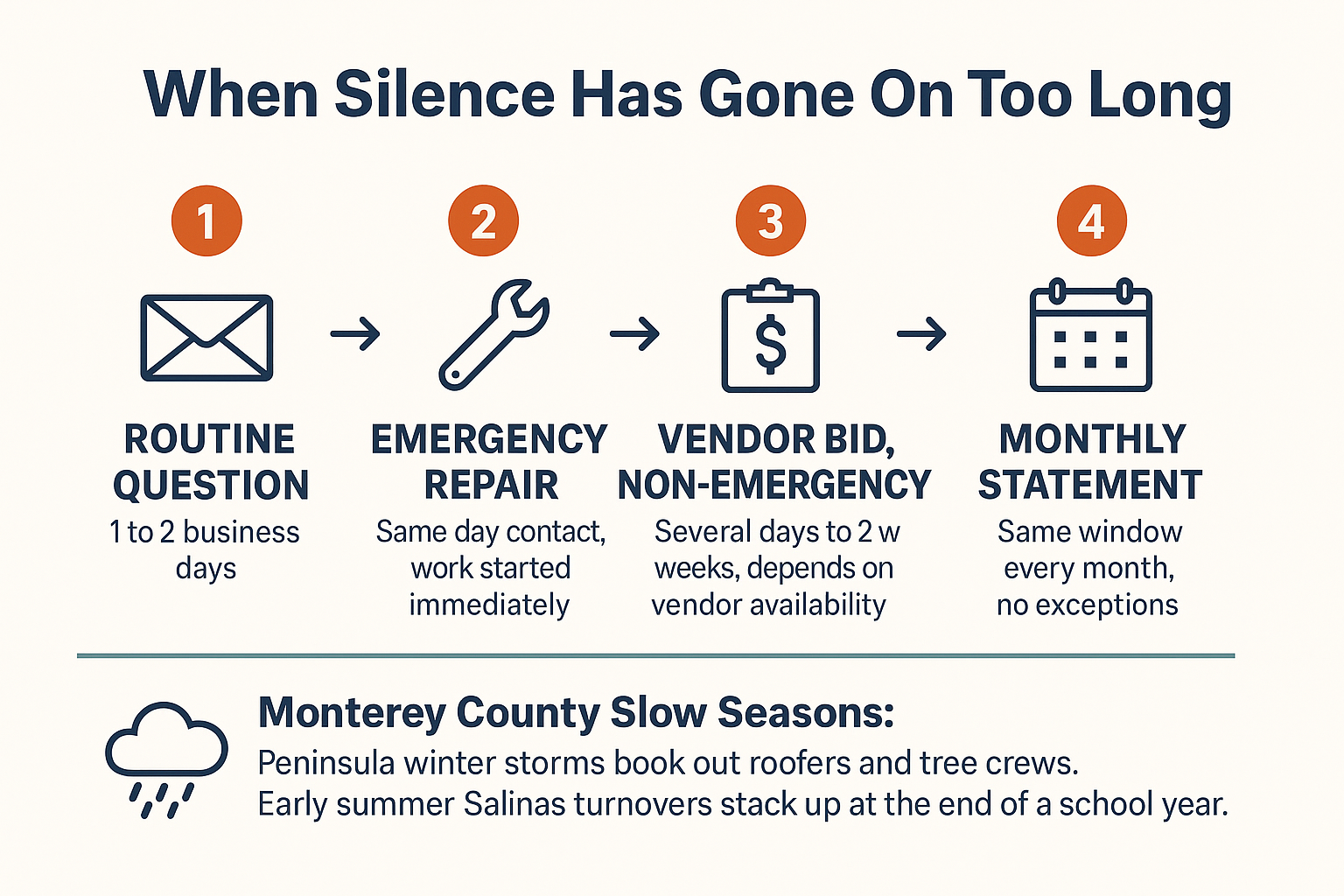
Response time depends heavily on what you asked for. Here is a practical way to judge whether silence has gone on too long.
Set the Triggers Before You Need Them
This is separate from the contract. What the agreement says and how the working relationship runs day to day are two different conversations, and the second one rarely gets had.
The fix is to define your triggers in writing at the start. Two numbers and one short list will cover most of it.
First, the dollar amount above which a repair needs your approval. Set it too low and you will get pinged about every faucet washer. Set it too high and you will read about a $3,000 job after it is done.
Second, the events that should generate a phone call rather than a line item on next month's statement:
- A tenant falling behind on rent
- A notice to vacate
- An insurance claim of any size
- A repair that turns out to be significantly bigger than the original estimate
- Anything involving habitability or safety
An owner who puts those in writing at the start almost never ends up wondering about a fence for three months. If you are still deciding how much authority to hand over, it is worth reading through what a management agreement actually says alongside this.
If You Do Not Live Here Anymore, the Reporting Is the Property
A large share of Monterey County rentals are now held by people who moved to the Bay Area or out of state and kept the house instead of selling. Inherited homes in Salinas and Pacific Grove often end up the same way.
When you cannot drive down Highway 68 and look at the place yourself, the written record is your view of the asset. That changes how much weight the reporting carries.
Here is a habit I recommend to every out-of-area owner. Pick one month each fall and do a simple review:
- Read the last twelve statements in a row, not one at a time
- Compare total maintenance spend against what was actually reported to you during the year
- Confirm inspection photos exist for that year and that you can open them
It takes maybe forty minutes. It also surfaces a communication problem while it is still a communication problem, before it becomes a deferred-repair problem. Owners who go through this exercise often come to the same conclusion as the ones who stop managing their own properties: the value is in knowing, not guessing.
Frequently Asked Questions About Owner Reporting and Communication
Is it unreasonable to ask for photos of every completed repair?
Not at all, especially for anything structural, exterior, or over a few hundred dollars. Ask for it at the start so it becomes part of the routine instead of a special favor each time. For small things like a replaced filter, a line on the statement is usually enough.
How long should a vendor bid take in Monterey County?
Longer than most owners expect, and it swings by season. During Peninsula storm season, roofers and tree crews get booked out for weeks, and around the end of the school year Salinas turnovers stack up and everyone is busy at once. A few days to two weeks is normal for non-emergency work. What is not normal is hearing nothing about the delay.
My manager only contacts me when something is wrong. Is that a red flag?
By itself, no. Quiet months are usually good months. But you should still be receiving a monthly statement, an annual inspection report, and a rent review before renewal without asking. If those are missing and the only contact is bad news, that is worth raising.
Does more frequent reporting cost more?
Reporting is generally part of standard management rather than an add-on, though what is included varies quite a bit between firms in this area. Pricing depends on property type, unit count, and the scope of services involved, so the honest answer is to ask directly during a consultation rather than trust a number you read online.
What should I do first if I think I am being kept in the dark?
Put your questions in one written message with a date on it and ask for a written reply. That creates a record, and it usually gets faster results than a phone call. If two clear written requests go unanswered, you have your answer about the relationship.
Want to Compare Your Current Reporting Against This?
We have run this from a Main Street office in Salinas since 2009, and we are broker-owner led, so an owner with a question about a statement is talking to someone who knows the property rather than a rotating queue at a national brand. That is paired with an owner portal for statements, invoices, and inspection reports, plus membership in the national association for residential property managers. If you want to talk through what normal reporting should look like for your Monterey County property, we are reachable at (831) 757-1270 or through the contact form at coastandvalleypm.com.
What Property Management Fees Actually Cover, and What They Don't
Almost every owner who reaches out to us opens with the same question: what does it cost? I see it in our contact form submissions constantly. One owner with several rental units in Salinas wrote in asking about fee structure and management agreement terms before anything else, and honestly, that is a fair place to start.
But the monthly management fee percentage is rarely the whole picture. Owners who compare firms on that single number often get surprised six months later when a leasing fee or a vendor markup shows up.
This article is not a pitch. It is a breakdown of how fee structures generally work in California so that when you sit down with any firm in Monterey County, you know exactly what to ask.
The Monthly Management Fee Is Only One Line Item
The monthly fee is usually a percentage of collected rent, and in California it is typically quoted as a range rather than a flat number. What drives that range is more interesting than the number itself.
From what I see across Monterey County, the factors that move a quote up or down include:
- Property type. A single family home in Pacific Grove takes different work than a four unit building in Salinas.
- Door count. Owners with small portfolios often see different pricing than single property owners.
- Condition and age. An older home with deferred maintenance generates more service calls.
- Location. A property in King City or Greenfield involves different drive time than one on the Peninsula.
- Scope. Bill payment for mortgage, utilities, insurance, and property taxes is a different level of service than rent collection alone.
That is why we do a 45 minute to one hour walkthrough before quoting anything. A firm that gives you a number over the phone without seeing the property is guessing.
If you want the wider view of what falls inside a management scope, we covered that in what full-service property management actually covers.
The Leasing Fee Causes the Most Sticker Shock
This is the one that catches people. The leasing fee is charged when a new tenant is placed, and in California it is commonly structured as one month's rent or a percentage of it.
Market reporting generally puts average rent in Salinas somewhere around $2,000 a month, and higher on the Peninsula. So a one month leasing fee is not a rounding error. It is a real number that hits at the start of a tenancy, which is also when your property has been vacant and producing nothing.
Here is what that fee usually pays for on the front end:
- Marketing and advertising the listing
- Unlimited showings
- Screening applications for credit, rental history, and employment
- Owner review of applications before a decision
- Lease execution and negotiation
- A documented move-in evaluation with photos
- Collection of the security deposit and first month's rent
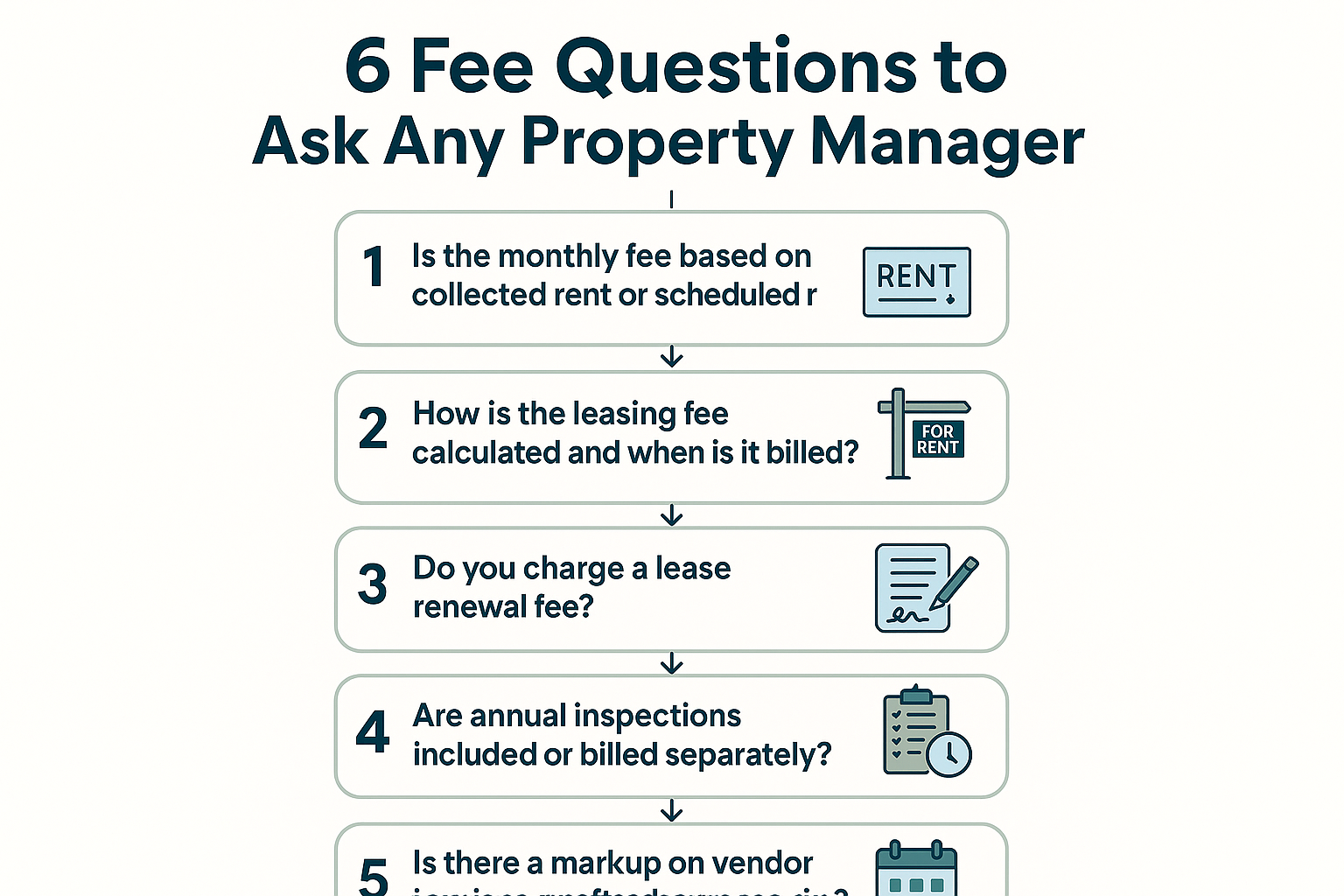
Ask every firm you evaluate three things: how the leasing fee is calculated, when it is charged, and whether anything similar applies at lease renewal. Some firms charge a smaller renewal fee. Some charge nothing. The agreement should say plainly which it is.
California is also tightening disclosure rules around rental fees generally, with AB 747 requiring mandatory fees to be shown upfront in rental listings. That tells you where the state's attention is headed for the whole industry.

Common California Fee Types and What to Ask About Each
Not every firm charges all of these, and not every firm brings them up in the first conversation. Use this as a checklist when you interview anyone.
| Fee Type | What It Generally Covers | Question to Ask |
|---|---|---|
| Monthly management fee | Rent collection, tenant communication, maintenance supervision, reporting, emergency availability | Is it charged on collected rent or scheduled rent, and is it charged during vacancy? |
| Leasing fee | Marketing, showings, screening, lease execution, move-in documentation | Is it one month's rent or a percentage, and when is it billed? |
| Lease renewal fee | Renewal paperwork, rent review, compliance updates under current law | Do you charge one at all, and how is the renewal rent set? |
| Inspection fee | Periodic or annual property inspections with documentation | Is an annual inspection included in the monthly fee or billed separately? |
| Maintenance coordination | Sourcing vendors, scheduling, verifying the work before payment | Is there a markup on vendor invoices, a flat coordination fee, or neither? |
| Legal and eviction costs | Attorney retention, filings, court appearances | Are these at my expense, and who selects counsel? |
Six Questions Every Owner Should Ask Before Signing
If you only remember one part of this article, make it this list. These six questions surface almost every fee that would otherwise show up later.
Maintenance Coordination Is Where Costs Vary Most
Two firms can quote the same monthly percentage and end up costing very different amounts over a year, and maintenance is usually the reason.
Some firms add a markup on vendor invoices. Some charge a flat coordination fee per work order. Some charge neither and simply pass the invoice through. None of those approaches is wrong on its own, but you should know which one you are agreeing to.
After hours work is the part owners underestimate. Any owner who has self-managed knows that an emergency plumber on a Saturday night can run two to three times the normal rate. If your management agreement is silent on how after-hours calls are handled and billed, get that clarified before you sign.
A few things worth confirming in writing:
- The dollar threshold above which you must approve a repair
- Whether the firm inspects completed work before releasing payment
- Whether vendors are licensed, insured, and carry a current W-9 on file
- How emergency calls are routed after business hours
We review estimates, oversee the work, and check it before payment goes out, because the alternative is paying twice for the same repair. Owners weighing this against doing it themselves may want to read what Salinas property owners get wrong about self-managing.
What Management Fees Do Not Cover
This is the half of the conversation that gets skipped. Management fees pay for management. They do not pay for the property itself.
In most California agreements, these remain owner expenses:
- Repairs and materials. The vendor invoice is yours.
- Capital improvements. Roofs, HVAC replacement, and remodels are ownership costs.
- Legal fees. Attorney retention for an eviction or dispute is typically at the owner's expense.
- Turnover work. Paint, carpet, and deep cleaning between tenants.
- Insurance, taxes, HOA dues, and utilities. We can pay these from your funds, but the money is still yours.
One more thing owners often do not realize: managing rentals for others in California is licensed activity. Under the California Department of Real Estate, that work generally requires a real estate license, and our firm is broker-owned. If a company cannot answer who holds the license, that is a bigger issue than the fee schedule.
Before signing anything, read the agreement itself. We walked through the clauses that matter in what a property management agreement actually says, including term length and exit terms.
Frequently Asked Questions About Property Management Fees in California
Do property managers charge a fee while my unit is vacant?
It depends entirely on the agreement. Many California firms base the monthly fee on rent actually collected, which means no rent, no fee. Others charge a reduced flat amount during vacancy. Ask directly and get the answer in writing.
Why won't you quote a price over the phone?
Because a quote without seeing the property is a guess. We do a walkthrough of 45 minutes to an hour, look at condition, amenities, and comparable rents, and then give you a specific range. For a number on your property, the office line is (831) 757-1270.
Is a lower monthly percentage always the better deal?
Not usually. A firm with a low monthly rate and a full month leasing fee, a renewal fee, an inspection fee, and a vendor markup can cost more over a two year hold than a firm with a higher percentage and nothing else. Compare the total, not the headline.
How long am I locked into a management agreement?
Terms vary by firm. Ours runs annual for the first year and then converts to month-to-month. Always ask about the exit clause and the notice period before you sign.
Do commercial properties use the same fee structure as residential?
No. Commercial management pricing is generally built around the services the property needs, since lease compliance, budget preparation, 1099 handling, and vendor contract oversight look different than residential work.
Want a straight answer on what management would cost for your property?
Every property in Monterey County prices differently, from a Carmel cottage to a four unit building off Main Street in Salinas, so we look at the property before we quote it. Coast & Valley Properties handles consultations by phone at (831) 757-1270 or through the contact form at coastandvalleypm.com, and we are happy to walk through the full fee schedule line by line so nothing surprises you later.

Maximize Deductions with 7 Tax-Saving Strategies for Commercial Property Owners

Being a commercial property owner comes with its own set of financial responsibilities, including taxes. However, with a strategic approach and the right knowledge, you can maximize deductions and save on your tax bill. In this article, we will explore seven effective tax-saving strategies specifically tailored for owners of commercial properties.
Understanding the Basics of Commercial Property Tax
Before diving into the tax-saving strategies, it's important to have a good grasp of the basics of commercial property tax. Commercial property tax is a levy imposed by local governments on owners of commercial properties based on the assessed value of the property. Understanding how this tax works is crucial for implementing effective tax-saving strategies.
Commercial property tax is a significant expense for property owners, and having a solid understanding of how it is calculated can help you make informed financial decisions. The assessed value of a commercial property is determined by local assessors who evaluate the property's market value, taking into account factors such as location, size, and condition. This assessed value is then multiplied by the mill rate, which is the rate used to calculate the property tax owed.
The Importance of Tax Planning for Commercial Property Owners
Effective planning is essential for commercial property owners when it comes to taxes. By carefully reviewing your financial situation, property assessment, and applicable tax laws, you can identify opportunities to minimize your tax liability and maximize your deductions. Engaging the services of a qualified tax professional can greatly help in devising a tax plan tailored to your specific circumstances.
Tax planning is not a one-time task but an ongoing process that should be revisited regularly to ensure that you are taking advantage of all available tax-saving opportunities. Changes in tax laws, property values, and your financial situation can all impact the effectiveness of your tax plan, making regular reviews crucial for optimizing your tax strategy.
Key Terms in Commercial Property Taxation
Before exploring the tax-saving strategies in detail, it's important to familiarize yourself with key terms related to commercial property taxation. Some of these terms include assessed value, mill rate, tax exemptions, and abatement. Understanding these terms will help you navigate the tax landscape better and make informed decisions.
Assessed value is the value assigned to a property for tax purposes and is used as the basis for calculating property taxes. The mill rate, on the other hand, is the rate per thousand dollars of assessed value that is used to calculate the property tax due. Tax exemptions and abatements are incentives provided by local governments to reduce the tax burden on certain properties, such as historic buildings or properties used for charitable purposes.
The Role of Depreciation in Tax Savings
Depreciation is an essential concept that commercial property owners should be well-versed in, as it plays a crucial role in tax savings. Depreciation allows you to deduct the costs of acquiring and improving your property over time, rather than all at once. This can significantly reduce your taxable income and increase your deductions, resulting in substantial tax savings.
Understanding the nuances of depreciation can empower property owners to make informed financial decisions and optimize their tax liabilities. By leveraging depreciation strategies effectively, property owners can not only save on taxes but also enhance their overall financial position.
How Depreciation Works in Commercial Real Estate
In commercial real estate, depreciation is typically calculated over a 39-year period for non-residential properties and 27.5 years for residential rental properties. The depreciation deduction is spread out evenly over this period, allowing you to deduct a portion of the property's value each year. This systematic approach to depreciation provides a steady stream of tax savings over the long term.
Depreciation can also reflect the actual wear and tear of a property over time, aligning tax deductions with the property's decreasing value. This not only benefits property owners from a tax perspective but also ensures a fair representation of the property's economic reality.
Maximize Deductions through Accelerated Depreciation
Accelerated depreciation is a strategy that allows you to front-load your depreciation deductions, thereby maximizing your tax savings in the earlier years of property ownership. By using methods such as bonus depreciation and Section 179 expensing, you can deduct a significant portion of the property's value in the first year. This can provide immediate tax benefits and help free up cash flow for further property investments.
Property owners can strategically utilize accelerated depreciation to optimize their tax planning, improve cash flow, and reinvest in their properties for long-term growth. By understanding the benefits of accelerated depreciation, owners can take advantage of valuable tax incentives and enhance their property investment strategies.
Exploring Cost Segregation Studies
Cost segregation studies are a valuable tool for commercial property owners looking to maximize their deductions. These studies involve the identification and reclassification of certain building components into shorter recovery periods, such as five, seven, or fifteen years, rather than the standard 27.5 or 39 years for depreciation purposes. This allows for accelerated deductions and significant tax savings.
When delving into the world of cost segregation studies, it's essential to understand the intricate details involved in the process. Each component of a commercial property is carefully evaluated to determine its proper classification for depreciation purposes. This meticulous examination can uncover hidden opportunities for tax savings that may have been previously overlooked. By conducting a thorough cost segregation study, property owners can unlock the full potential of their tax benefits.
The Benefits of Cost Segregation
Cost segregation offers numerous benefits beyond accelerated deductions. By segregating the costs of different components of your commercial property, you gain a better understanding of the building's true value. This information can be used for insurance purposes, financial reporting, and even potential future sales. Cost segregation studies can result in increased cash flow, as tax savings can be reinvested into your property or other ventures.
The insights gained from a comprehensive cost segregation study can provide strategic advantages for property owners. Understanding the specific depreciation timelines of various building components can inform decisions regarding maintenance, renovations, and overall asset management. This knowledge empowers property owners to make informed choices that optimize their financial position and long-term investment strategies.
Implementing Cost Segregation in Your Tax Strategy
To implement cost segregation effectively, it is crucial to engage the services of a qualified professional with expertise in this area. They will conduct a detailed study of your property and identify components that can be reclassified for accelerated depreciation. This not only ensures compliance with applicable tax laws but also maximizes your tax savings while minimizing potential audit risks.
Working hand in hand with a knowledgeable specialist in cost segregation can streamline the process and provide peace of mind for property owners. Their expertise and experience in navigating the complexities of tax regulations ensure that every opportunity for savings is leveraged to its fullest extent. By incorporating cost segregation into your overall tax strategy, you can position yourself for long-term financial success and enhanced profitability in the realm of commercial property ownership.
Utilizing the 1031 Exchange for Tax Deferral
The 1031 exchange, also known as a like-kind exchange, is a powerful tax-deferral strategy available to commercial property owners. By selling a property and reinvesting the proceeds into a similar property, you can defer capital gains taxes. This allows you to keep more of your investment capital working for you and potentially grow your wealth further.
The Basics of a 1031 Exchange
A 1031 exchange involves the sale of a commercial property and the subsequent purchase of another property that is of "like-kind." The term "like-kind" is broad and encompasses a variety of property types, as long as they are held for productive use in a trade or business or for investment purposes. When executed correctly, a 1031 exchange can provide substantial tax deferral benefits.
Strategic Use of 1031 Exchanges in Commercial Real Estate
Commercial property owners can strategically use 1031 exchanges to their advantage. By continually reinvesting in like-kind properties, you can defer taxes indefinitely, potentially accumulating a substantial real estate portfolio while deferring capital gains obligations. It's important to work with a qualified intermediary to ensure compliance with IRS regulations and maximize the benefits of this tax-saving strategy.
Capitalizing on Opportunity Zone Investments
Opportunity zones are designated areas that provide tax benefits to investors who choose to invest in economically distressed communities. Commercial property owners can utilize this tax-saving strategy to not only reduce their tax bill but also make a positive impact on communities in need of revitalization.
Understanding Opportunity Zones
Opportunity zones were established as part of the Tax Cuts and Jobs Act of 2017 to encourage investment in underserved areas. These zones offer attractive tax incentives, including the deferral of capital gains, partial reduction of capital gains taxes, and potential tax-free growth on qualified investments. Understanding the intricacies of opportunity zones can help you make informed investment decisions.
Tax Advantages of Investing in Opportunity Zones
Investing in opportunity zones can provide significant tax advantages. By investing capital gains into a qualified opportunity zone fund, you can defer taxes on those gains until 2026 or until you sell your investment, whichever comes first. Additionally, if you hold the investment for at least ten years, any future appreciation on that investment will be tax-free. This can be a powerful tool for growing your wealth while minimizing your tax liability.
Implementing these seven tax-saving strategies can provide commercial property owners with substantial savings and increased cash flow. By understanding the basics of commercial property tax, depreciating assets effectively, utilizing cost segregation studies, strategically executing 1031 exchanges, and capitalizing on opportunity zone investments, you can maximize deductions and optimize your tax position. Remember, it's always wise to consult with a qualified tax professional to ensure compliance and take full advantage of the available tax benefits.

7 Tenant Services That Will Elevate Your Salinas, CA Rental Property
If you own a rental property in Salinas, CA, you know how important it is to provide excellent tenant services. These services not only enhance the overall tenant experience but also have a significant impact on your property's value. In this article, we will explore the importance of tenant services, the top seven services you should offer, how to implement them in your property, and ways to evaluate their effectiveness.
Understanding the Importance of Tenant Services
Tenant services play a crucial role in rental properties. By offering services that cater to your tenants' needs, you create a positive living environment and build strong tenant relationships. When tenants feel well taken care of, they are more likely to stay longer, take better care of the property, and refer others to your rental units. This ultimately leads to higher tenant satisfaction and improved property value.
The Role of Tenant Services in Rental Properties
Tenant services go beyond simply collecting rent. They involve providing support and assistance to tenants throughout their lease term. Whether it's addressing maintenance issues promptly or offering online rent payment options, these services contribute to the overall well-being of your tenants and foster a sense of community within your property.
One important aspect of tenant services is maintenance support. When tenants encounter issues with their rental units, such as plumbing problems or electrical malfunctions, it is essential to address these concerns promptly. By having a dedicated team of maintenance professionals available, you can ensure that repairs are carried out efficiently and effectively, minimizing any inconvenience to your tenants. This proactive approach to maintenance not only enhances the living experience for your tenants but also helps to preserve the condition of your property.
In addition to maintenance support, tenant services can also include amenities that enhance the quality of life for your tenants. For example, you may consider providing access to a fitness center, a communal lounge area, or a swimming pool. These amenities not only attract potential tenants but also contribute to a sense of community within your property. By fostering a welcoming and inclusive environment, you can create a place where tenants feel connected and supported.
How Tenant Services Impact Your Property's Value
When you invest in tenant services, you are investing in the long-term success of your rental property. By offering comprehensive services, you create a competitive advantage, attracting quality tenants who are willing to pay a premium for the added value. Additionally, satisfied tenants are more likely to renew their leases, reducing turnover costs and increasing cash flow.
Furthermore, tenant services can have a positive impact on the overall property value. When tenants are happy and satisfied with the services they receive, they are more likely to take better care of the property. This means fewer instances of damage or neglect, resulting in lower maintenance and repair costs for you as the landlord. Additionally, well-maintained properties are more attractive to potential buyers or investors, increasing the market value of your rental units.
Moreover, tenant services can also contribute to the reputation of your rental property. Positive word-of-mouth referrals from satisfied tenants can attract a larger pool of prospective tenants, allowing you to be more selective in choosing reliable and responsible individuals to occupy your units. This, in turn, reduces the risk of problematic tenants and potential issues that may arise from their tenancy.
In conclusion, tenant services are essential for creating a positive living environment, building strong tenant relationships, and enhancing the value of your rental property. By investing in comprehensive services and amenities, you can attract quality tenants, reduce turnover costs, and increase the overall satisfaction of your tenants. Ultimately, this leads to improved property value and long-term success in the rental market.
The Top 7 Tenant Services for Your Salinas Rental Property
Now that you understand the importance of tenant services, let's delve into the top seven services that will elevate your Salinas rental property:
Comprehensive Maintenance and Repair Services
Efficient and reliable maintenance and repair services are essential for any rental property. Timely response to repairs and well-maintained units contribute to tenant satisfaction and minimize potential property damage.
When it comes to comprehensive maintenance and repair services, it's important to have a team of skilled professionals who can address any issues that may arise. From plumbing and electrical repairs to fixing appliances and handling general wear and tear, having a reliable maintenance crew ensures that your tenants' needs are met promptly and effectively.
Additionally, implementing a preventive maintenance plan can help identify potential problems before they escalate. Regular inspections and scheduled maintenance tasks, such as HVAC servicing and gutter cleaning, can go a long way in preserving the condition of your property and preventing costly repairs down the line.
24/7 Customer Service and Support
Providing round-the-clock customer service and support is crucial for tenant convenience and peace of mind. Quick responses to inquiries or emergencies create a sense of reliability and trust between you and your tenants.
Having a dedicated customer service team available 24/7 ensures that your tenants can reach out for assistance whenever they need it. Whether it's a maintenance request, a question about their lease agreement, or a concern about their neighbors, being accessible and responsive demonstrates your commitment to providing a positive living experience.
Investing in technology that allows tenants to easily submit requests or reach out for support can streamline the process and enhance tenant satisfaction. Online portals, chatbots, and automated systems can all contribute to a seamless communication experience for both you and your tenants.
Online Rent Payment and Tenant Portal
Offering an online rent payment option and tenant portal simplifies the rent collection process and provides tenants with easy access to important documents and information. This modern approach also improves efficiency and reduces administrative overhead.
Gone are the days of collecting rent checks and manually updating spreadsheets. By implementing an online rent payment system, tenants can conveniently pay their rent from anywhere, at any time. This not only saves them the hassle of writing and mailing checks but also ensures that you receive payments promptly.
A tenant portal goes hand in hand with online rent payment. It serves as a centralized hub where tenants can access lease agreements, submit maintenance requests, view payment history, and communicate with you. This self-service option empowers tenants and reduces the need for constant back-and-forth communication.
Regular Property Inspections
Regular property inspections help identify maintenance issues early on, ensuring that your property remains in excellent condition. These inspections also provide opportunities for open communication with tenants and address any concerns they may have.
Conducting routine inspections allows you to proactively identify and address any maintenance or safety issues. By inspecting the property on a regular basis, you can catch problems before they become major headaches for both you and your tenants. This not only helps maintain the value of your property but also shows your commitment to providing a safe and comfortable living environment.
During inspections, take the time to engage with your tenants. Ask them if they have any concerns or suggestions for improvements. This open dialogue fosters a positive landlord-tenant relationship and shows that you value their input.
Efficient Handling of Tenant Complaints
Creating a system that addresses tenant complaints promptly and effectively is crucial for tenant satisfaction. By actively listening to your tenants' concerns and taking appropriate action, you demonstrate your commitment to providing a comfortable living environment.
No matter how well-maintained your property is, issues may still arise that require your attention. It's important to have a clear process in place for handling tenant complaints. This includes establishing multiple channels of communication, such as phone, email, or an online portal, to ensure that tenants can easily report their concerns.
When a complaint is received, respond promptly and acknowledge the issue. Investigate the matter thoroughly and take appropriate action to resolve it. Keeping tenants informed throughout the process shows that you take their concerns seriously and are committed to maintaining a high standard of living in your property.
Tenant Screening and Selection Services
Thorough tenant screening and selection services play a key role in maintaining a high-quality tenant base. By carefully evaluating potential tenants' backgrounds, credit histories, and rental references, you can minimize the risk of problematic tenants and ensure a harmonious community.
When it comes to tenant screening, it's important to have a standardized process in place. Conducting background checks, verifying employment and income, and contacting previous landlords can provide valuable insights into a potential tenant's reliability and suitability for your property.
While it may be tempting to fill vacancies quickly, taking the time to thoroughly screen applicants can save you from potential headaches down the line. A thorough screening process helps ensure that you select tenants who will pay rent on time, take care of the property, and abide by the terms of the lease agreement.
Lease Renewal and Rent Increase Management
Managing lease renewals and rent increases efficiently is important for maintaining a stable cash flow and establishing clear expectations with your tenants. By providing transparent communication and fair rent adjustments, you can maintain positive landlord-tenant relationships.
As leases approach their expiration dates, it's important to initiate conversations with your tenants regarding their intentions to renew or move out. Providing clear and timely communication about lease renewal options and any potential rent adjustments allows both parties to plan ahead.
When considering rent increases, it's essential to conduct market research to ensure that your proposed adjustments are fair and in line with the current rental market. Communicate the reasons for the increase to your tenants and be open to discussing any concerns they may have. A transparent and respectful approach to rent adjustments helps maintain trust and fosters a positive landlord-tenant relationship.
By implementing these top seven tenant services, you can elevate your Salinas rental property and provide an exceptional living experience for your tenants. Remember, happy tenants are more likely to stay long-term, take care of the property, and recommend it to others. Investing in tenant services is not only beneficial for your tenants but also for your overall success as a landlord.
Implementing Tenant Services in Your Rental Property
Now that you are aware of the top tenant services, let's discuss how to implement them in your Salinas rental property:
Steps to Introduce New Services
When introducing new services, outline a clear plan for implementation. This may involve researching service providers, setting up systems and processes, and training your staff to ensure a smooth transition.
Communicating Changes to Your Tenants
Effective communication is key when implementing new services. Inform your tenants well in advance about the changes, highlighting the benefits they will receive. Be open to feedback and address any concerns to ensure a positive reception.
Evaluating the Effectiveness of Your Tenant Services
Once you have implemented tenant services, it's important to evaluate their effectiveness regularly. Here are a few ways to assess the impact of these services:
Tenant Satisfaction Surveys
Conduct regular tenant satisfaction surveys to gauge overall tenant happiness and identify areas for improvement. Use the feedback received to fine-tune your services and cater to your tenants' needs better.
Tracking Rent Collection Efficiency
Monitor your rent collection efficiency to ensure that your online payment system is functioning well and is widely adopted. Efficient rent collection processes reduce administrative burden and contribute to improved cash flow management.
Monitoring Tenant Retention Rates
Track tenant retention rates over time to assess the success of your tenant services. A high retention rate indicates that your services are meeting tenant expectations and creating a positive living experience.
By offering comprehensive tenant services, you can elevate your Salinas rental property to new heights. Invest in these services, implement them effectively, and regularly evaluate their effectiveness. Your tenants will appreciate the care and attention you provide, leading to a successful and thriving rental property.

Maximize Rental Income in 2024 with These 4 Powerful Strategies for Salinas Property Owners
Renting out property in Salinas can be a lucrative investment, especially if you employ the right strategies. With the new year just around the corner, it's essential for Salinas property owners to be prepared and maximize their rental income in 2024. In this article, we will explore five powerful strategies that will help you achieve this goal.
Understanding the Salinas Rental Market
Before implementing any strategies, it's important to have a solid understanding of the Salinas rental market. This includes analyzing key factors that influence rental prices and predicting trends for the upcoming year.
The Salinas rental market is a dynamic and ever-changing landscape, influenced by various factors that shape the pricing and demand for rental properties. By delving deeper into these factors, property owners can gain valuable insights and make informed decisions to maximize their rental income.
Key Factors Influencing Rental Prices
Several factors play a role in determining rental prices in Salinas. Firstly, location is a critical factor that significantly impacts rental rates. Properties situated in prime locations, such as near the beach or in desirable neighborhoods, tend to command higher rental prices due to their proximity to amenities and attractions.
Property size also plays a crucial role in rental pricing. Larger properties with more bedrooms and bathrooms generally have higher rental rates compared to smaller units. This is because larger properties offer more space and can accommodate larger families or groups, making them more desirable for tenants.
Amenities are another important consideration when it comes to rental prices. Properties with desirable amenities, such as swimming pools, fitness centers, or gated access, often command higher rental rates as they provide added convenience and luxury to tenants.
Overall market demand is a key factor that influences rental prices in Salinas. When there is high demand for rental properties and limited supply, landlords have the advantage of setting higher rental rates. Conversely, during periods of low demand or increased competition, landlords may need to adjust their prices to attract tenants.
Predicted Trends for 2024
Having insights into predicted trends can give you a significant advantage as a Salinas property owner. By staying updated on market forecasts, you can anticipate shifts in demand and make proactive decisions to stay ahead of the competition.
One predicted trend for 2024 is the continued growth of the local economy in Salinas. With new businesses and industries moving into the area, there will likely be an increased demand for rental properties as more people seek housing options near their workplaces.
Another trend to watch out for is the development of the rental landscape in Salinas. As the city continues to grow, there may be new rental developments and complexes being built, which could impact the overall supply and demand dynamics. Keeping an eye on these developments can help property owners adjust their rental pricing and marketing strategies accordingly.
Additionally, changes in the local economy can also influence rental prices. Factors such as job growth, wage increases, and changes in the cost of living can all impact the affordability and demand for rental properties. Staying informed about these economic indicators can help property owners make educated decisions about their rental pricing.
In conclusion, understanding the Salinas rental market is crucial for property owners looking to maximize their rental income. By analyzing key factors that influence rental prices and staying updated on predicted trends, property owners can make informed decisions and stay ahead in this competitive market.
Strategy 1: Optimal Pricing
One of the most critical strategies for maximizing rental income is setting optimal pricing for your property. Competitive pricing attracts tenants and ensures you're generating consistent income.
When it comes to setting the right price for your rental property, it's important to consider various factors. These factors include the location, size, amenities, and condition of your property. Additionally, you should also take into account tenant-landlord laws, as well as current demand and market trends in the area.
Importance of Competitive Pricing
Competitive pricing is important because it directly affects your property's desirability and occupancy rate. Price your rental too high, and potential tenants will look elsewhere; price it too low, and you may be leaving money on the table.
By setting a competitive price, you are positioning your rental property as an attractive option for potential tenants. This increases the chances of attracting a larger pool of interested individuals, ultimately leading to a higher occupancy rate and maximizing your rental income.
Tools for Accurate Rental Pricing
Thankfully, there are tools available to help you accurately price your rental property. Utilize online platforms that provide rental market data and compare your property to similar listings in Salinas. This will give you a better understanding of the competitive landscape to make informed pricing decisions.
These online platforms often provide valuable insights such as average rental prices in the area, rental trends, and the demand for different types of properties. By leveraging this data, you can ensure that your rental property is priced competitively and in line with the current market conditions.
Furthermore, it's also beneficial to consult with local real estate agents or property management companies who have a deep understanding of the rental market in Salinas. Their expertise and knowledge can provide you with valuable guidance in determining the optimal pricing for your property.
Strategy 2: Property Upgrades that Maximize Rental Income
Investing in property upgrades can significantly increase your rental income. By making strategic improvements, your property becomes more attractive to potential tenants, allowing you to charge higher rental rates.
When considering property upgrades, it's important to focus on areas that have the potential for high returns. One area to consider is the kitchen. Renovating the kitchen can have a significant impact on the overall appeal of the property. Upgrading countertops, cabinets, and appliances can give the kitchen a modern and luxurious feel, making it more desirable to potential tenants.
In addition to the kitchen, another area to focus on is the bathroom. Upgrading the bathroom can make a big difference in attracting quality tenants. Consider installing new fixtures, updating the flooring, and adding a fresh coat of paint. These simple upgrades can give the bathroom a fresh and clean look, enhancing the overall appeal of the property.
While the interior upgrades are important, it's also crucial to pay attention to the exterior of the property. Enhancing curb appeal can make a lasting impression on potential tenants. Consider landscaping the front yard, adding new plants and flowers, and ensuring that the property looks well-maintained. A visually appealing exterior can make a property stand out from the competition and attract more tenants.
In addition to the physical upgrades, adding desirable amenities can also increase the rental income. Consider adding in-unit laundry facilities, as this is a highly sought-after feature for many tenants. Another amenity that can attract tenants is a gym facility. Creating a dedicated space for tenants to exercise can be a valuable selling point and justify higher rental rates.
When planning property upgrades, it's important to strike a balance between cost and value. Conduct thorough cost-benefit analyses to determine which upgrades will yield the highest return on investment. This ensures that you're making strategic choices that enhance the value of your property without overspending.
By investing in property upgrades strategically, you can not only increase your rental income but also attract more quality tenants. The key is to focus on areas that have the potential for high returns, such as the kitchen and bathroom, while also considering the overall curb appeal and adding desirable amenities. Remember to strike a balance between cost and value to maximize your investment.
Strategy 3: Effective Marketing
Effective marketing is vital for attracting the right tenants and filling vacancies quickly. By utilizing the right channels and targeting the right audience, you can maximize your rental income.
Targeting the Right Tenants
Identify your ideal tenant profile and tailor your marketing efforts accordingly. Consider factors such as demographics, lifestyle preferences, and rental history. This allows you to craft targeted messages that resonate with potential tenants, increasing the chances of attracting the right individuals.
Utilizing Digital Marketing Channels
Take advantage of various digital marketing channels to reach a wide audience. Create eye-catching listings on popular rental websites and leverage social media platforms to showcase your property's unique features. Utilize high-quality photos and engaging descriptions to make a memorable impression.
Strategy 4: Tenant Retention
It's not just about acquiring new tenants; retaining existing tenants can also help maximize rental income. Reducing turnover costs and establishing positive landlord-tenant relationships should be part of your long-term strategy.
The Cost of Tenant Turnover
Tenant turnover can be expensive and time-consuming. Vacancies result in loss of rental income and require additional resources for advertisement, screening, and lease preparation. By focusing on tenant retention, you can minimize these costs and maintain a stable income stream.
Strategies for Increasing Tenant Satisfaction
Building positive relationships with your tenants is crucial for long-term success. Ensure prompt responses to maintenance requests, conduct regular property inspections, and provide incentives for lease renewals. Happy tenants are more likely to stay longer, reducing turnover and maximizing your rental income.
Conclusion
As we approach 2024, Salinas property owners have the opportunity to maximize their rental income by implementing powerful strategies. Understanding the rental market, utilizing optimal pricing, investing in property upgrades, executing effective marketing campaigns, and focusing on tenant retention are all key elements for success. By following these strategies, you can make the most out of your rental property and achieve maximum financial returns.

Salinas Homeowners Use These 4 Steps to Convert Their Residence into a Profitable Rental Property
Understanding the Basics of Rental Property Conversion
The process of converting your home into a profitable rental property can be an exciting endeavor. However, before diving into the world of real estate investing, it's important to understand the basics of rental property conversion.
First and foremost, you must recognize the importance of rental property conversion and its potential benefits. Converting your residence into a rental property can provide a steady stream of income, additional tax deductions, and the opportunity for long-term wealth accumulation.
However, it's crucial to consider a few key factors before embarking on this journey. These factors include the current real estate market conditions, the demand for rental properties in your area, and your financial ability to handle the responsibilities of being a landlord.
The Importance of Rental Property Conversion
Rental property conversion is a strategic investment that can offer numerous advantages to homeowners in Salinas. By converting your residence into a rental property, you can tap into the growing demand for rental housing in the city and generate a lucrative income stream.
Furthermore, rental property conversion allows homeowners to take advantage of tax benefits. Expenses such as mortgage interest, property taxes, insurance, repairs, and maintenance costs can be deducted from rental income, reducing your overall tax liability.
Moreover, rental property conversion can provide you with the opportunity for long-term wealth accumulation. As property values appreciate over time, your rental property can become a valuable asset that increases your net worth.
In addition, being a landlord can offer you a sense of financial security. With a steady stream of rental income, you can have peace of mind knowing that you have a reliable source of cash flow.
Key Factors to Consider Before Conversion
Prior to converting your home into a rental property, it's essential to carefully evaluate certain key factors. These factors include the current real estate market conditions, the rental demand in your specific neighborhood, and your financial readiness to take on the responsibilities of being a landlord.
For example, if the housing market is currently experiencing a downturn, it may be more difficult to find suitable tenants or command competitive rental rates. It's important to conduct thorough market research and consult with real estate professionals to assess the market conditions and make an informed decision.
Additionally, you should research the rental demand in your neighborhood to ensure that there is a viable market for your property. Consider factors such as proximity to amenities, schools, and transportation, as well as the overall desirability of the area for renters.
Furthermore, you need to assess your financial readiness. Consider factors such as your ability to cover mortgage payments during vacancies, allocate funds for property maintenance and repairs, and set aside a contingency fund for unforeseen expenses. It's important to have a solid financial plan in place to ensure that you can handle the financial responsibilities of being a landlord.
Moreover, it's advisable to familiarize yourself with the legal and regulatory requirements of being a landlord in your area. This includes understanding landlord-tenant laws, obtaining the necessary permits and licenses, and ensuring that your property meets all safety and habitability standards.
In conclusion, rental property conversion can be a rewarding and profitable venture. By understanding the basics of rental property conversion and carefully considering key factors, you can make an informed decision and set yourself up for success as a landlord.
Step 1: Evaluating Your Property's Rental Potential
Once you have a clear understanding of the importance of rental property conversion and have carefully considered the key factors, you can begin the first step of the process: evaluating your property's rental potential.
When evaluating your property's rental potential, there are several factors to consider. One of the most important factors is the location of your property. The location plays a significant role in determining its rental potential. Proximity to employment centers, schools, shopping centers, and transportation options can significantly impact the attractiveness of your rental property to potential tenants.
Take the time to research and understand the rental market in your specific neighborhood. Analyze the rental rates of similar properties and consider how your property compares in terms of amenities, size, and overall condition. By understanding the rental market in your area, you can determine the potential demand for your property and set an appropriate rental price.
Assessing Your Property's Location
Assessing your property's location is a crucial step in evaluating its rental potential. The location can greatly influence the desirability of your property and the rental income it can generate.
Consider the proximity of your property to various amenities and facilities. Is it located near major employment centers? Are there good schools in the area? Are there shopping centers and entertainment options nearby? Additionally, assess the accessibility and availability of public transportation options.
Furthermore, consider the overall neighborhood and its reputation. Is it a safe and desirable area to live in? Are there any upcoming developments or infrastructure projects that could enhance the appeal of the neighborhood?
By carefully evaluating these factors, you can gain a better understanding of how your property's location influences its rental potential.
Determining Your Property's Rental Value
Once you have assessed the location of your property, you can proceed to determine its rental value. Determining the rental value involves analyzing the rental rates of similar properties in your area.
Start by researching the rental rates of properties that are similar in size, amenities, and overall condition to your property. Look for properties that are located in the same neighborhood or nearby areas. This will give you a benchmark to compare your property against.
Consider factors such as property size, number of bedrooms and bathrooms, amenities, and overall condition when comparing your property to others. If your property has additional features or upgrades, you may be able to justify a higher rental value.
However, it is important to strike a balance between attracting potential tenants and ensuring you receive a fair return on your investment. Setting the rental value too high may deter potential tenants, while setting it too low may result in lost income.
By conducting a thorough analysis of similar rental properties in your area, you can determine an appropriate rental value for your property that is competitive in the market and aligns with your investment goals.
Step 2: Preparing Your Home for Tenants
After evaluating your property's rental potential, it's time to move on to the second step of the conversion process: preparing your home for tenants. This step involves making necessary home improvements and creating a welcoming environment for renters.
Necessary Home Improvements and Repairs
Before welcoming tenants into your rental property, it's essential to address any necessary home improvements and repairs. This includes fixing any plumbing or electrical issues, patching up walls, replacing worn-out flooring, and ensuring that appliances are in good working condition.
By investing in necessary repairs and improvements, you can attract quality tenants who will be more likely to take care of the property and pay their rent on time.
Creating a Welcoming Environment for Renters
In addition to addressing repairs and improvements, it's important to create a welcoming environment for potential renters. This includes cleaning the property thoroughly, staging the space with tasteful furniture and decor, and ensuring all systems (such as heating and air conditioning) are functioning optimally.
Consider adding a fresh coat of paint to the walls and enhancing curb appeal through landscaping and exterior improvements. By presenting a well-maintained and inviting property, you increase the likelihood of attracting quality tenants who are willing to pay top dollar for their rental accommodations.
Step 3: Navigating the Legal Aspects of Renting
Navigating the legal aspects of renting is a crucial step in converting your residence into a profitable rental property. Familiarize yourself with the rental laws specific to Salinas to ensure compliance and protect your rights as a landlord.
Understanding Salinas Rental Laws
Research and become familiar with the rental laws in Salinas to ensure you are abiding by all legal requirements. Familiarize yourself with landlord-tenant rights and responsibilities, eviction procedures, and fair housing laws.
Consulting with a real estate attorney or a local property management company can provide you with valuable guidance and ensure you are well-versed in the legal aspects of renting.
Drafting a Comprehensive Lease Agreement
A comprehensive lease agreement is essential to protect your interests and outline the rights and responsibilities of both you and your tenants. Include important information such as rental terms, payment details, maintenance responsibilities, and any specific rules or regulations.
Additionally, consider including clauses regarding rent increases, pet policies, and tenant obligations. A well-drafted lease agreement can set clear expectations and minimize potential disputes.
Step 4: Marketing Your Rental Property
Once you have prepared your rental property and are confident about its rental potential, it's time to focus on marketing your property effectively to attract potential tenants.
Effective Advertising Strategies for Rental Properties
Utilize various marketing channels to maximize exposure for your rental property. Take advantage of online platforms such as rental listing websites, social media, and local online classifieds.
Highlight the unique features of your property and include high-quality photos to catch the attention of potential tenants. Additionally, consider collaborating with local real estate agents or property management companies to expand your reach and attract qualified renters.
Screening Potential Tenants
Screening potential tenants is a critical step to ensure you find responsible and reliable renters for your property. Implement a thorough screening process that includes background checks, credit checks, and verification of income and employment.
Look for red flags such as a history of evictions or late payments, excessive debt, or inconsistent employment. By selecting tenants who are financially stable and have a good rental history, you minimize the risk of problematic tenancies.
In conclusion, by following these five steps, Salinas homeowners can successfully convert their residence into a profitable rental property. Understanding the basics of rental property conversion, evaluating your property's rental potential, preparing your home for tenants, navigating the legal aspects of renting, and effectively marketing your rental property are all crucial components of this process. With careful planning and attention to detail, homeowners can tap into the lucrative rental market in Salinas and enjoy the benefits of long-term real estate investment.

7 Must-Know Tips for First-Time Rental Property Buyers
Investing in rental property can be an exciting and profitable venture. Whether you're considering purchasing a rental property in Salinas, CA, or elsewhere, it's essential to be well-prepared for this significant financial decision. To help first-time rental property buyers navigate the process successfully, we've compiled seven must-know tips that can make your journey smoother and more rewarding.
1. Define Your Investment Goals
Before you start exploring properties, take the time to define your investment goals clearly. Are you looking for a steady stream of rental income, long-term property appreciation, or a combination of both? Understanding your objectives will guide your decisions throughout the process.
2. Local Market Research is Vital
Real estate is all about location, and that couldn't be truer when it comes to rental properties. Conduct in-depth research on the local real estate market, especially if you're considering Salinas, CA, as your investment location. Consider factors like rental demand, property values, and neighborhood stability. Collaborating with a residential property agent in Salinas, CA can provide valuable insights into the local market trends and opportunities.
3. Create a Realistic Budget
Purchasing a rental property involves more than just the purchase price. You'll need to budget for property taxes, insurance, maintenance, potential property management fees, and unexpected expenses. Ensure your budget is comprehensive and aligns with your investment goals. A financial advisor can help you establish a realistic financial plan.
Additionally, consider setting aside a portion of your rental income for long-term investments, such as property improvements or future property acquisitions. This forward-thinking approach not only secures your existing investment but also lays the groundwork for expanding your rental property portfolio in the future, bolstering your overall financial stability as a property owner. A financial advisor can play a pivotal role in helping you devise and execute such a strategic financial plan, tailoring it to your specific investment aspirations and circumstances.
4. Explore Financing Options for Rental Property Buyers
Financing a rental property is different from financing a primary residence. There are various financing options available, including traditional mortgages, investment property loans, or partnerships. Each option comes with its advantages and considerations. Take the time to explore which financing method suits your financial situation and investment strategy best.
5. Property Selection is Key
Begin by recognizing that not all properties are created equal. Each one has its unique characteristics, and it's essential to consider these factors comprehensively before making a decision. Start with a thorough property inspection. This process involves assessing the property's physical condition, including its structural integrity, the state of electrical and plumbing systems, and any necessary repairs or upgrades. Identifying any potential issues upfront can help you estimate future maintenance costs accurately.
Additionally, delve into the property's rental history. Understanding how the property has performed in terms of occupancy rates, rental income, and any past challenges can provide valuable insights. Were there periods of high vacancy? Have there been consistent rental income increases over time? This historical data can reveal crucial patterns and trends that inform your decision.
Location is another critical aspect that should not be underestimated. Consider the property's proximity to essential amenities like schools, public transportation, shopping centers, and recreational areas. Is it located in a safe, desirable neighborhood? Location plays a significant role in attracting the type of tenants you desire and, ultimately, the rental income you can command.
6. Plan Your Property Management Strategy
Decide whether you'll manage the property yourself or enlist professional property management services. A property management company can handle essential tasks like tenant screening, maintenance, and rent collection. This option can save you time and reduce stress, especially if you're new to rental property ownership.
7. Think Long-Term
Rental property ownership is a long-term commitment. Develop a strategy that includes regular property maintenance, adjustments to rent based on market trends, and the potential for expanding your real estate portfolio in the future. Staying informed about the real estate market and rental property regulations will contribute to your success.
Conclusion
Investing in rental property can be a rewarding and lucrative endeavor when approached with knowledge and a well-thought-out strategy. Clearly define your investment goals, conduct thorough local market research, create a comprehensive budget, explore financing options, choose properties carefully, plan your property management approach, and always think long-term. These seven essential tips provide a solid foundation for first-time rental property buyers.
Remember that partnering with a knowledgeable residential property agent in Salinas, CA can be a valuable asset throughout your investment journey. With these tips and professional guidance, you're well-equipped to embark on a successful path toward rental property ownership.

Unlocking the Potential of Your Rental Property: 7 Strategies for Higher Rental Income
residential property management salinas" width="1200" height="800" />
Owning a rental property is not just about having a piece of real estate; it's an opportunity to generate a steady stream of income. To truly capitalize on your investment, higher rental income should be your goal. Thankfully, there are strategic approaches that can significantly boost your earnings. Whether you're new to the game or a seasoned property owner, these residential property management strategies in Salinas will help you unlock your rental property's full potential.
1. Optimize Rental Rates:
Setting the right rental rate is a balancing act. It's tempting to aim high, but an unrealistic rate could drive potential tenants away. Research the local market thoroughly to determine the appropriate rate for your property's size, location, and amenities. Remember, a slightly lower rate that attracts long-term, reliable tenants can result in higher overall income. Additionally, consider seasonal fluctuations and current market trends when adjusting your rental rate over time.
2. Achieve Higher Rental Income with Enhance Curb Appeal:
First impressions matter, and that applies to rental properties too. Invest in curb appeal by maintaining a well-landscaped front yard, fresh paint, and an inviting entryway. A visually appealing property not only attracts quality tenants but also justifies a higher rental price. Furthermore, consider adding outdoor lighting to highlight your property's features during evenings, creating a warm and welcoming ambiance.
3. Add Value with Upgrades:
Consider making strategic upgrades that add value to your property and justify a higher rent. Upgrades like modern appliances, energy-efficient features, or improved security systems can entice tenants to pay more for a comfortable and safe living environment. Moreover, keep an eye on emerging trends in home design and technology to ensure your upgrades align with tenant preferences and demands.
4. Offer Amenities:
Providing amenities that align with your target tenant's lifestyle can significantly impact the rental income. Depending on your property type, consider offering perks like in-unit laundry, covered parking, or a communal fitness center. These extras can make your property stand out and justify a premium rent. Additionally, consider hosting community events or workshops to foster a sense of belonging among your tenants.
5. Regular Maintenance:
A well-maintained property not only attracts better tenants but also allows you to charge higher rents. Proactively addressing repairs and maintenance shows that you care about your property's condition, which in turn, appeals to potential tenants looking for a hassle-free living experience. Implement a routine maintenance schedule and promptly address any tenant-reported issues to maintain the property's value and appeal.
6. Professional Property Management:
Engaging a professional residential property management company in Salinas can be a game-changer. They handle day-to-day operations, tenant screening, maintenance requests, and more. This ensures your property is in top shape and appeals to tenants who are willing to pay a premium for a well-managed rental. Furthermore, professional property managers have access to a network of trusted contractors and service providers, ensuring that any maintenance or repairs are carried out efficiently and cost-effectively.
7. Utilize Strategic Marketing:
Effective marketing can draw attention to your property and justify higher rents. Craft compelling listings that highlight unique features, nearby attractions, and the overall lifestyle your property offers. Professional photos and detailed descriptions can make a significant difference in attracting quality tenants who are willing to pay more for a desirable living space. Additionally, leverage social media platforms and local advertising channels to expand your property's visibility and reach a wider audience of potential renters.
Conclusion:
Increasing your rental income doesn't just happen by chance; it's the result of strategic choices and proactive management. By optimizing rental rates, enhancing your property's appeal, offering value-added amenities, prioritizing maintenance, considering professional property management, and using strategic marketing techniques, you can unlock the full potential of your rental property. Remember, investing time and effort in these strategies can lead to higher rental income and a more successful rental property venture.
For professional assistance in achieving higher rental income, contact Coast & Valley Properties, the leading residential property management experts in Salinas. With their experience and expertise, they can guide you towards maximizing your rental income and ensuring the success of your investment.

9 DIY Home Maintenance Tips Every Landlord Should Know, According to Coast & Valley Properties
 Property management tips for landlords, Home maintenance for rental properties, residential property agent salinas ca" width="300" height="200" />
As a landlord, it's essential to keep your rental property in good condition to ensure your tenants' safety and satisfaction. Neglecting maintenance tasks can lead to costly repairs and even legal issues. That's why Coast & Valley Properties, a residential property agent in Salinas, CA, has put together these 9 DIY home maintenance tips that every landlord should know.
1. Check the HVAC
System Regularly Heating, ventilation, and air conditioning (HVAC) systems are essential for maintaining a comfortable and healthy living environment. It's crucial to check your HVAC system regularly to ensure it's working correctly. Replace the air filter every three months or sooner, clean the coils, and remove any debris around the outdoor unit.
2. Inspect the Plumbing System
A leaking faucet or pipe can cause extensive damage to your property. Inspect your plumbing system regularly and fix any leaks or clogs immediately. Check the water heater for any signs of corrosion and flush it out annually to remove sediment buildup.
3. Maintain the Roof
A leaky roof can lead to water damage, mold, and even structural issues. Inspect your roof for any signs of damage, such as missing or cracked shingles, and repair them as soon as possible. Clean the gutters regularly to prevent water from backing up and causing damage.
4. A Landlord Should Keep the Property Clean
A clean rental property not only looks better but also prevents pest infestations and reduces the risk of accidents. Encourage your tenants to keep their living spaces clean and tidy, and hire professional cleaners to deep clean the property between tenants.
5. Inspect and Maintain Electrical Wiring
Electrical fires are a leading cause of residential fires, and faulty wiring is often the culprit. It's crucial to inspect your property's electrical system regularly and fix any issues promptly. Exposed wires, overloaded circuits, and faulty outlets can all lead to electrical fires. Installing smoke detectors in every room is also essential to alert tenants in case of a fire.
Smoke detectors should be tested regularly to ensure they're working correctly, and the batteries should be replaced annually. In addition to smoke detectors, it's also a good idea to install carbon monoxide detectors to detect this odorless gas that can be lethal. Hiring a licensed electrician to inspect your property's electrical system is the best way to ensure that it's safe and up to code.
6. Check the Windows and Doors
Windows and doors play a significant role in your property's energy efficiency and security. Inspect them regularly and repair any damage or gaps that allow air to escape. Install weather stripping and caulking to improve insulation.Properly sealed windows and doors can significantly reduce energy bills by preventing heat loss during winter and heat gain during summer.
7. Maintain the Landscape
A well-maintained landscape not only enhances your property's curb appeal but also prevents water damage and pest infestations. Trim the trees and bushes regularly, and remove any dead branches or debris. Keep the lawn mowed and fertilized to prevent weeds from taking over.
8. Test the Smoke and Carbon Monoxide Detectors
Smoke and carbon monoxide detectors save lives. Test them regularly and replace the batteries twice a year. Install detectors on every floor of the property, including the basement and garage.
9. Respond to Maintenance Requests Promptly
Tenants expect their landlord to respond to maintenance requests promptly. Make sure you have a system in place to track and respond to maintenance requests quickly. Addressing maintenance issues promptly can prevent small problems from becoming more significant and costly repairs.
In conclusion, maintaining a rental property requires time and effort, but it's essential for ensuring your tenants' safety and satisfaction. Following these 9 DIY home maintenance tips can help you avoid costly repairs and legal issues. Remember, a well-maintained property not only benefits your tenants but also protects your investment.

7 Reasons Finding the Right Tenant is Essential for Your Salinas Rental Property

When you own a rental property in Salinas, California, finding the right tenant is critical for your success. It’s not just about having someone pay rent; it’s about finding someone who will take care of your property, be respectful of the other tenants and neighbors, and be responsible when it comes to bills. Having a great tenant can make all the difference in how successful you are as a landlord. In this article, we cover seven reasons why you should always be looking for the right tenant to occupy your Salinas rental property.
The Importance of a Good Tenant
As a landlord, it's important to find the right tenant for your rental property. Here are seven reasons why:
1. The right tenant will pay rent on time. This is essential in order to keep your rental property running smoothly.
2. The right tenant will take care of your property. This means that they'll respect your property and won't damage it in any way.
3. The right tenant will be a good neighbor. This is important because you want to maintain a good relationship with the people who live around you.
4. The right tenant will obey the rules and regulations that you set forth. This is important in order to keep everyone safe and happy.
5. The right tenant will be someone who you can trust. This is important because you're letting them into your home and entrusting them with your property.
6. The right tenant will be respectful of your privacy. This is important because you want to feel comfortable in your own home.
7. The right tenant will be someone who you can rely on. This is important because you need to know that they'll be there when you need them to be.
If you take the time to find a good tenant, you'll be rewarded with peace of mind and a well-maintained property. So don't underestimate the importance of finding the right tenant for your rental property!
The Consequences of a Bad Tenant
Bad tenants can have a number of consequences for your rental property. First and foremost, they can cause extensive damage to your property. This can range from minor damage, like leaving a hole in the wall, to major damage, like flooding the unit. Not only does this cause you financial stress in having to make repairs, it also takes away from your time as you have to deal with the repairs yourself or hire someone to do them for you.
In addition to property damage, bad tenants can also cause problems with other tenants in the building. This can include making noise at all hours of the night, being disrespectful or even violent towards others, or causing general disruption. This not only makes it difficult for other tenants to enjoy their time in the rental property, but it can also lead to them wanting to move out – which then causes you to lose money as you have to find new tenants.
Finally, bad tenants can simply not pay their rent on time or at all. This leaves you struggling to make ends meet as you still have bills to pay, like the mortgage and utilities, but don’t have the income from your tenant that you were counting on. Not only is this stressful financially, but it can also be emotionally draining as you try to figure out how to resolve the situation.
How to Find the Right Tenant
As a landlord, it is important to find a tenant who is responsible and will take care of your rental property. There are a few things you can do to find the right tenant:
1. Screen potential tenants carefully. When you are screening potential tenants, be sure to check their credit score and rental history. You can also require a background check.
2. Make sure the tenant understands the lease agreement. Be sure to go over the lease agreement with the tenant so they understand their responsibilities.
3. Have a written agreement. Having a written agreement helps to protect both you and the tenant. This agreement should include things like the length of the lease, rent amount, and what is expected in terms of property maintenance.
4. Get references from previous landlords. If possible, try to get references from previous landlords or employers. This can give you an idea of what kind of tenant they are likely to be.
Tips for Keeping Good Tenants
As a landlord, one of your primary goals is to keep good tenants in your rental property. Good tenants are those who pay their rent on time, take care of the property, and follow the rules and regulations that you set forth. While it can be difficult to find and keep good tenants, there are some things that you can do to help improve your chances.
One tip for keeping a good tenant is to screen them carefully when they first apply to rent from you. This means taking the time to check their rental history, employment history, and credit score. By doing this, you can get a better sense of whether or not they will be a good fit for your property.
Another tip is to be clear about your expectations from the start. Be sure to go over the rules and regulations of the rental agreement with them before they move in so that there are no surprises later on. If they know what is expected of them from the beginning, they are more likely to abide by those rules.
Finally, it’s important to stay proactive as a landlord. This means regularly checking in with your tenants to make sure everything is going well and addressing any issues that may arise in a timely manner. By staying on top of things, you can help prevent small problems from turning into bigger ones. This also includes ensuring all California tenant rights are strictly adhered to. Following these tips can help you attract and keep good tenants in your rental property.
Conclusion
Finding the right tenant for your Salinas rental property is an essential step in the process of being a successful landlord. Doing thorough background checks, referencing former landlords and properly screening potential tenants are just some of the steps you should take to make sure that you find the perfect tenant for your property. With these 7 reasons in mind, it’s clear that finding quality tenants can save you time and money in the long run which makes it well worth taking extra care during this important job.